Equip Exposition being named the third largest trade show in the U.S. per the Gold 100 Awards is a notable industry benchmark.
On its own, that ranking does not tell us the full operating model behind the event, the exact technology stack in use, or which decisions most influenced performance. But it does give exhibitors, organizers, and venue teams a practical signal about scale: events at this level create very different planning pressures than mid-size shows.
For event operators, that matters because scale changes everything at once. Registration volume, exhibitor servicing, on-site support, wayfinding, staff coordination, queue management, and reporting all become more demanding as the floor and audience grow.
Large-show rankings are not just prestige signals. They are operations signals.
Why this matters
When a trade show reaches the top tier of the market, teams can no longer rely on informal fixes for predictable problems.
At that level, small breakdowns travel fast:
- an entry bottleneck affects attendee sentiment early
- a weak exhibitor support process creates delays across multiple halls
- unclear signage increases staffing pressure
- slow issue escalation frustrates vendors and sponsors
- disconnected systems make live decisions harder
That is why rankings like this matter beyond publicity. They highlight the operational standard large exhibitions are expected to meet.
What the public signal actually tells us
From the source context available here, the confirmed signal is narrow but meaningful: Equip Exposition was named the third largest trade show in the United States in the Gold 100 Awards.
That supports a practical discussion about what events of that size usually require from exhibitors, venue teams, and event technology planning.
What it does not confirm on its own is:
- the exact registration, ticketing, or badge workflow in place
- which venue systems are integrated
- how staffing ratios are structured
- what service levels apply to exhibitors
- which tech decisions were most important behind the scenes
That distinction matters.
A scale benchmark is useful guidance, not a complete blueprint.
What this kind of scale usually means for exhibitors
For exhibitors, a top-tier show is not simply a bigger version of a smaller event. It usually requires tighter operational discipline.
1. Booth goals need to be narrower
At very large shows, visitors have more to see and less time per stop. Booths that try to do everything often become hard to understand quickly.
Exhibitors should define one primary job for the space, such as:
- lead generation
- scheduled buyer meetings
- product demonstration
- partner support
- brand visibility with fast engagement
That choice affects layout, messaging, staffing, and lead capture.
2. Staff planning becomes an operations issue
Busy shows punish under-staffed booths. They also punish booths where everyone is present but no one has a defined role.
A practical staffing split may include:
- greeters for first contact
- qualifiers for quick conversations
- product specialists for deeper questions
- meeting owners for pre-booked appointments
- one person responsible for lead data quality
Without role clarity, busy periods quickly turn into missed opportunities.
3. Lead capture needs to be fast and reliable
At a high-volume expo, the biggest risk is often not low traffic. It is losing usable information during high traffic.
Exhibitors should keep the capture workflow simple:
- collect only the fields the team will actually use
- tag leads by priority or intent
- record the promised follow-up action
- set ownership before the show ends
More data is not always better. Cleaner data usually is.
What this kind of scale usually means for organizers and venue teams
For organizers and venue operators, a show of this size usually depends on repeatable systems more than heroic effort.
Arrival and entry flow matter disproportionately
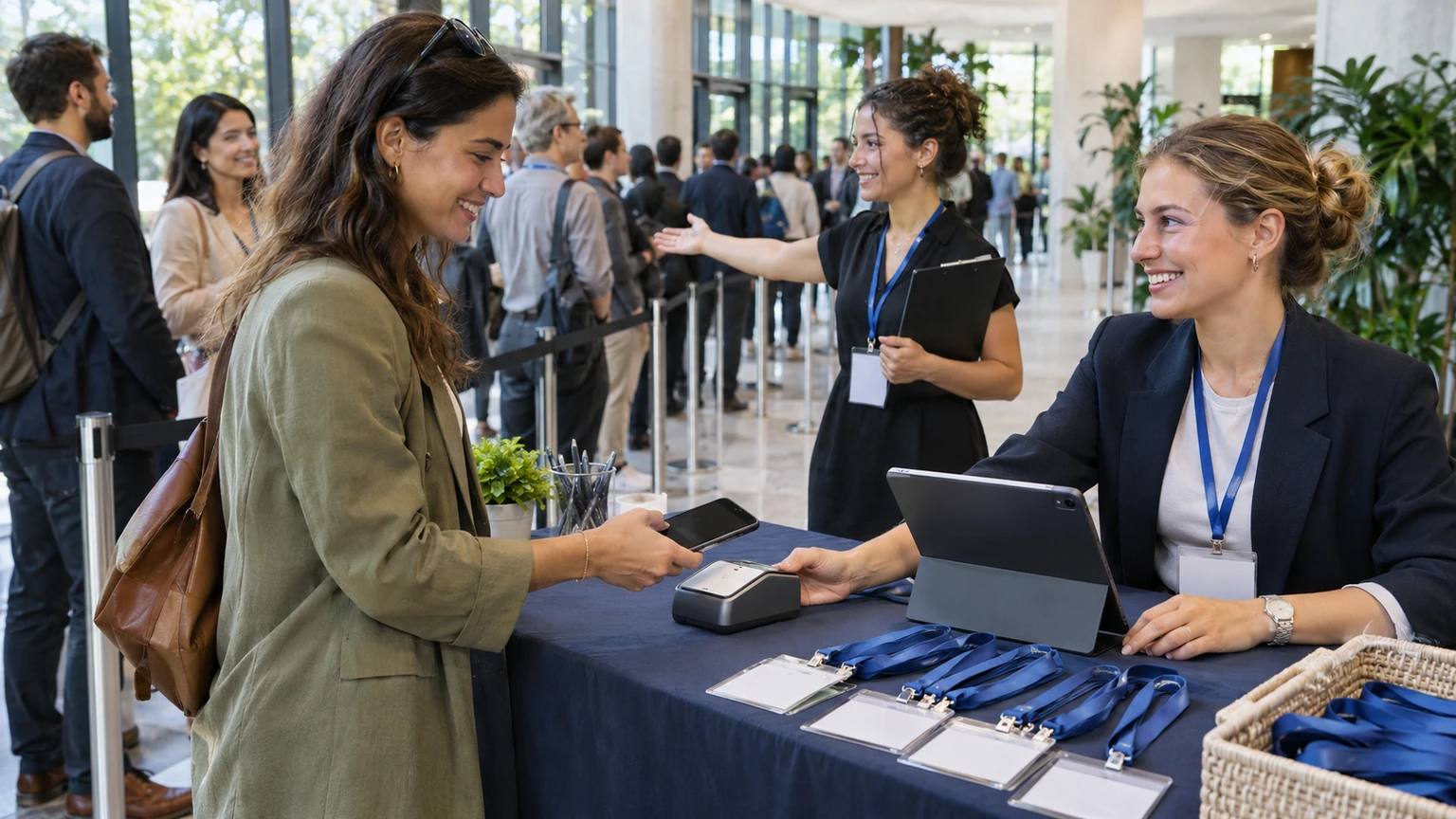
First impressions are often formed at the perimeter. If arrival is confusing or slow, the event feels harder than it should before attendees even reach the floor.
Teams should pressure-test:
- peak arrival windows
- badge pickup or registration desk capacity
- access points by attendee type
- overflow procedures when one area backs up
- staff escalation routes for exceptions
Large events rarely avoid exceptions. They succeed by processing them consistently.
Exhibitor servicing must be easy to navigate
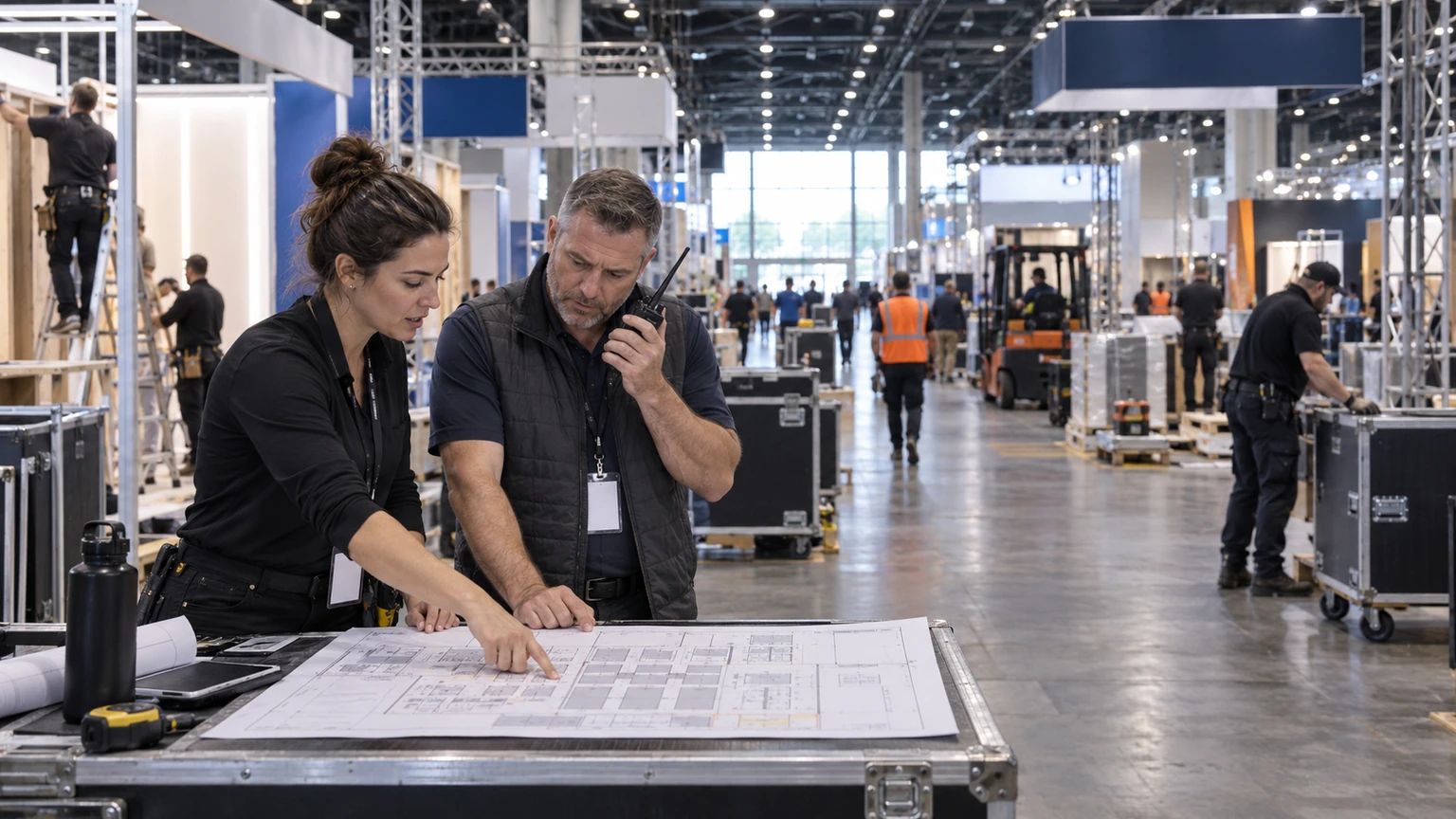
At major expos, exhibitors interact with many support needs before and during show days. Freight timing, booth access, utility requests, credential issues, cleaning questions, and last-minute changes can all hit at once.
If support channels are unclear, the floor team absorbs the confusion manually.
That is why organizers should make sure exhibitors know:
- where to go for each type of issue
- which deadlines are firm
- what can be resolved on site
- how urgent requests are escalated
Wayfinding becomes part of service delivery
The larger the event footprint, the more signage, maps, and directional support affect satisfaction.
Wayfinding is not just a design task. It is an operational control point. Poor navigation increases late arrivals, missed meetings, repeated staff questions, and congestion in the wrong places.
Venue teams should review whether navigation works for:
- first-time attendees
- exhibitors arriving during setup
- VIP or hosted buyer guests
- staff and contractors moving between halls
Where venue tech becomes more important at this level
Not every large event needs the same tools. But at top-tier scale, certain capabilities become harder to manage manually or across too many disconnected processes.
1. Registration and credentialing coordination
High-volume events need a dependable process for attendee categories, access rules, badge handling, and issue resolution.
The key question is not only whether registration works. It is whether the operating team can resolve edge cases quickly when traffic is high.
2. Live visibility for operations teams
Large shows benefit when operations leads can see where pressure is building.
That may include visibility into:
- queue build-up
- help-desk demand
- staff deployment gaps
- exhibitor service issues
- access or entry exceptions
Without live visibility, teams often react too late or over-allocate people to the wrong area.
3. Cleaner handoffs between teams
Venue operations, organizer teams, contractors, and exhibitor support staff all need shared context. Large events struggle when every group tracks issues differently.
Even when systems are not fully unified, the handoffs need to be clear:
- who logs the issue
- who owns the fix
- how status is updated
- when escalation is triggered
This is where event tech decisions often matter most: not in flashy features, but in reducing ambiguity.
A practical checklist for exhibitors preparing for a show at this scale
- set one primary booth objective
- build a staffing plan for both rush periods and quiet periods
- create a short conversation script for booth staff
- test lead capture before travel day
- plan a back-up process if devices or connectivity fail
- schedule internal handovers for breaks and end-of-day notes
- define follow-up timing before the show opens
A practical checklist for organizers and venue operators
- review peak arrival assumptions against actual desk and gate capacity
- separate standard attendee flow from exception handling
- map exhibitor service points clearly
- test signage with someone unfamiliar with the venue
- set a simple escalation structure across organizer and venue teams
- prepare staffing flex for known surge periods
- run a post-show review based on operational friction, not only attendance totals
Stay evidence-aware
The useful fact here is specific: Equip Exposition was named the third largest trade show in the U.S. in the Gold 100 Awards.
That is enough to justify a serious conversation about scale, readiness, and event systems. It is not enough to claim a particular technology model, service design, or operating playbook without further evidence.
For event teams, the right response is to treat the ranking as a benchmark prompt. Ask what your own event would need to handle that level of complexity more cleanly.
What this means for event teams
For exhibitors, this kind of ranking is a reminder to plan for disciplined execution, not just presence.
For organizers and venue teams, it reinforces a simple truth: large expos perform best when frontline workflows are clear, support paths are visible, and technology choices reduce operational friction instead of adding more handoffs.
That is the real value of a scale benchmark. It helps teams think more seriously about what reliable event delivery actually requires.