Experiential events are often described in creative terms first: immersive, memorable, shareable, high-touch.
For organizers, the harder question is operational: how do you make an experience feel personal when audience size, partner demands, and on-site complexity keep increasing?
That question matters even more as experiential formats mature. Recent coverage highlighted a five-year milestone in experiential events, a useful reminder that this is not a passing novelty category. It is an established part of how brands, venues, and organizers engage audiences.
As experiential events become more common, expectations rise. Guests expect smoother entry, clearer guidance, better timing, and fewer dead moments. Sponsors expect measurable outcomes. Internal teams expect the event to scale without becoming chaotic.
Experiential events do not become harder at scale because the idea gets weaker. They become harder because every successful idea creates more moving parts.
Why this matters
Small experiential activations can often run on improvisation. Larger ones usually cannot.
Once attendance grows, organizers have to manage more than atmosphere. They have to manage flow.
That includes:
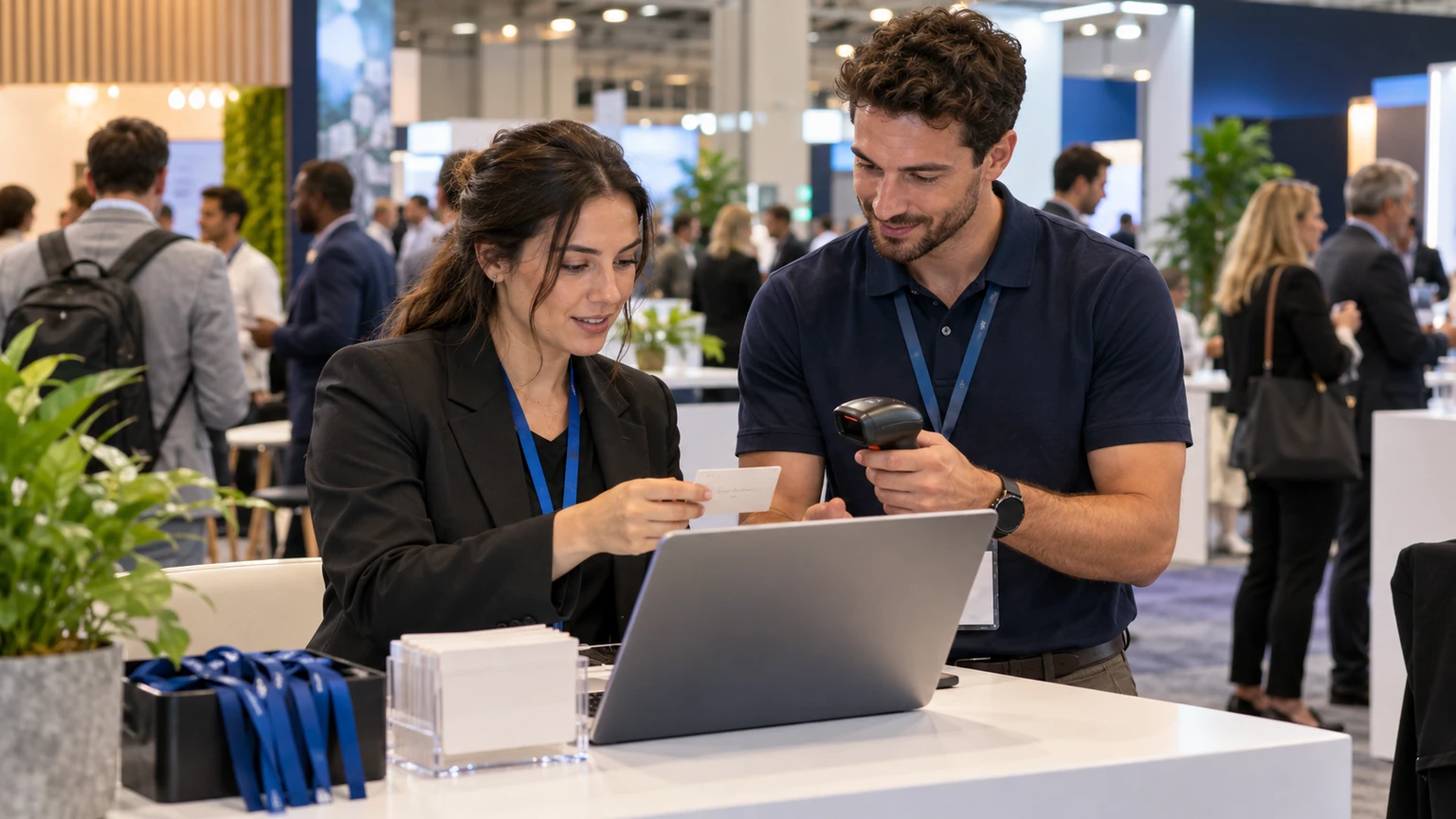
- arrival and check-in patterns
- capacity at each activation point
- staff briefings and handoffs
- queue management
- timed content or performances
- sponsor visibility and servicing
- attendee communications before and during the event
- post-event measurement
If those systems are weak, the guest experience suffers quickly, even when the concept itself is strong.
Start by defining what must scale, and what must stay controlled
Not every part of an experiential event should scale in the same way.
Some elements can absorb volume. Others lose value when too many people hit them at once.
Before expanding the event, identify three categories:
1. High-capacity elements
These are experiences that work well with larger numbers, such as open networking zones, sponsor lounges, self-guided installations, or broad entertainment moments.
2. Limited-capacity moments
These include guided demos, private brand interactions, workshop-style sessions, tastings, or any experience that depends on staff attention and time slots.
3. Operational choke points
These are the areas most likely to fail under pressure: registration, security screening, transition spaces, narrow corridors, popular activations, and exit flows.
This simple split helps teams avoid a common mistake: promoting the whole event as if every part can handle the same volume.
Design the attendee journey before designing the spectacle
Experiential events are often judged by visual impact, but operationally they are judged by movement.
Map the attendee journey in sequence:
- pre-event communication
- arrival and entry
- orientation
- first interaction
- movement between zones
- high-demand moments
- breaks and dwell time
- exit and follow-up
For each step, ask:
- What does the attendee need to know here?
- What could slow them down?
- Who owns this moment operationally?
- How will we know if it is working?
That is where event apps and operations tools can become useful, not as decoration, but as coordination support. If the event includes schedules, timed access, session reminders, maps, or live updates, the attendee journey needs one clear communication logic.
The more immersive the event feels on the surface, the more disciplined the operational layer usually needs to be underneath.
Use capacity planning to protect the experience
Experiential events often fail at the exact point where they appear most popular.
A queue outside a signature activation may look exciting for a few minutes. After that, it becomes evidence that the experience is undersupplied, poorly timed, or badly distributed.
Protect the event by planning capacity in practical terms:
- how many people can each zone hold comfortably
- how many can be processed per 15-minute interval
- which experiences require staff supervision
- where buffers are needed between groups
- what happens when demand exceeds forecast
If one activation can only serve 120 people per hour, but the event schedule drives 500 people toward it at once, the problem is not attendee behaviour. The problem is design.
Staff for guidance, not just hospitality
Experiential events often over-index on brand ambassadors and under-invest in operational guides.
Friendly staff matter, but scale requires clearer role separation.
At minimum, define who is responsible for:
- entry and check-in support
- wayfinding
- queue control
- VIP or partner handling
- technical troubleshooting
- experience resets between groups
- incident escalation
- end-of-day reporting
Do not assume one team can cover all of this by instinct.
Experiential events are especially vulnerable to confusion when staff are briefed on brand messaging but not on thresholds, escalation paths, and timing rules.
Keep sponsor and partner activity operationally realistic
Sponsors often want deeper participation in experiential formats because the environment feels more engaging than standard exhibition space.
That can be valuable, but only if sponsor involvement fits the flow of the event.
Before approving partner activations, check:
- whether they add queue pressure
- whether they require separate power, connectivity, or staffing
- whether they interrupt circulation
- whether they need attendee data capture at specific points
- whether they create noise or visibility conflicts with nearby moments
An activation that looks exciting in a deck may still weaken the event if it competes with the main attendee route or creates service demands the team cannot support cleanly.
Build a communication model for the live day
Scaling experiential events means accepting that the original plan will change on site.
What matters is whether the team can react quickly and consistently.
Create a simple live communication model that covers:
- how front-line staff report issues
- who approves operational changes
- how updates are shared across departments
- how attendees are informed if timing or access changes
- how sponsor-facing teams are kept aligned
This is where many teams feel the strain of fragmented workflows. If updates live across radios, text threads, spreadsheets, printed sheets, and memory, response time slows down.
Even a basic operating rhythm helps: scheduled check-ins, one owner per zone, one escalation lead, and one current version of the live plan.
Measure the event beyond attendance
Experiential events are easy to overrate if measurement stops at footfall, social activity, or visual buzz.
Those signals matter, but they do not tell the full operational story.
Track a small set of metrics across four areas:
Experience delivery
- average queue time
- activation throughput
- session or experience fill rate
- drop-off points in the attendee journey
Audience engagement
- check-ins or participation by zone
- repeat interaction rate
- dwell time where relevant
- post-event survey responses
Partner outcomes
- meetings completed
- lead capture volume
- activation participation
- sponsor feedback on traffic quality
Operational performance
- incident count
- staffing gaps
- schedule delays
- areas that required manual intervention
This gives organizers a more honest picture of what actually scaled well.
Common mistakes to avoid
- treating attendance growth as proof that the format is operationally sound
- adding too many experience elements without adjusting staffing
- underestimating queue visibility and crowding effects
- letting sponsor requests reshape the attendee route too late
- running live updates through too many channels
- measuring hype instead of throughput, completion, and service quality
A practical checklist for organizers
Before the event:
- map the attendee journey from entry to exit
- classify each activation by capacity and staffing need
- stress-test likely choke points
- assign clear zone ownership
- confirm the live communications plan
- define the minimum measurement framework
During the event:
- watch queues, dwell patterns, and bottlenecks in real time
- log changes to schedules or access rules
- keep sponsor-facing teams updated on flow changes
- capture staff feedback while the day is still live
After the event:
- compare forecast capacity with actual throughput
- review where the experience slowed down
- separate creative success from operational success
- document what should be standardized before the next edition
What this means for event teams
The recent milestone highlighted in coverage of the experiential events sector is useful because it points to maturity. Mature categories reward better operations.
That is the real scaling challenge.
Organizers do not need to make experiential events less creative in order to grow them. They need to become more intentional about flow, staffing, communication, and measurement.
If the event concept is strong, scale should make the experience more valuable, not more fragile.
That only happens when the operating model grows with it.