Regional coverage sounds like a vendor footprint question.
For event planners, it is really an operations question.
If you are sourcing event technology across multiple markets, the provider's coverage can affect delivery timing, equipment availability, service consistency, contingency planning, and how much manual coordination your team absorbs.
The public signal behind this topic is straightforward: an event technology rental provider has announced expanded coverage across all 50 U.S. states and Canada.
That matters as a planning signal. It does not, on its own, confirm identical service levels, inventory depth, staffing models, or response times in every market.
Coverage is not just about where a supplier says it can go. It is about how reliably it can deliver, support, recover, and scale in the places your event actually needs help.
Why this matters
Many event teams outgrow local sourcing before they realize it.
A single-city event can often tolerate more improvisation. A multi-city roadshow, national conference series, or cross-border program usually cannot. Once events spread across regions, small logistics gaps become bigger operating risks.
Regional coverage influences practical questions like:
- how early equipment must be locked in
- whether the same setup can be repeated across markets
- how backup units are handled if something fails
- who supports delivery, install, pickup, and troubleshooting
- how much shipping complexity lands on the organizer
- whether cross-border moves create extra delay or admin
These are not procurement details at the edge of the project. They shape the event plan itself.
What the public signal actually tells us
Based on the information provided here, the usable signal is limited but relevant: a provider in event technology rentals says it has expanded coverage to all 50 states and Canada.
That is enough to discuss what broader coverage can mean for planners evaluating rental partners.
What it does not confirm on its own is:
- which equipment categories are available in every market
- whether inventory is locally stocked or moved in from other regions
- how quickly replacements can be dispatched
- whether service is delivered by in-house teams, partners, or a mix
- how customs, taxes, or cross-border documentation are managed
- whether pricing and minimums are consistent across territories
That distinction matters because planners should evaluate operating reality, not just map coverage.
A broad footprint is useful. Operational proof is better.
How regional coverage changes event logistics
1. Lead times become more predictable, or more complicated
When a provider has credible regional reach, planners may get more confidence that standard event setups can be delivered across multiple locations without rebuilding the supply plan from scratch each time.
But broad coverage can also hide variation. One city may have strong local support, while another depends on longer transport routes or outside crews.
Ask whether your timeline is being protected by local readiness or by extra shipping margin.
2. Inventory planning gets tied to geography
National or cross-border events often assume the same kit can appear everywhere on demand.
In practice, inventory may be distributed unevenly. Some regions can support last-minute additions. Others may need longer notice or substitution.
This matters if your event format depends on repeatable configurations, such as:
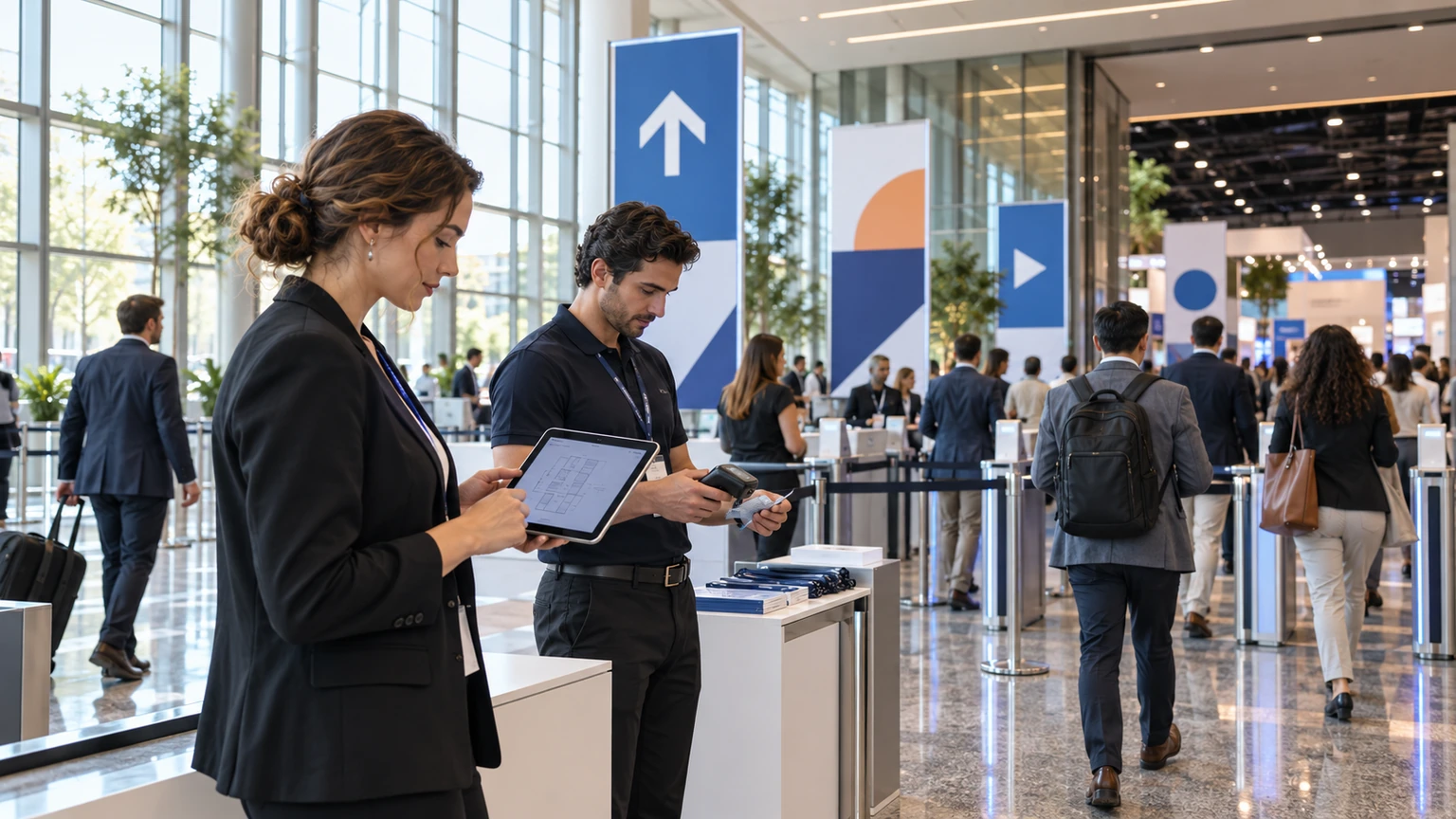
- registration and check-in stations
- badge printing setups
- tablet or device fleets
- session-room technology packages
- sponsor activation equipment
- temporary office or back-of-house systems
If consistency matters, confirm whether the provider can replicate the same operating standard across each stop.
3. Support models matter more than coverage maps
For planners, the real question is rarely, "Can you serve this location?" It is usually, "What happens if we need help at 6:30 a.m. on event day?"
Regional coverage should be evaluated together with support structure:
- who receives issues on site
- who can authorize replacements
- who owns escalation
- how spare equipment is positioned
- how service hours align with event timings
A provider may technically cover a region and still leave too much uncertainty around response.
Where planners often get caught out
Assuming national coverage means local stock
A provider may be able to fulfill nationally without warehousing everything locally.
That is not automatically a problem. It becomes one if the event requires rapid changes, same-day recovery, or multiple concurrent deployments.
Underestimating cross-border friction
Canada coverage can be valuable for North American event programs. It can also introduce extra operational steps depending on the equipment, route, and event timeline.
Planners should not assume a U.S. workflow simply extends unchanged across the border.
Even when the vendor handles most of the process, the organizer still needs clarity on timing, responsibilities, and fallback plans.
Overlooking labor coordination
Equipment logistics are only part of the story.
Install, testing, handoff, on-site support, strike, and returns all depend on people. If the provider's service model changes by market, the organizer may need different run-of-show assumptions from one location to the next.
That can affect venue access windows, staffing schedules, and setup sequencing.
What to ask a rental partner before you scale
When evaluating a provider with broad geographic claims, planners should move beyond the headline and test the operating model.
- Coverage depth: Which cities or regions have the strongest support today?
- Inventory model: Is equipment stocked locally, regionally, or shipped per project?
- Standardization: Can the same setup be repeated across all event locations?
- Backup process: What is the replacement plan if equipment fails on site?
- Support ownership: Who is responsible during delivery, live event hours, and pickup?
- Escalation path: How are urgent issues handled after business hours?
- Cross-border readiness: What changes when the event moves between the U.S. and Canada?
- Lead-time expectations: How much notice is needed for standard orders and late changes?
- Peak-period limits: Are there dates, markets, or event types where capacity gets tighter?
- Commercial clarity: What fees change by region, distance, or service level?
These questions help separate theoretical coverage from dependable delivery.
A practical checklist for organizers
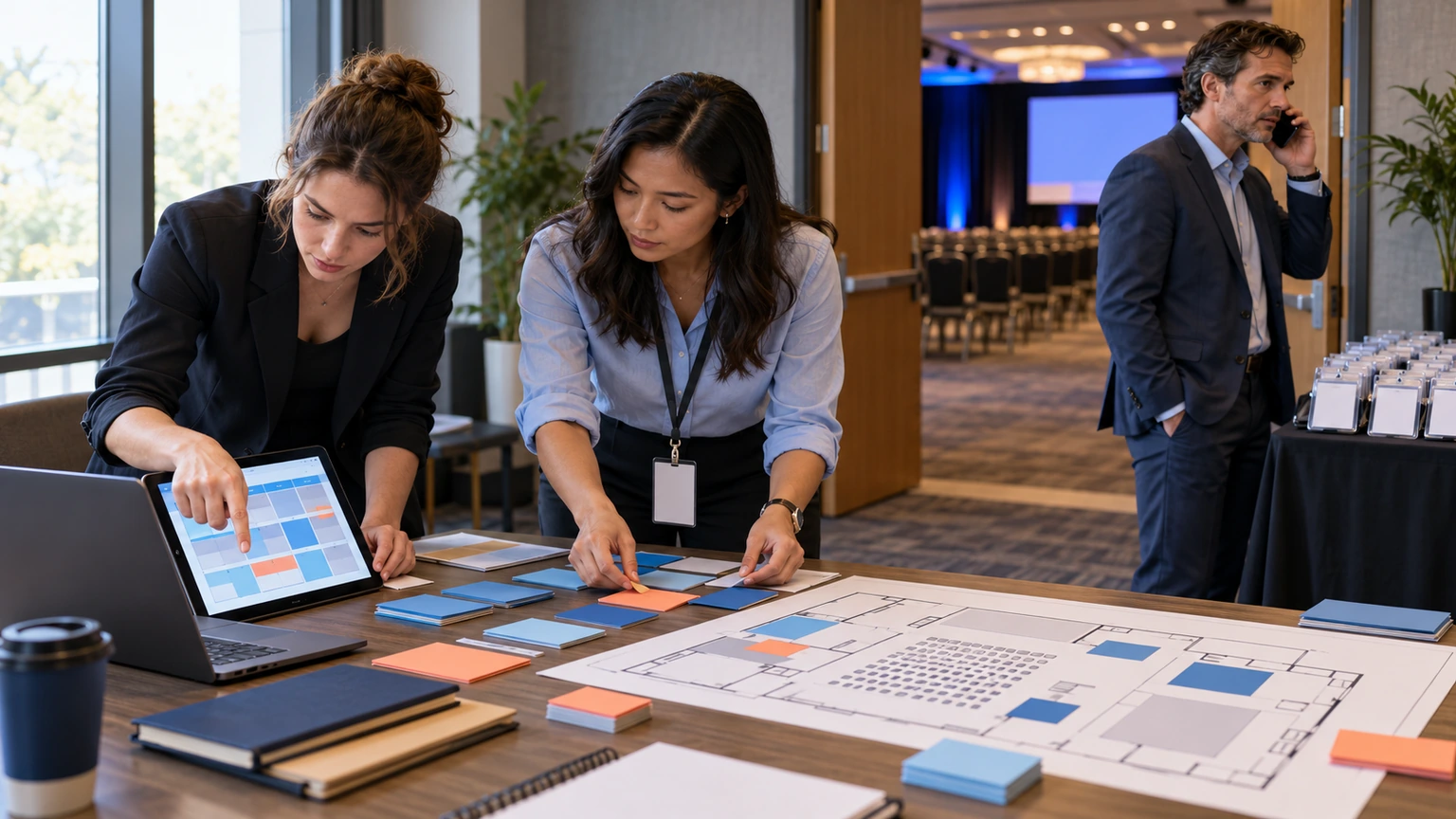
If you are comparing rental partners for a regional or national event program, use a simple evaluation checklist:
- List every event location, including likely expansions and backup venues.
- Define which equipment must be identical everywhere and which items can vary.
- Mark the event moments where downtime would be most damaging, such as check-in opening or keynote start.
- Ask each supplier how support and replacement would work in those exact moments.
- Confirm whether the quoted plan depends on local inventory, transfer stock, or subcontracted service.
- Review cross-border requirements separately instead of treating them as a normal extension of domestic delivery.
- Stress-test the timeline for late attendee growth, added stations, or venue access delays.
- Get named responsibilities for delivery, setup, testing, on-site support, and returns.
This process is not about making procurement slower. It is about removing hidden assumptions before the schedule gets tight.
What stronger regional coverage can improve
When a provider's footprint is real and operationally mature, planners may gain several practical advantages:
- fewer one-off sourcing decisions for each market
- more consistent event setups across a series
- less reliance on ad hoc local vendors
- clearer planning for backup equipment and service
- better confidence when expanding into new locations
Those benefits are meaningful, especially for teams running repeatable event formats at scale.
But they only hold if coverage is matched by execution discipline.
What this means for event teams
The main lesson is simple: regional coverage is not a branding detail. It is part of your event operating model.
If your program spans multiple cities, states, or countries, your rental partner's geography affects speed, resilience, and how much risk your internal team has to carry.
The recent expansion signal is useful because it reflects a market reality. Organizers increasingly need service models that can support broader event footprints.
Just make sure your evaluation goes further than the map.
Ask how the work gets done, where the inventory sits, who supports the event, and what happens when something changes late.
That is where coverage stops being a marketing claim and starts becoming operational value.