Recent industry attention on stage-manager training, including the Third Annual Stage Managers Academy at LDI 2026, is a useful reminder: event operations improve when teams train for execution, not just planning.
That matters beyond theater or show calling. The core discipline of stage management translates well to conferences, venue operations, brand events, and multi-room productions.
The best live events do not run smoothly by accident. They run smoothly because someone built a repeatable operating rhythm before doors opened.
For event teams, the practical question is simple: what can the rest of the operation borrow from stage-manager thinking?
Why this matters now
Many event teams are strong at strategy, creative development, and stakeholder management. They are less consistent when it comes to live execution habits.
That usually shows up in familiar ways:
- unclear ownership on event day
- last-minute timing confusion
- version-control problems across agendas and run-of-show documents
- slow responses to changes backstage or on-site
- staff relying on chat threads instead of a clear command structure
Stage managers are trained to reduce exactly this kind of drift.
The lesson is not that every event needs a theatrical model. It is that live operations benefit when teams practice cueing, communication, escalation, and contingency management as real disciplines.
Start with role clarity, not heroics
One of the strongest habits in stage management is clean ownership.
Someone knows who gives the go cue. Someone knows who confirms talent is ready. Someone knows who speaks to lighting, audio, venue staff, front of house, security, and the client.
In many business events, that structure is softer than it should be. Teams often assume smart people will work it out in the moment.
Sometimes they do. Sometimes they do not.
A better approach is to define event-day roles in plain language:
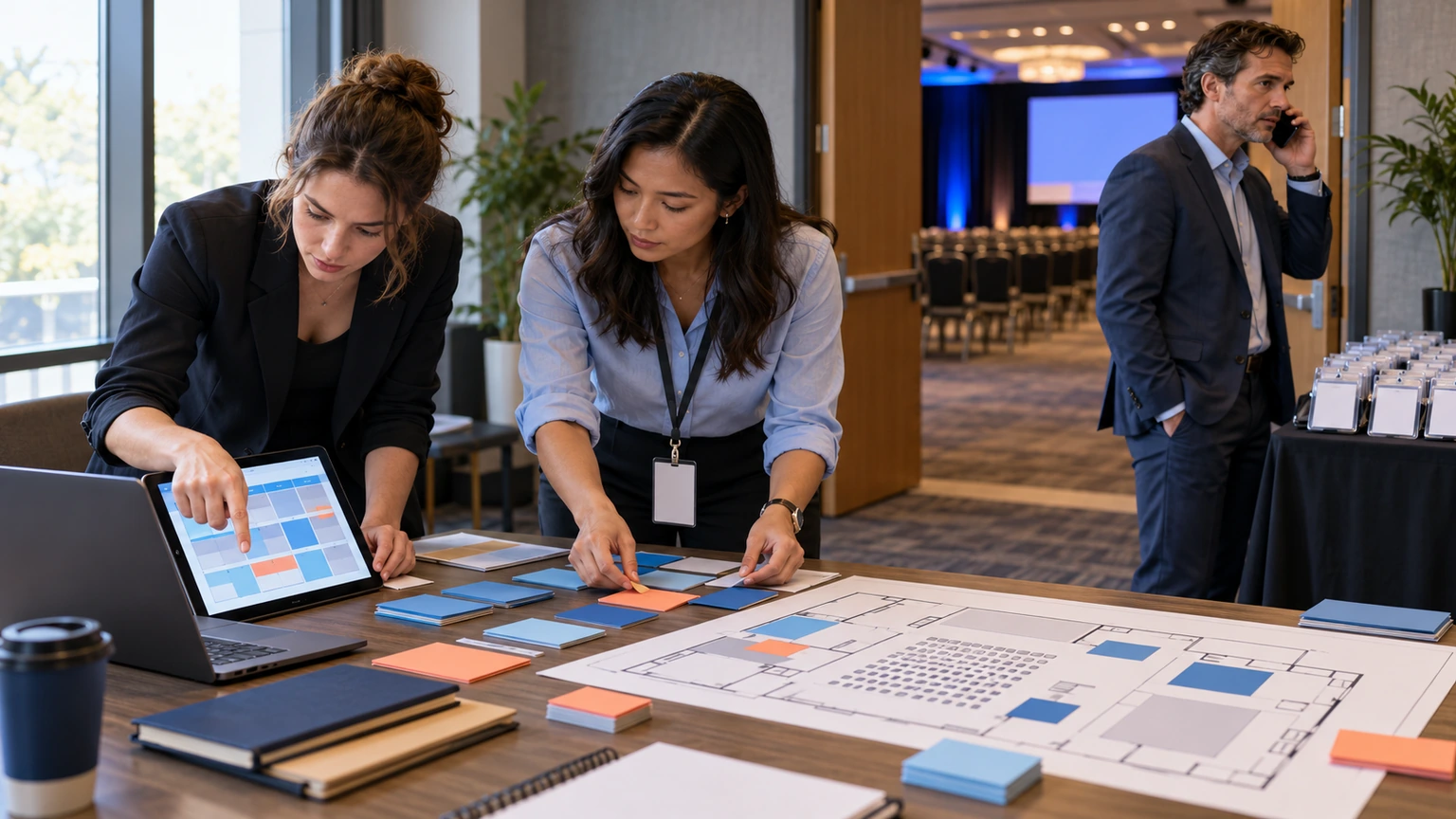
- who owns the master run of show
- who approves timing changes
- who communicates with speakers or talent
- who owns room readiness
- who handles attendee-facing disruptions
- who decides whether a small issue becomes a bigger escalation
If those answers are vague, the event is more fragile than it looks.
The run of show is an operating tool, not a document archive
Stage managers treat the show flow as a working control tool.
Event teams sometimes treat the run of show as a file that gets built, shared, and then partially ignored once the live day gets busy.
That is a mistake.
A useful run of show should help the team make decisions in real time. It should be current, readable, and specific enough to support execution.
At minimum, it should make clear:
- timing by segment
- handoffs between teams
- speaker or presenter readiness points
- technical cues and dependencies
- door timing, seating, and audience movement points
- named owners for each critical moment
If the team needs three other side documents to understand what is happening next, the run of show is probably underperforming.
When live timing slips, teams do not need more opinions. They need one believable source for what happens next.
Communication should be structured under pressure
Stage management is built around disciplined communication. Short updates. Clear acknowledgments. Minimal ambiguity.
That standard is valuable in any live event environment.
Under pressure, many teams communicate too much and too loosely. Multiple channels light up. Different people answer the same question. A room change gets posted in one place but not another. Front-of-house hears about a delay after the audience does.
Training can fix that.
Event teams should agree in advance on:
- which channel is used for urgent operational updates
- who is allowed to issue live changes
- how acknowledgments should work
- what requires escalation versus local handling
- when radios, messaging, and in-person communication each make sense
This is basic, but it is rarely basic on a busy show day.
Cueing is useful outside the stage
Some planners hear “cues” and think only about lighting or theatrical production.
In practice, cue-based thinking helps across the event.
For example:
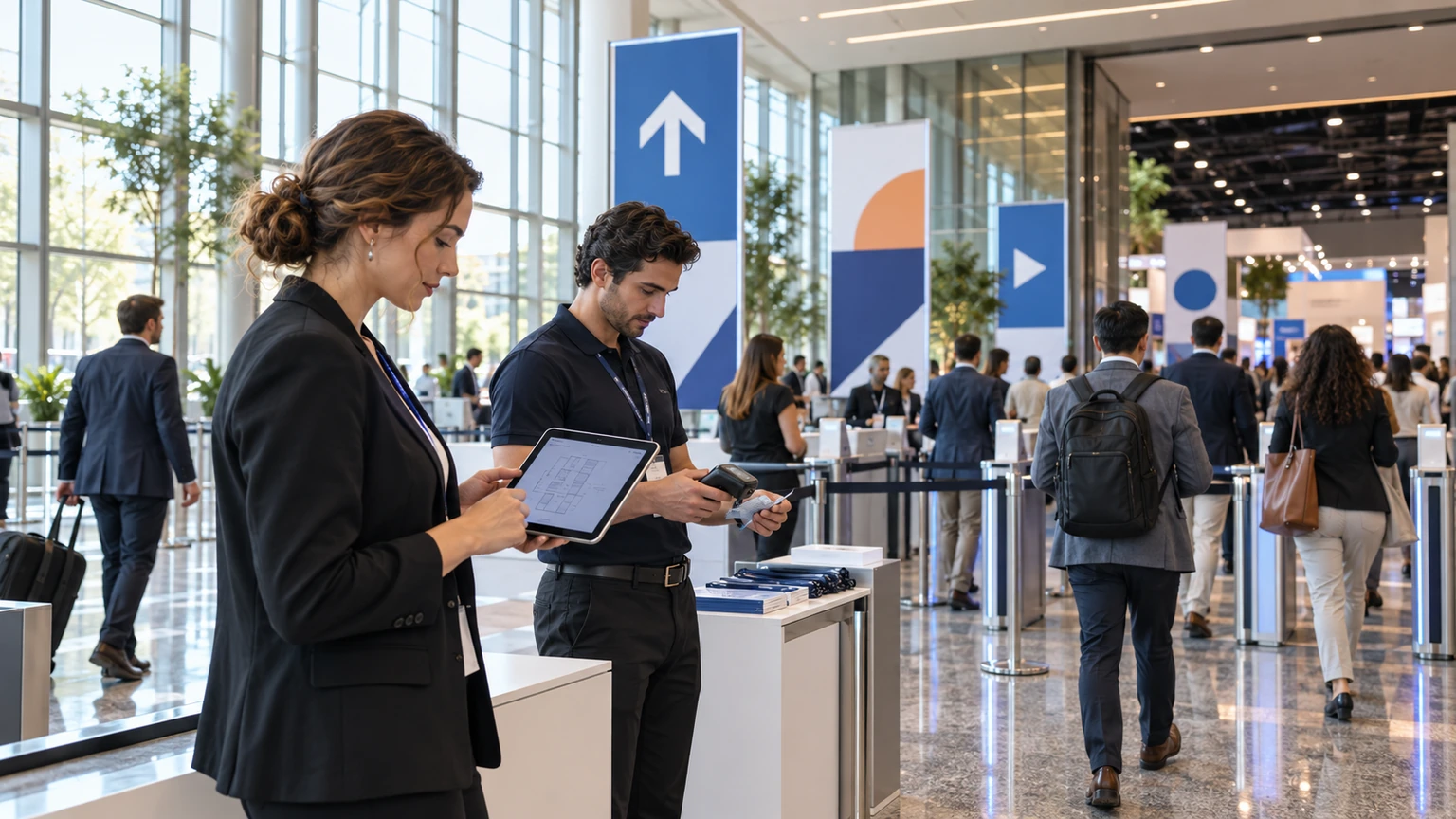
- registration opens only after staffing, devices, and badge stock are confirmed
- doors open only after the room, stage, and presenter are ready
- meal service starts only after attendee flow and seating timing are aligned
- session changeovers begin only after the prior room clears and reset is complete
- VIP movement happens only after transport, access, and receiving staff confirm readiness
This kind of sequencing reduces assumptions. It also makes handoffs more visible.
Teams do not need to over-formalize every moment. But they should identify the points where one weak transition can affect the whole attendee experience.
Rehearsal should include operations, not just speakers
Many events rehearse content. Fewer rehearse the operation around the content.
That is where stage-manager habits can raise the standard quickly.
A practical pre-event rehearsal can include:
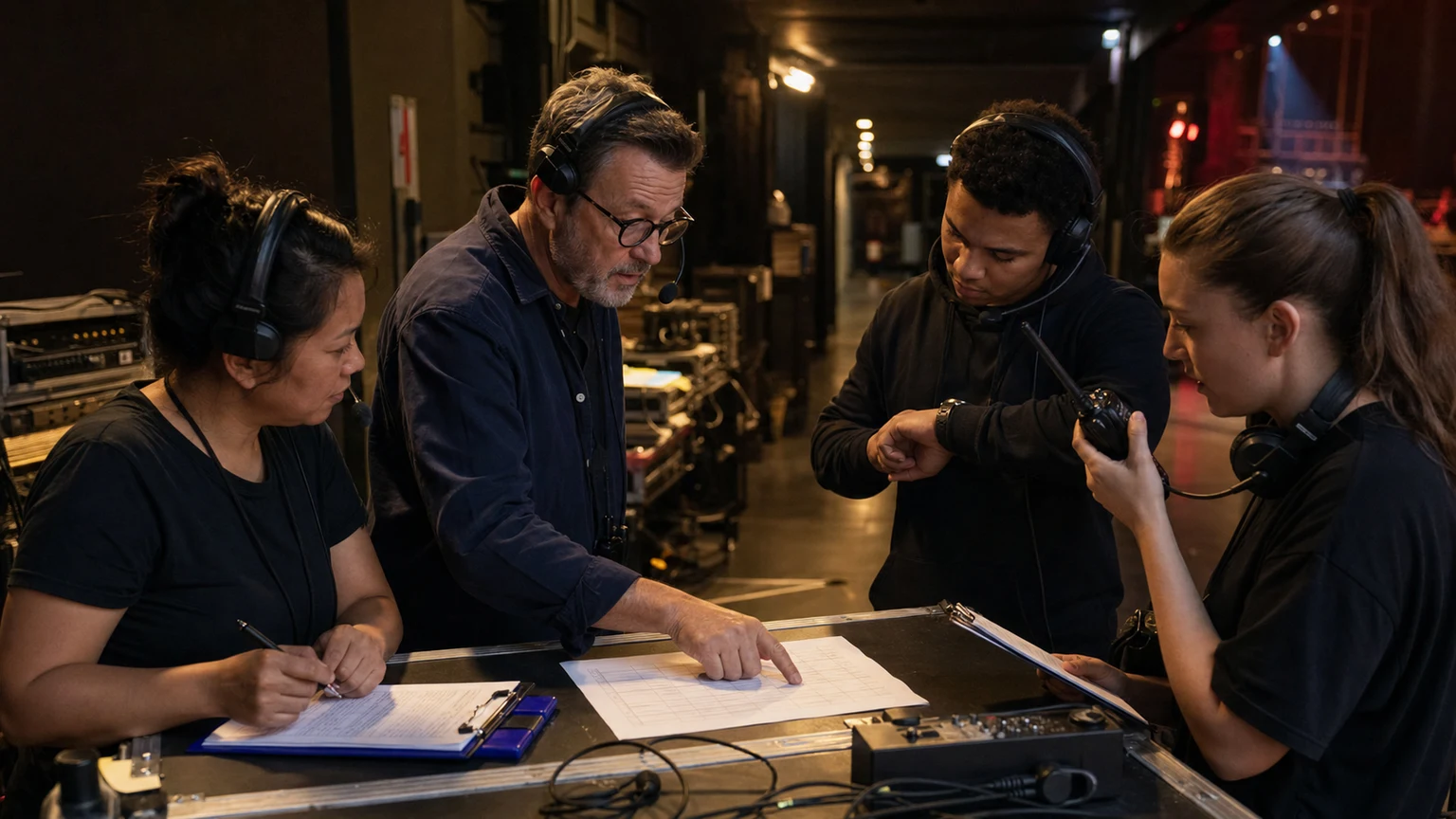
- walking the full show flow in time order
- testing room resets and speaker arrivals
- checking how cues are called
- confirming backup plans for overrun, no-shows, or technical failure
- making sure front-of-house knows what happens if the agenda changes
This does not have to be elaborate. Even a short operations rehearsal exposes weak assumptions that polished planning decks tend to hide.
Contingencies work better when they are assigned early
Stage managers are trained to think in alternates: if this slips, then what; if this person is missing, then who steps in; if the room is not ready, then how do we hold the audience?
Event operations teams need the same reflex.
Useful contingency planning often comes down to a few predictable scenarios:
- a speaker arrives late
- a session runs over
- an AV element fails
- entry lines build too quickly
- a room reaches capacity
- a transport or delivery delay affects the schedule
What matters is not producing a giant risk register nobody reads. What matters is assigning response owners and making sure the first move is obvious.
Training builds calm, and calm is operationally visible
Well-trained stage managers often create something event teams value immediately: calm under pressure.
That calm is not a personality trait. It usually comes from preparation, repetition, and a clear mental model of the show.
Operations leads can build more of that into their teams by training around recurring live-event skills:
- show-flow management
- radio discipline
- escalation paths
- backstage etiquette and speaker handling
- timing recovery after delays
- post-incident documentation
These are not glamorous skills, but they make events feel more professional to attendees, clients, and partners.
What producers and venues can do next
If this topic is gaining visibility, the practical response is not to admire the profession from a distance. It is to borrow the habits that improve execution.
A good starting checklist:
- Review your event-day roles and remove overlaps or gaps.
- Simplify the run of show into a true control document.
- Define one primary channel for live operational changes.
- Identify your highest-risk handoffs and add cue-based checks.
- Run a short operations rehearsal before event week, not only a speaker rehearsal.
- Assign first-response owners for the most likely disruptions.
None of this requires a major restructure. It requires operational seriousness.
Final thought
Training for stage managers is more than a niche professional development story. It is a reminder that live events depend on practiced coordination.
For organizers, venues, and production teams, that is the real takeaway: better events come from stronger operating habits, clearer communication, and more deliberate execution when the show is live.
That is a lesson worth carrying well beyond the stage.