Trade shows are often treated as visibility engines first: booths, meetings, launches, footfall, and follow-up.
They are also one of the best places to gather real-world event intelligence.
Recent coverage around Travel And Tour World expanding its global travel intelligence through trade shows in July and August 2026 points to a useful industry reality. Trade shows are not only places to promote. They are places to observe, compare, validate, and learn.
That does not mean every event suddenly becomes a clean data machine. It does mean organizers, exhibitors, and venue teams should think more deliberately about what signals trade shows can produce, and how to capture them without disrupting operations.
The most useful trade show data usually comes from live behavior, not just post-event opinion.
Why this matters
Trade shows generate a dense mix of attendee movement, buyer intent, content interest, exhibitor activity, and operational friction.
If teams only look at headline totals, they miss the patterns that help future events perform better.
Practical insight from trade shows can help teams:
- understand which zones actually attract meaningful traffic
- spot where attendees hesitate, queue, or drop off
- see which topics and product areas are drawing attention
- compare stated interest with real on-site behavior
- improve sponsor, exhibitor, and visitor experience next time
- support better floor planning, staffing, and programming decisions
For event operators, this matters because the best decisions usually come from a combination of attendance data, observed behavior, and operational context.
Start with the questions you need answered
Many teams gather too much low-value data because they start with what is easy to count.
It is better to start with a small set of operational questions.
For example:
- which show-floor zones hold attention and which are mainly pass-through areas
- which attendee groups are engaging most actively with exhibitors
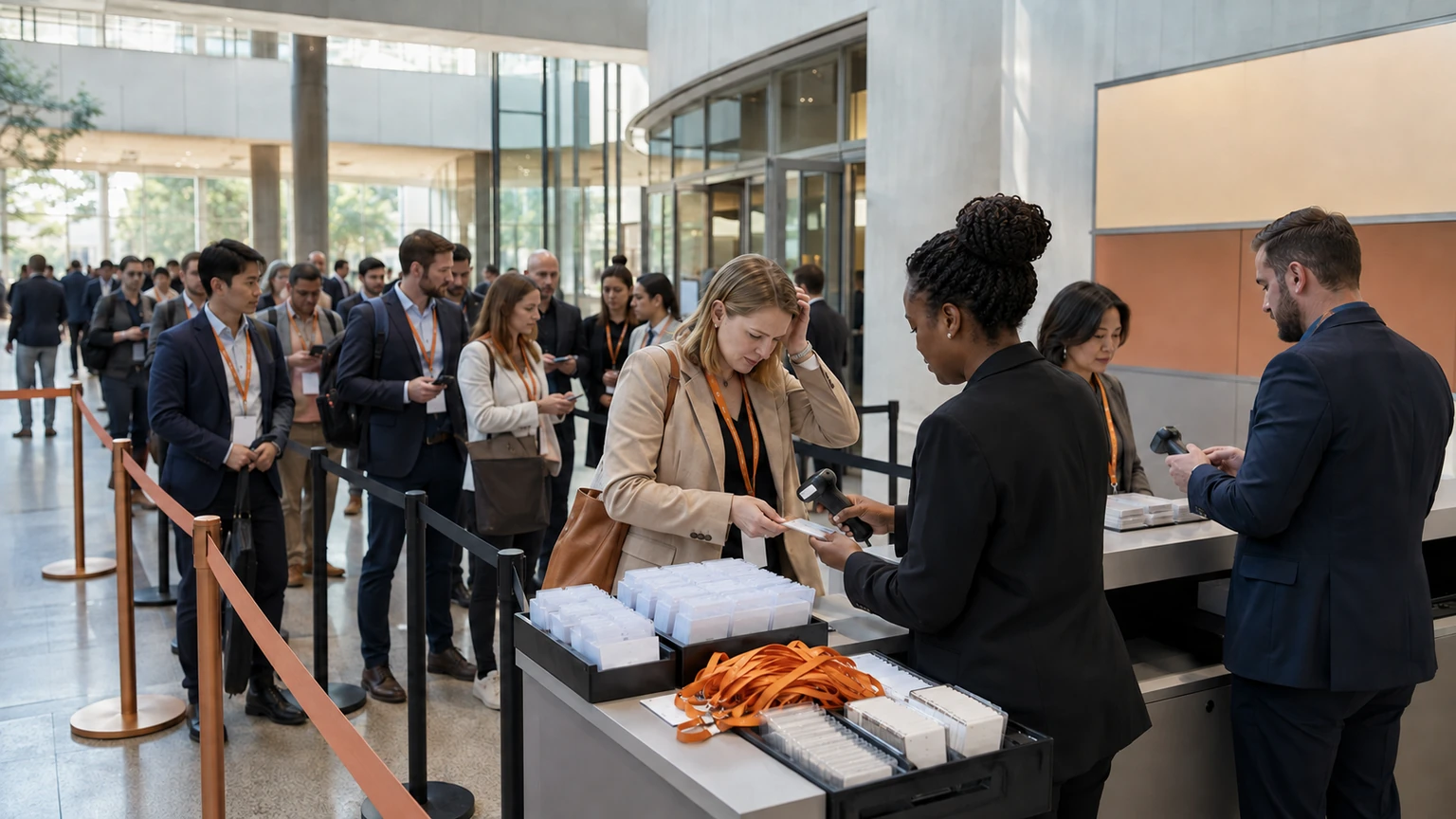
- where are queues or congestion affecting experience
- which session topics are pulling people back into the expo
- which sponsor activations create dwell time rather than just a brief crowd
- what repeat questions are staff answering all day
Once those questions are clear, data collection becomes more focused and more useful.
Without that discipline, teams often end up with dashboards full of numbers that do not change any decision.
What data is usually worth collecting at a trade show
1. Traffic and movement patterns
Footfall still matters, but raw traffic alone is a weak measure.
Try to understand where people enter, where they slow down, where they stop, and where they leave a zone quickly.
This can help with:
- entrance planning
- stand placement strategy
- sponsor zone pricing
- staff deployment
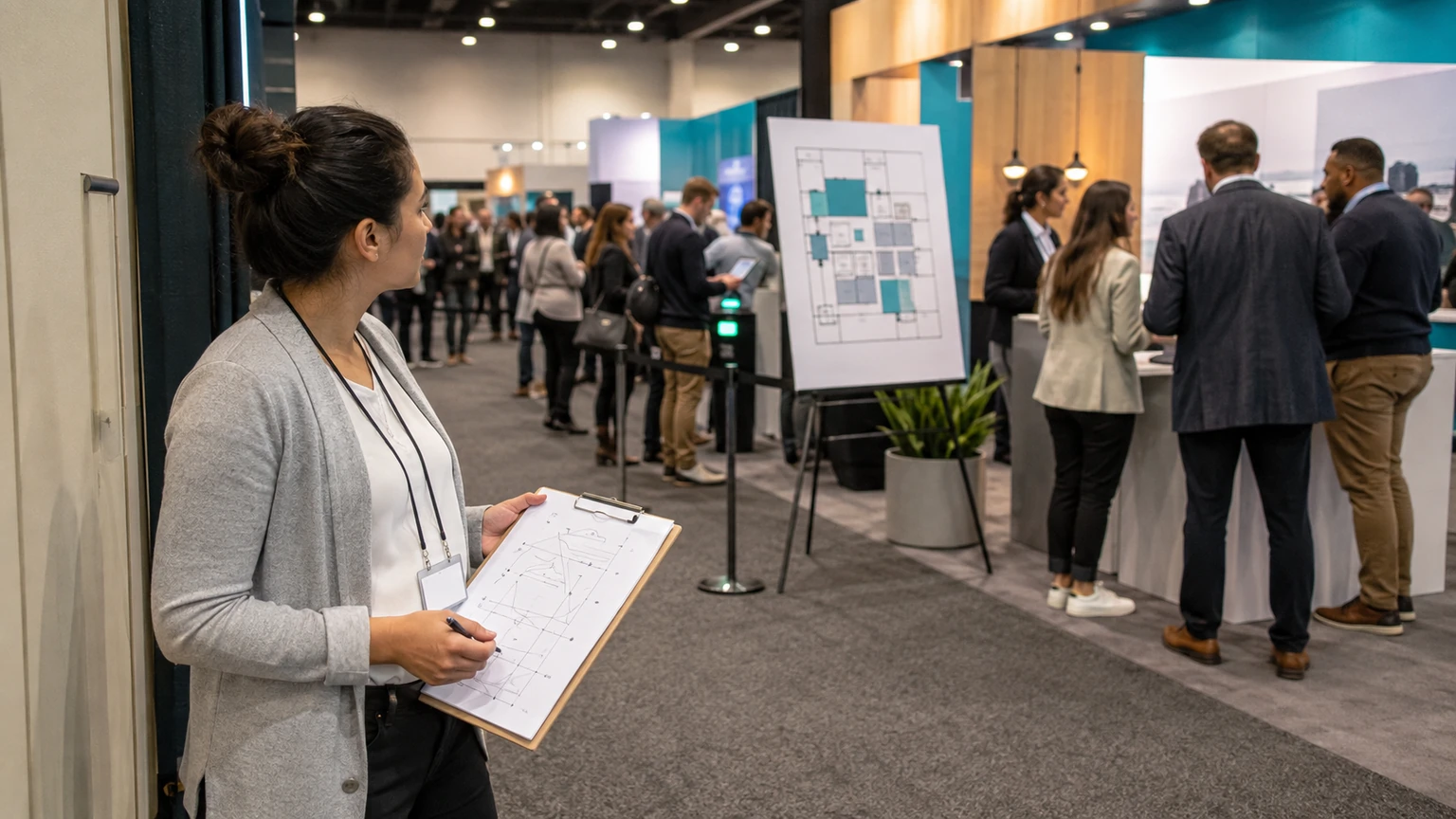
- wayfinding improvements
2. Dwell time and engagement quality
A busy aisle is not the same as meaningful engagement.
If one area gets moderate traffic but strong dwell time, that may be more valuable than a high-flow area where nobody stops for long.
For exhibitors and organizers alike, dwell time often says more about relevance than traffic counts on their own.
3. Content-to-expo behavior
Trade shows often combine conference content with exhibition activity.
That creates a useful question: what happens after a session ends?
If attendees move from a content topic into related booths, demo areas, or networking spaces, that is a strong signal about topic interest and commercial relevance.
Even simple observation can help here. Do people disperse randomly, head for coffee, or move toward a specific category area?
4. Buyer intent signals
Not every conversation is equal.
Teams should look for practical indicators of stronger intent, such as:
- repeat visits to a stand
- requests for demos or follow-up meetings
- deeper product questions
- interest from specific job roles or buyer types
- cross-visits between related exhibitors or categories
These signals are more useful than large piles of undifferentiated lead volume.
5. Operational friction
Some of the best insight comes from what goes wrong repeatedly.
Pay attention to:
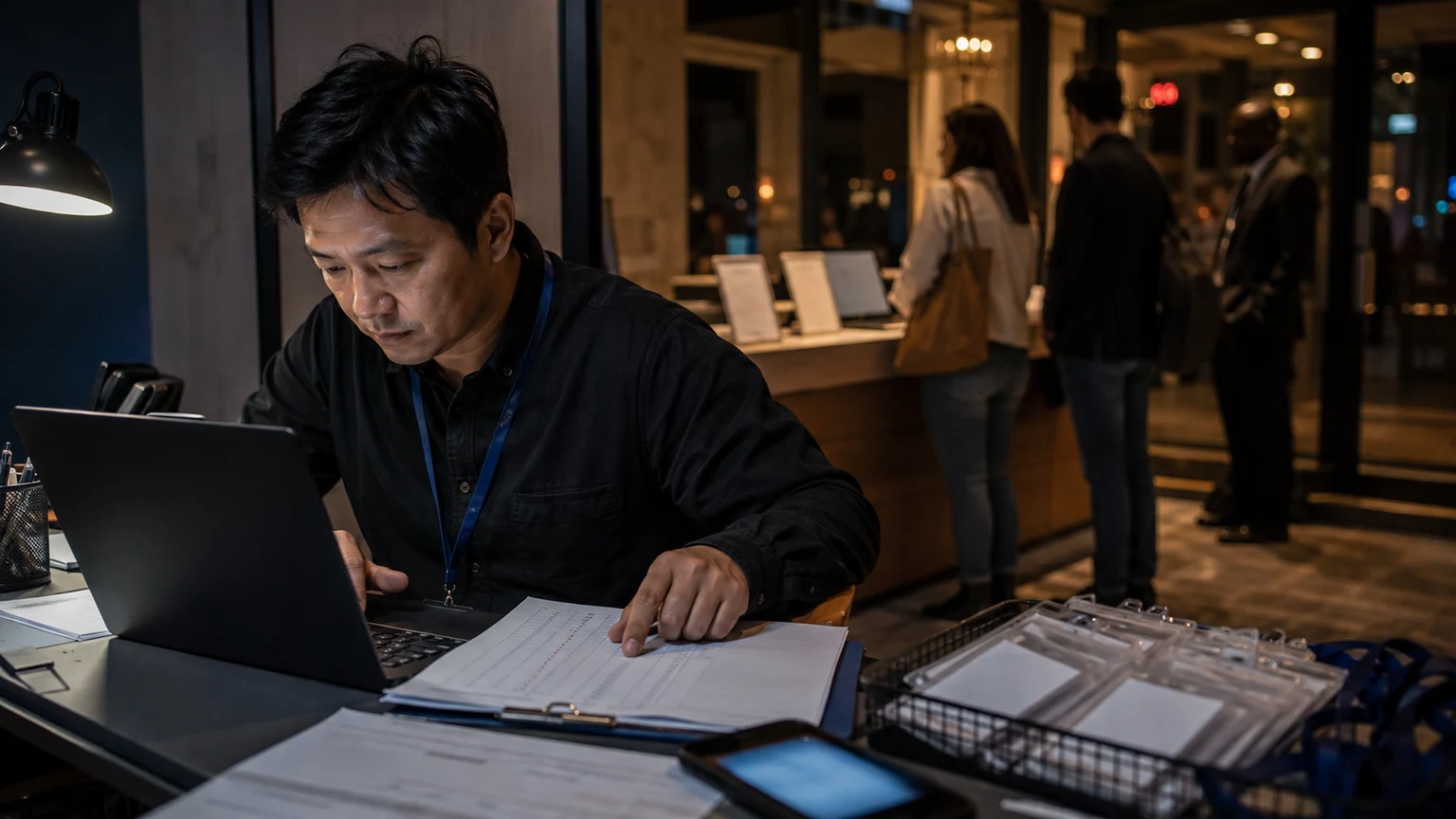
- check-in delays
- badge issues
- wayfinding confusion
- poorly timed crowd spikes
- questions staff answer again and again
- service points that become bottlenecks
This is event intelligence too. It shows where the attendee experience is harder than it should be.
If the same confusion appears fifty times in a day, it is not a one-off. It is a design signal.
Do not rely on one source of truth
Trade show insight gets stronger when teams combine several types of evidence.
A practical mix may include:
- registration and attendance records
- session participation trends
- lead capture or meeting activity
- staff observations from the floor
- exhibitor feedback
- attendee survey responses
- support and help-desk questions
Each source has limits.
Attendance data shows presence, not motivation. Surveys show perception, not always behavior. Staff notes add context, but can be inconsistent. Exhibitor feedback is valuable, but often shaped by stand position and team quality.
Used together, these sources give a more reliable view of what actually happened.
Build insight collection into operations, not afterthoughts
The best event data plans are simple enough to survive a busy show day.
That means building collection into normal workflows rather than asking teams to remember extra tasks under pressure.
Useful approaches include:
- giving floor managers a short observation checklist
- tracking common help-desk questions by category
- logging queue build-ups by time and location
- asking exhibitors a few structured end-of-day questions
- aligning content teams and expo teams on what behavior to watch for
This matters because live event memory becomes unreliable very quickly. By the end of a long day, teams remember the dramatic moments and forget the repeated patterns.
What exhibitors should measure more carefully
Exhibitors can gather useful event intelligence too, especially at larger B2B shows.
Instead of measuring success only by scanned leads or rough stand traffic, it helps to assess:
- which visitor roles spent the most time with the team
- which product messages triggered the strongest response
- what objections came up repeatedly
- which hours produced better conversations
- how many visitors came from sessions, referrals, or planned meetings
- which competitors appeared to attract overlapping interest
This creates better follow-up and also improves future booth design, staffing plans, and event selection.
What organizers should look for across the whole show
Organizers have a wider responsibility than any single exhibitor. They need to understand the shape of the event as a system.
That usually means looking across:
- hall and zone performance
- session-to-expo flow
- arrival timing patterns
- peak service pressure points
- sponsor activation effectiveness
- attendee behavior by segment
One practical goal is to separate popularity from usefulness.
A crowded activation may be visually successful but operationally disruptive. A quieter zone may be producing stronger commercial conversations. A packed session may not translate into expo interest at all.
Good event intelligence helps teams see those differences clearly.
Use trade shows as listening environments
Some of the most valuable insight is qualitative.
Trade shows expose language, priorities, and market shifts in real time. Visitors explain what they are looking for. Exhibitors reveal what demand they believe is changing. Sponsors test positioning live. Buyers compare options out loud.
Teams should capture this systematically.
That can be as simple as recording recurring themes such as:
- new buyer concerns
- frequently mentioned market challenges
- emerging product categories
- pricing sensitivity
- common comparisons between vendors
- topics people wish were covered more deeply
This is especially relevant in sectors that move quickly, including travel, tourism, and event technology. The source item behind this article is a reminder that trade shows are often part of how industries build and expand intelligence networks in practice.
Be careful with interpretation
Evidence-aware event teams stay cautious.
One busy stand does not prove long-term market demand. One quiet session does not automatically mean the topic is weak. One strong show may reflect location, timing, audience mix, or competitor absence more than a lasting trend.
It is better to ask:
- is this pattern repeated across days or formats
- does behavior match what attendees and exhibitors said
- what local factor may have distorted the result
- is this signal strong enough to change next year's plan
The goal is not to force certainty from limited evidence. It is to make better decisions than guesswork would allow.
A simple post-show review framework
After the event, keep the review practical.
- List the main questions you started with.
- Pull together the strongest evidence from operational, behavioral, and feedback sources.
- Identify three to five patterns that seem reliable.
- Separate immediate fixes from longer-term strategy changes.
- Turn each insight into a named action with an owner.
This last step matters most. Insight without follow-through is just event memory with better formatting.
What this means for event teams
Trade shows should be treated as working intelligence environments, not just promotional stages.
For organizers, that means designing shows so useful signals can be seen and acted on. For exhibitors, it means measuring conversation quality and buyer behavior, not just badge scans. For venue and operations teams, it means treating friction, flow, and repeated attendee questions as valuable data.
The source behind this article highlights trade shows as part of a broader intelligence strategy in the travel sector. That signal is worth taking seriously, but carefully. The lesson is not that every trade show automatically produces insight. The lesson is that event teams who collect better evidence on site will make better operational decisions afterward.
In practice, that usually starts small: a few smarter questions, a cleaner observation plan, and a stronger habit of turning live event signals into action.