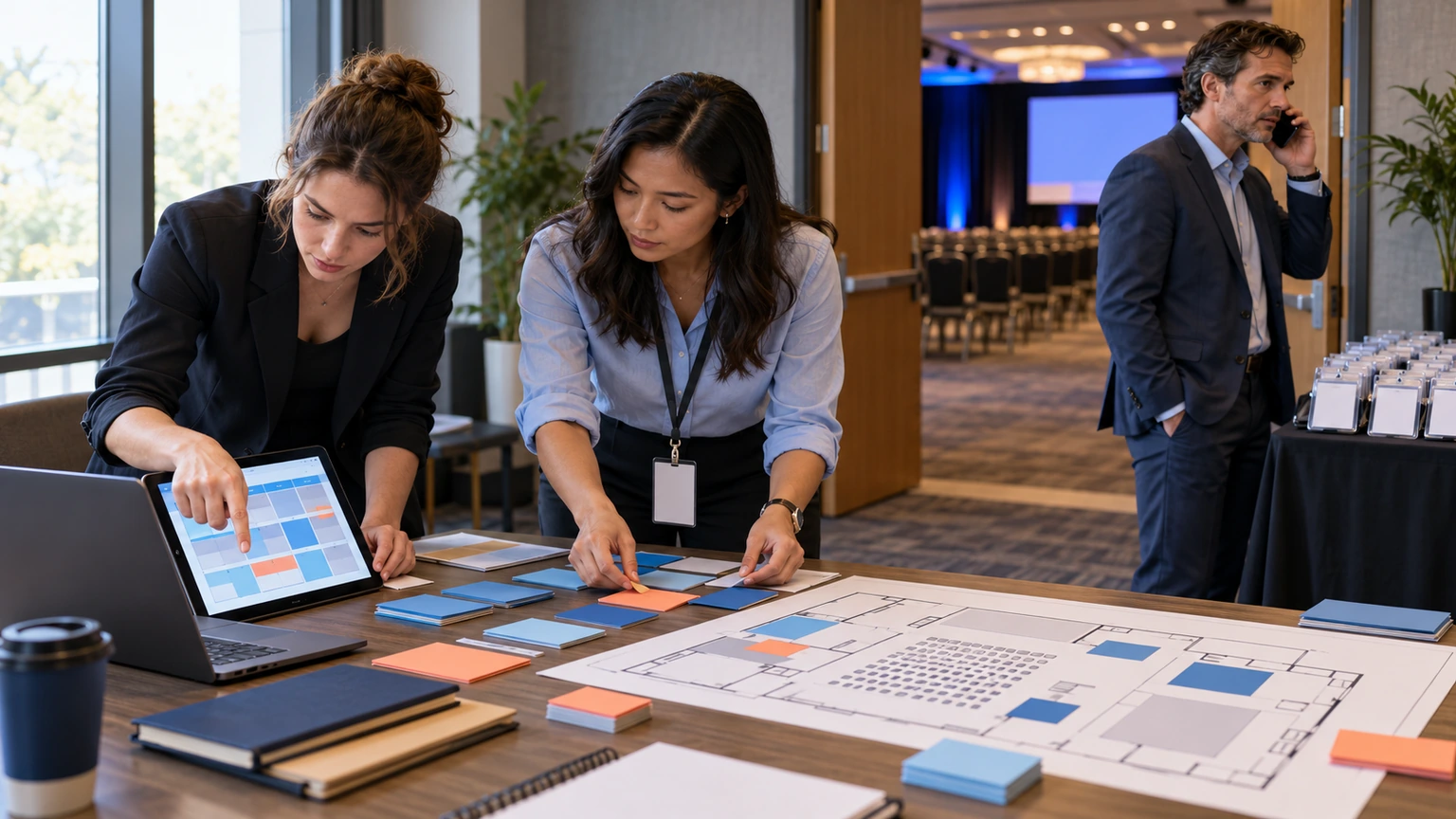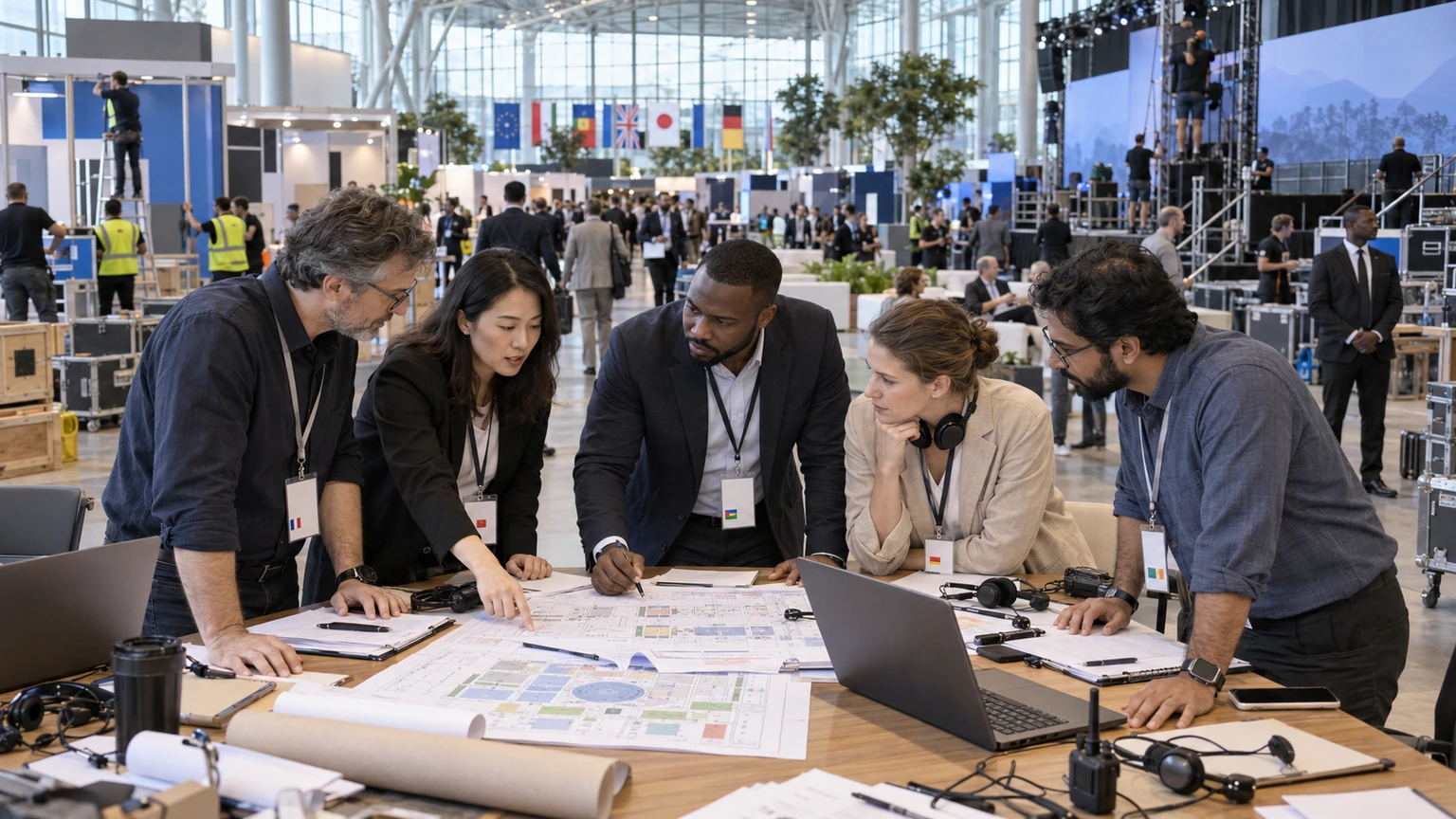
International tech conferences are hard to run well because the event itself is only one part of the operating challenge.
Organizers also need to manage cross-border travel, venue suitability, security coordination, speaker logistics, translation needs, exhibitor requirements, and a consistent attendee experience across time zones and formats.
The public signal behind this topic is useful: South Gyeongsang Province is hosting a global space industry conference in Jinju. That points to continued demand for large-scale, internationally focused conferences and exhibitions.
What it does not give us on its own is a full operating blueprint for that event, its staffing model, its technology stack, or its measured outcomes.
International conferences succeed when organizers treat logistics, content, security, and attendee movement as one connected system.
Why this matters for event operations
A domestic conference can absorb some inconsistency. An international one usually cannot.
More attendees are arriving with longer lead times, tighter travel dependencies, and higher expectations around clarity. Speakers may be crossing several time zones. Sponsors may be evaluating the event as both a lead-generation channel and a market-entry signal. Government, trade, or industry stakeholders may also be involved.
That raises the cost of weak coordination.
In practice, international tech conferences need stronger operating discipline in areas such as:
- venue and city selection
- visa and travel support communication
- multi-language attendee information
- agenda design across global audiences
- exhibitor and sponsor logistics
- on-site security and access control
- hybrid or remote participation planning
- clear ownership across local and central teams
What the public signal tells us, and what it does not
From the source idea provided, the confirmed signal is narrow but relevant: an internationally oriented space industry conference is being hosted in Jinju, backed by a regional government context.
That supports a practical discussion about how organizers should plan large, globally focused conferences.
What this source does not confirm on its own is:
- the exact venue model being used
- how international delegations are being managed
- what security or accreditation processes are in place
- which hybrid tools or workflows support remote audiences
- how sponsor packages are structured
- what attendance or satisfaction results will follow
That distinction matters. A public announcement can signal market demand. It does not remove the need for detailed operating design.
Public demand for international conferences is real. Operational success still depends on planning the unglamorous details early.
Start with the event blueprint, not the marketing plan
Many conference teams start by promoting the event before locking the operating model. For international events, that creates avoidable risk.
Your blueprint should answer a few basic questions first:
- Who is the event primarily for: buyers, founders, engineers, researchers, investors, policymakers, or partners?
- Is the event a conference, an exhibition, a hosted meetings program, or a combination?
- Which attendee groups require the highest service level?
- Which parts of the experience must work equally well for international and local attendees?
- What is the minimum viable hybrid experience, if remote participation is offered?
These decisions shape everything that follows, from room layouts to staffing plans.
Choose a venue that fits international movement, not just capacity
Venue selection for an international tech conference is not only about how many people fit in the building.
It is about how easily people can reach it, enter it, navigate it, and use it for different event modes.
When evaluating venues, focus on:
Accessibility
- distance from international airports and major hotels
- transfer reliability during peak arrival windows
- public transport and road access for local attendees
Operational suitability
- space for plenary sessions, breakouts, and exhibition zones
- back-of-house access for production and exhibitors
- secure entry points and accreditation areas
- good queueing space for check-in and badge collection
Technical readiness
- stable connectivity for production and attendee use
- AV infrastructure that supports simultaneous content tracks
- space and workflow support for streaming or recording
A beautiful venue that creates long transfers, weak load-in conditions, or poor attendee flow often becomes expensive in hidden ways.
Build the travel and arrival plan early
International attendees judge the event before they ever reach the venue.
If arrival communications are vague, support requests spike. If visa letters are slow, speaker confidence drops. If airport transfers are unclear, the first experience of the event becomes friction.
A practical arrival plan should include:
- published travel guidance with realistic timelines
- clear visa support instructions, where appropriate
- hotel blocks or recommended accommodation zones
- airport-to-hotel and hotel-to-venue transport advice
- emergency contact information for travel disruption cases
- speaker-specific arrival briefings and deadlines
Do not assume international guests will interpret local transport norms correctly. Spell out what the team thinks is obvious.
Design content tracks around audience pathways
Large tech conferences often overload the agenda with topics and under-design the attendee journey.
International audiences need clearer track logic because they have invested more time and cost to attend. They need to know which sessions matter to them and why.
A strong track structure usually separates by one or more of these dimensions:
- industry segment
- job function
- technical depth
- commercial maturity
- regional relevance
For example, a global tech conference may need distinct programming for investors, operators, engineers, public-sector delegates, and first-time market entrants.
That structure helps with more than discovery. It also improves room planning, speaker briefing, sponsor alignment, and signage.
Plan speaker operations like a logistics function
International speaker management often fails when it is treated as a content-only task.
In reality, it is a logistics function with editorial dependencies.
Your speaker process should cover:
- invite and confirmation timelines
- travel status tracking
- visa support needs
- presentation deadlines
- session format briefing
- green room and rehearsal planning
- backup options for delay, cancellation, or remote delivery
For high-profile or long-haul speakers, contingency planning matters. A remote dial-in backup, a standby moderator, or a session reshuffle protocol can protect the agenda when travel fails.
Treat security as part of attendee experience
Security at an international tech conference should be visible enough to build confidence, but not so clumsy that it damages flow.
This is especially important where senior officials, major investors, sensitive technology sectors, or large exhibition footprints are involved.
Event teams should align early on:
- access control levels for different attendee groups
- credential issuance and verification rules
- VIP movement routes
- bag check or screening requirements
- incident escalation roles
- coordination with venue security and local authorities
The goal is not maximum restriction. It is predictable movement with clear exception handling.
Make sponsor and exhibitor operations easy to understand
International sponsors and exhibitors usually need more support, not less. They may be shipping materials across borders, coordinating local staffing, or interpreting venue rules for the first time.
A practical exhibitor operations pack should include:
- move-in and move-out schedules
- shipping deadlines and restrictions
- customs or local handling guidance, if relevant
- stand build rules
- power, connectivity, and AV options
- staff pass allocation details
- on-site service desk contacts
If these instructions arrive late or in fragmented documents, exhibitor friction rises quickly. That usually lands back on the operations team during build days.
Define the hybrid model carefully
Not every international conference needs a fully featured hybrid experience. But if remote attendance is part of the promise, it needs a clear operating definition.
Be explicit about what remote attendees will actually get:
- live-streamed keynotes only
- selected breakout sessions
- on-demand replays
- virtual Q&A for certain sessions
- remote sponsor visibility
Problems start when marketing promises a hybrid event but operations plans for basic streaming.
It is better to offer a narrower remote experience clearly than a broad one inconsistently.
Support international attendees with simpler communication
International events often produce too much communication, not too little.
The issue is that messages are spread across channels, written with local assumptions, or sent too late to be useful.
A better structure is to organize attendee communications by stage:
- registration confirmation and key deadlines
- travel and accommodation guidance
- arrival and check-in instructions
- agenda planning and meeting booking
- on-site daily updates
- post-event follow-up
Whenever possible, write in plain language. Shorter sentences help more than clever copy. International attendees do not need more branding. They need fewer points of confusion.
Create one integrated control rhythm on site
International conferences usually involve more stakeholders: venue teams, production crews, local hosts, sponsors, security, transport, protocol teams, and content leads.
If each group operates in parallel without a common control rhythm, problems escalate slowly and get solved late.
A simple daily operating structure should include:
- morning leadership briefing
- clear issue log and owner assignment
- scheduled cross-functional check-ins
- real-time escalation path for attendee-impacting issues
- end-of-day reset review
This does not need to be bureaucratic. It needs to be consistent.
Where international conference teams often get stuck
1. They underestimate local complexity
A destination may look attractive on paper but create major transport, language, or supplier coordination challenges in practice.
2. They overbuild the agenda
Too many tracks create thin rooms, stressed speakers, and confused attendees. More content does not always create more value.
3. They separate content from operations
Programming decisions affect rooming, signage, staffing, interpretation, and production. These functions should not work in isolation.
4. They treat hybrid as an add-on
Remote participation changes production, moderation, support, and communication workflows. It cannot be solved the week before launch.
5. They wait too long to lock attendee communications
International attendees need more notice. Delayed instructions create avoidable support load.
A practical 90-day operating checklist
If the conference date is approaching and the team needs a working structure, start here.
By 90 days out
- confirm venue flow plan and room allocation
- lock core content tracks
- publish travel and hotel guidance
- finalize exhibitor manual
- set security planning cadence
By 60 days out
- confirm speaker travel status and backup needs
- finalize registration and check-in process
- test hybrid production scope
- issue operational briefings to sponsors and exhibitors
- freeze key signage and wayfinding assumptions
By 30 days out
- run cross-functional scenario reviews
- confirm staffing schedules and escalation paths
- publish final attendee arrival instructions
- check critical supplier readiness
- prepare incident and disruption playbooks
What this means for event teams
The signal from Jinju is not that every organizer should copy one conference model. The more useful takeaway is that internationally focused tech events continue to matter, and they require tighter execution than many domestic programs.
For event teams, the practical lesson is simple: build the conference as an operating system first. Then market it.
When venue logic, attendee movement, speaker logistics, security, content structure, and hybrid scope are aligned early, the event becomes easier to run and easier for attendees to trust.
That is what strong international conference execution really looks like.