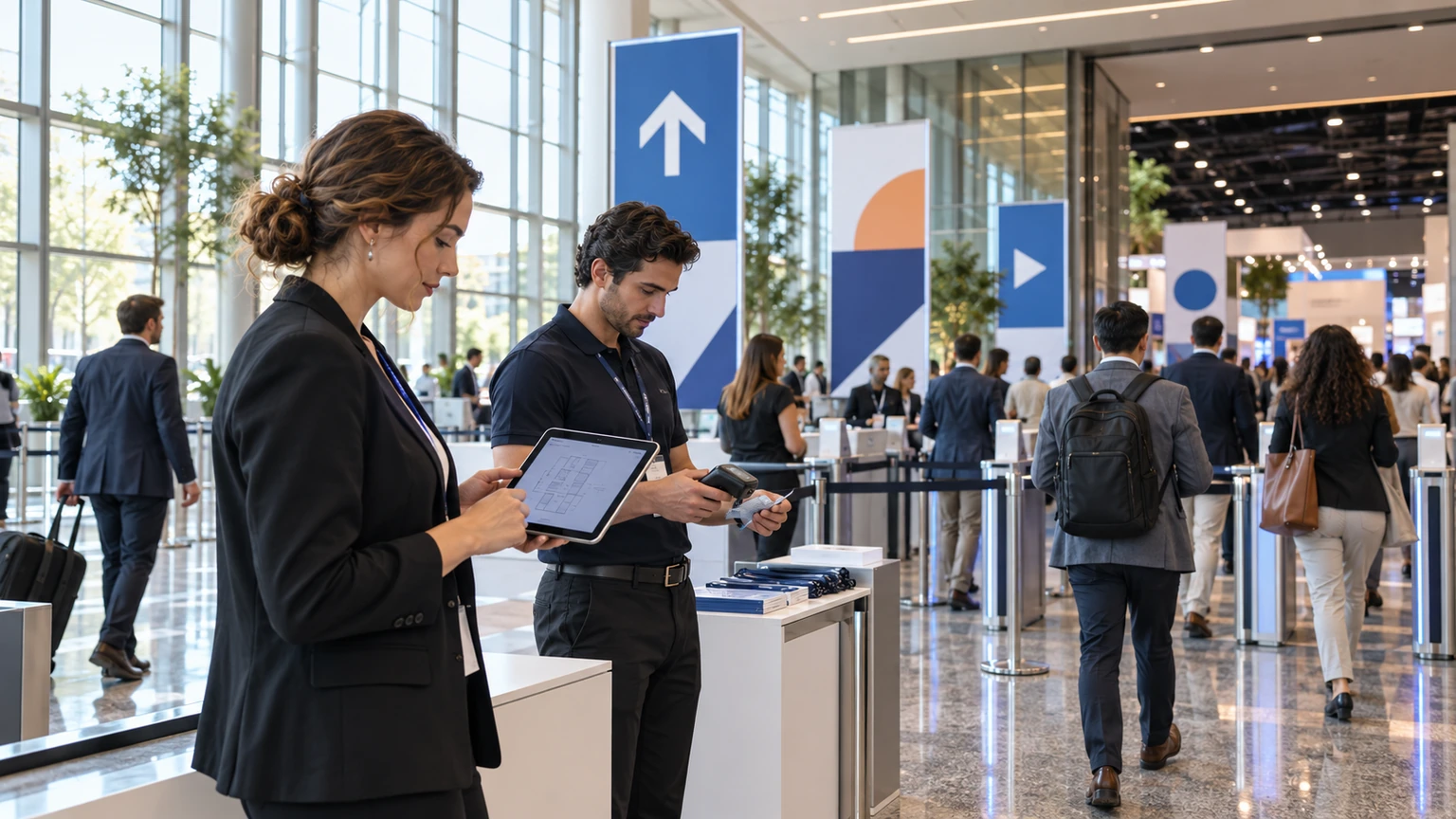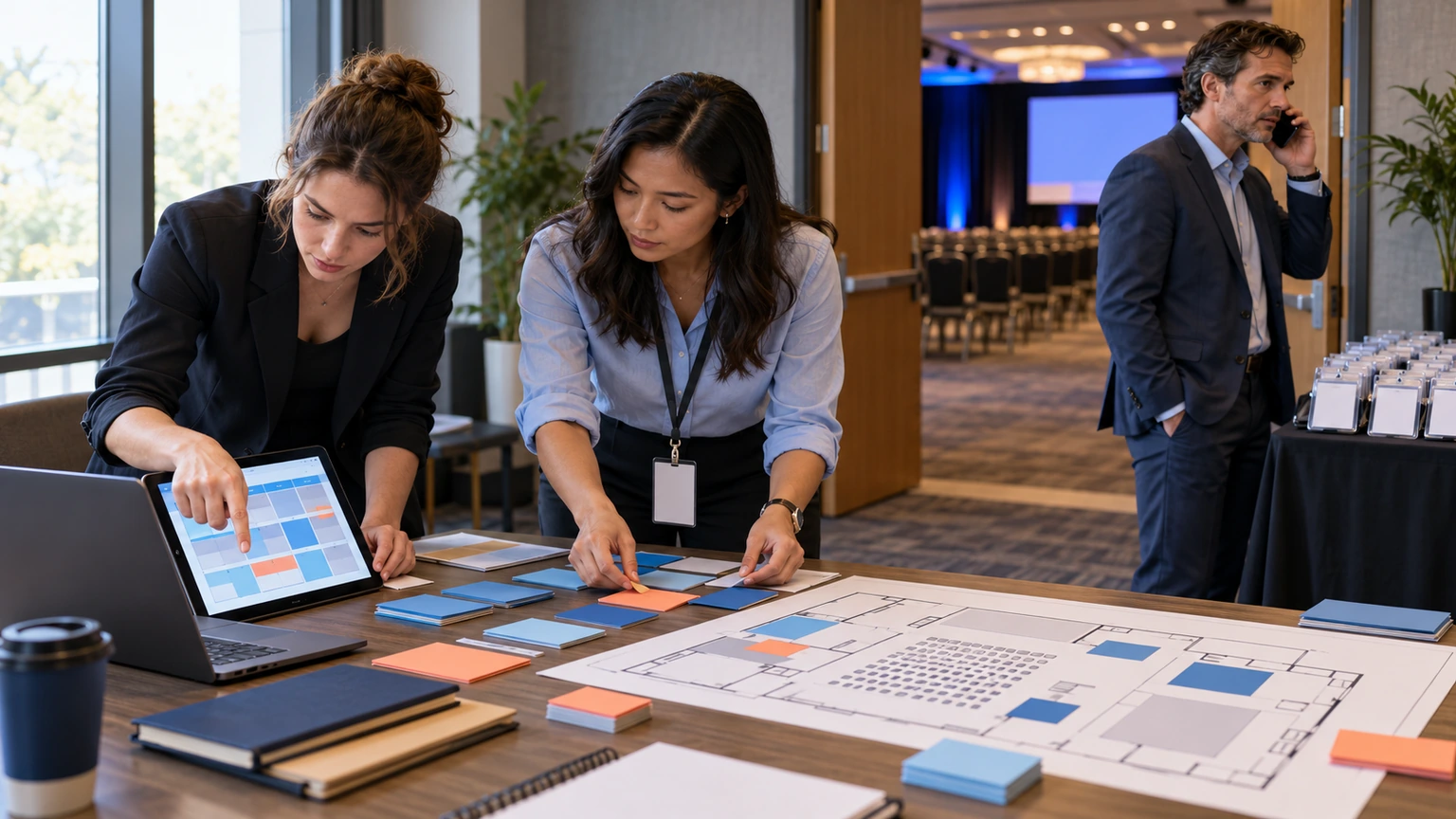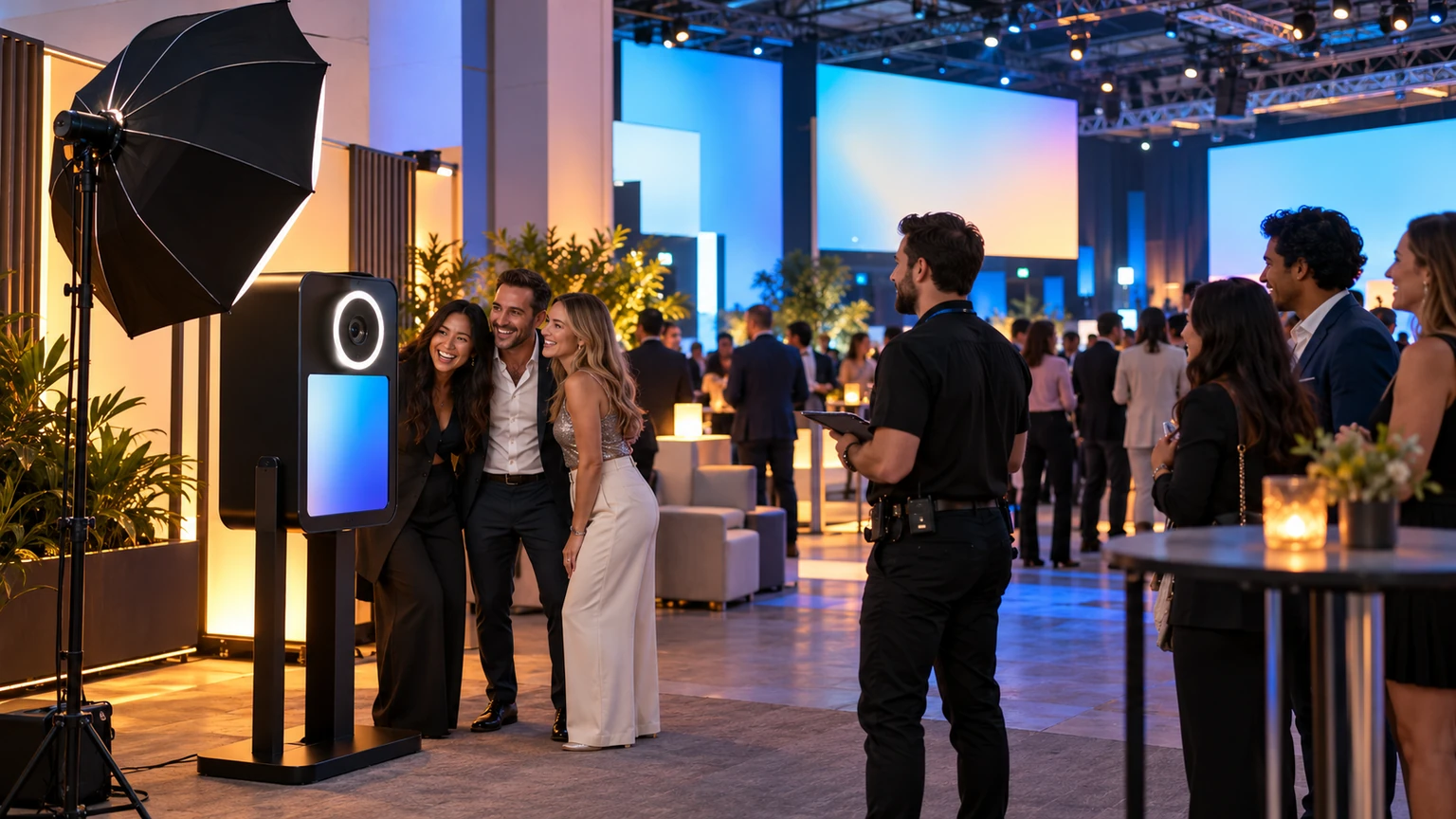
Attendee engagement technology is evolving from static activations to more responsive, data-aware experiences. Two areas drawing attention are AI-powered booths, especially photo-led activations, and intelligent lighting systems that adapt to timing, content, or crowd flow.
For event teams, the question is not whether these tools look impressive. It is whether they improve the attendee experience without creating new operational problems.
The public signal behind this topic is broad but relevant: market attention is moving from AI photo booths toward a wider conversation about intelligent lighting and experience-led event technology.
That is enough to support a practical discussion for organisers, experiential teams, AV leads, and venue technology managers.
New event technology earns its place when it improves flow, participation, or atmosphere in a way the team can actually operate.
Why this matters for event operations
Booths and lighting both sit close to the attendee experience, but they affect more than the moment itself. They can change how people move, where they stop, how long they stay, and what they remember afterwards.
Done well, these technologies can help teams:
- create clearer focal points on the show floor
- increase dwell time in sponsor or brand areas
- encourage participation from attendees who might not join a formal session
- shape the mood of a space throughout the day
- support content capture and social sharing
- make activations feel more dynamic without constant staff intervention
Done badly, they can create queues, confusion, overstimulation, technical dependency, and sponsor disappointment.
What the public signal tells us, and what it does not
From the source idea provided, the confirmed signal is limited but useful: event technology attention is shifting from AI photo booths to a broader conversation about intelligent lighting and the evolution of attendee-facing experiences.
What this does not confirm on its own is:
- which vendors or formats perform best in live conditions
- how much engagement lift organisers should expect
- what technical setup is required in different venue types
- which attendee groups respond most strongly
- how often these activations justify their cost
- whether AI features meaningfully outperform simpler booth formats
That distinction matters. Event teams can use the signal to guide planning, without pretending the market has already settled on one best approach.
A visible trend is not the same as operational proof. Event teams still need to test for fit, staffing, and flow.
What AI-powered booths usually change on site
AI-powered booths are often discussed as novelty. Operationally, they are better understood as high-attention participation points.
Whether the experience is photo-led, interactive, or personalised, the booth changes attendee behaviour in a few predictable ways.
1. They create a reason to stop
Many expo and foyer areas suffer from passive traffic. A booth gives attendees a clear prompt to engage, especially when the experience is fast, visible, and easy to understand from a distance.
2. They make participation more observable
When one attendee uses a booth, others notice. This can build momentum quickly, which is good for energy but risky for queue management.
3. They raise expectation for instant output
If the interaction involves AI-generated content, attendees usually expect a quick result. Delays that might be tolerated elsewhere feel much longer in a booth line.
4. They shift staffing needs
Teams may assume automation reduces labour. In practice, attendee-facing activations often still need staff for prompting, troubleshooting, pacing, and resetting the experience between users.
What intelligent lighting changes in the attendee experience
Lighting has always shaped events, but intelligent lighting adds responsiveness. Instead of treating lighting only as stage support or room wash, teams can use it more actively across the event journey.
In practical terms, intelligent lighting can help with:
- signalling that a session is about to start or end
- drawing attention to a sponsor activation or networking zone
- changing the mood between keynote, break, and evening segments
- supporting wayfinding through visual cues
- making a space feel more immersive without changing the physical build
This matters because atmosphere is operational, not just aesthetic. If attendees can read the room more easily, they make faster decisions about where to go and what to do next.
Where these technologies work best together
AI-powered booths and intelligent lighting are strongest when they are planned as part of one experience system, not as separate add-ons.
For example, lighting can help frame the booth area, pull attention at the right times, and make the activation feel intentional rather than dropped into a corner. The booth then gives attendees a concrete action to take within that visual environment.
That combination is often more useful than either element alone:
- a booth without environmental support can feel lost
- lighting without an interactive destination can feel decorative but underused
- together, they can improve visibility, energy, and participation
The planning point is simple: design the attendee path first, then place the technology inside it.
Questions organisers should answer before approving either one
What job is the activation doing?
Is it meant to drive sponsor traffic, create shareable moments, support networking, fill dead time, or reinforce event identity? If the team cannot answer this clearly, the technology is likely to be judged on looks alone.
What will success look like on site?
Useful measures may include participation volume, average wait time, completed interactions, sponsor satisfaction, attendee feedback, or how evenly traffic was distributed across the space.
Can the venue support it reliably?
This includes power, rigging or placement constraints, ambient light conditions, noise interaction, available footprint, network dependency, and safe crowd positioning.
Who owns live operation?
Someone needs clear responsibility for setup checks, go-live timing, attendee support, escalation, and shutdown procedures.
How to plan AI booths more practically
Keep the attendee instruction simple
If the booth needs too much explanation, throughput will suffer. People should be able to understand the action quickly by signage, staff cue, or seeing another person use it.
Design for line management
High-interest activations need a queue plan before doors open. That means defining entry and exit points, nearby waiting space, and what happens if interest spikes during breaks.
Prepare for variable output times
Anything that feels instant in a demo can slow down in a live environment. Build a plan for pacing and attendee communication if processing or handoff takes longer than expected.
Brief brand and legal stakeholders early
If the activation creates attendee-facing outputs, captures personal content, or is heavily branded, approvals should happen before show week, not on site.
How to use intelligent lighting without overcomplicating the show
Start with operational moments
Do not begin with effects. Begin with moments that need support: opening walk-in, session transitions, activation peaks, sponsor reveals, networking resets, and end-of-day changeovers.
Match lighting states to event rhythm
Attendees respond well when a space feels coherent. Lighting cues should support the programme, not compete with it.
Test for readability, not just drama
Lighting that looks strong in a production preview may work poorly for signage visibility, photography, accessibility, or staff communication. Test in real conditions where possible.
Coordinate with content and sound teams
Lighting decisions affect more than the lighting desk. Session producers, AV teams, exhibitors, and venue staff all need a shared understanding of timing and intent.
Where teams often get this wrong
- choosing the technology before defining the attendee outcome
- placing activations where queues block circulation
- understaffing supposedly self-service experiences
- using lighting effects that distract from content or make spaces harder to use
- treating sponsor excitement as proof of operational fit
- forgetting that reset, maintenance, and fallback plans matter as much as the launch moment
These mistakes are common because both booths and lighting are highly visible. Teams often focus on the reveal and underestimate the hours around it.
A simple operating checklist for event teams
- Define the attendee behaviour you want to change.
- Confirm whether a booth, lighting, or both are the right tools.
- Map the activation into traffic flow, not just available floor space.
- Assign operational ownership across vendor, organiser, and venue teams.
- Test setup timing, output speed, and crowd behaviour assumptions.
- Prepare fallback modes in case interaction volume or technical conditions change.
- Measure actual engagement, not just visual impact.
What this means for event teams
AI-powered booths and intelligent lighting can improve attendee engagement, but only when they are treated as operational design tools, not just technology features.
The opportunity is real: more responsive environments, stronger participation, and better sponsor or brand visibility. The risk is also real: adding complexity that looks modern but delivers little once the room fills up.
For most teams, the right approach is practical. Start with the experience problem, test in controlled ways, and judge success by what became easier, clearer, or more engaging for attendees on site.
That is usually where useful event technology proves itself.