
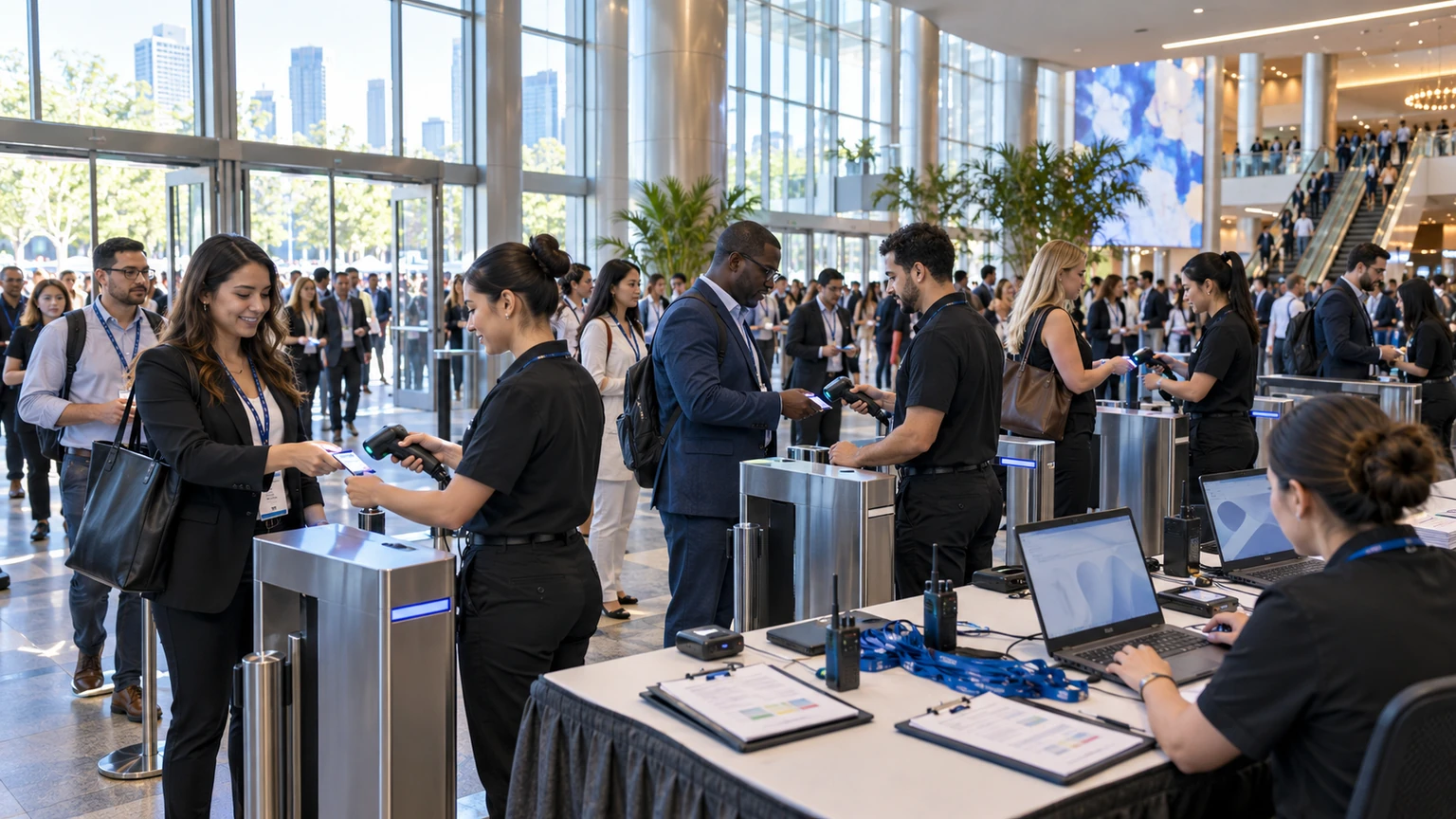
FAN EXPO’s reported selection of Showpass as its official ticketing and event technology partner is a useful signal for expo organizers.
On its own, that announcement does not give us a full implementation blueprint, a detailed scope of work, or verified performance data across every FAN EXPO event. But it does point to something operationally important: major expo organizers still see value in aligning ticketing and event technology under a more unified partner model.
For large conventions, fan events, trade shows, and multi-day expos, that matters because ticketing is rarely just a sales function. It touches entry flow, staffing, access control, attendee communication, reporting, and issue resolution across the whole event lifecycle.
A large expo does not feel fragmented only when the tech stack is fragmented. But fragmentation in ticketing and event operations often shows up first at the attendee-facing moments teams can least afford to get wrong.
Why this matters
Big expos create pressure in several places at once.
Organizers usually need to manage:
- high-volume onsales and pre-event changes
- multiple ticket types and access rules
- dense arrival windows
- VIP, guest, exhibitor, and staff exceptions
- on-site support across several desks or halls
- reporting needs for operations, finance, and partners
When those workflows sit across too many disconnected systems or vendors, teams often end up bridging the gaps manually. That is expensive in time, risky under pressure, and hard to scale.
A single official partner model may help reduce that operational drag, if the fit is right and the deployment is disciplined.
What the public signal actually tells us
From the information available here, the confirmed signal is narrow but meaningful: FAN EXPO has reportedly selected Showpass as its official ticketing and event technology partner.
That supports a practical discussion about what organizers should look for when evaluating a unified vendor relationship for large expos.
What it does not confirm on its own is:
- the exact technology stack in use across all events
- which workflows are fully integrated versus operationally coordinated
- how data governance is structured
- what service levels or performance targets were agreed
- which measurable outcomes drove the final decision
That distinction matters.
A partnership headline is a market signal, not a complete operating manual.
Why large expos often move toward a single operating partner
At small events, teams can sometimes absorb system gaps with manual effort. Large expos usually cannot.
The bigger the event, the more one weak handoff affects several teams at once. A ticketing issue can quickly become a queue problem, a staffing problem, a customer service problem, and a reputation problem.
That is why organizers often start looking beyond feature checklists and focus on coordination risk.
A more unified partner model can be attractive when organizers want:
- fewer handoffs between vendors
- clearer accountability
- more consistent attendee data handling
- faster response when issues appear on site
- less duplication across support, operations, and reporting
None of that guarantees success. But it reflects a real operational logic.
Where unified ticketing partnerships can streamline expo operations
1. Registration and entry flow
Entry is where attendees judge the event’s operational competence immediately.
If ticketing, check-in logic, and event-day support are tightly aligned, teams are usually better placed to handle common problems quickly:
- missing confirmations
- name mismatches
- ticket type confusion
- VIP or guest-list exceptions
- last-minute upgrades or changes
The goal is not perfection. It is faster triage, fewer unclear ownership gaps, and more consistent decisions at the front line.
2. Access management across audience types
Large expos rarely serve one simple audience. They may include general attendees, premium passholders, exhibitors, talent, media, sponsors, crew, and invited guests.
That creates complexity around who can go where, and when.
A single partner approach may help if it reduces ambiguity between ticket rules and on-site enforcement. Organizers should pay close attention to whether access logic is easy for staff to understand and easy to apply under pressure.
3. Attendee communications linked to live operations
Ticketing decisions affect communication more than teams sometimes expect.
When schedules shift, capacities change, or support issues spike, attendee messaging needs to reflect operational reality quickly. If those workflows are split between too many tools or owners, delays and inconsistencies appear.
Organizers evaluating partners should ask how well ticketing operations connect to practical customer communication before, during, and after the event.
4. On-site support and exception handling
Most event-day disruption comes from exceptions, not standard flows.
What matters is how quickly staff can identify the issue, confirm the correct action, and resolve or escalate it. That is where a fragmented vendor ecosystem can slow teams down.
Even if one partner does not perform every operational function directly, a clearer official partnership structure can make support paths easier to define.
5. Reporting and operational visibility
Large events need reporting for more than finance.
Operations leads often need a working view of demand, arrivals, ticket categories, exceptions, and service pressure. A unified setup may improve that visibility, provided reporting is built around operational use, not only end-of-month summaries.
What organizers should evaluate before choosing a single partner
For expo teams considering a similar move, the most useful questions are practical ones.
Operational fit
- Can the partner support your event format, scale, and audience mix?
- How well do they handle multi-day, high-density attendance patterns?
- Can frontline staff use the workflows confidently with limited friction?
Ownership and escalation
- Who owns event-day issue resolution?
- What happens when a problem crosses ticketing, access, and customer support?
- How quickly can decisions be escalated on site?
Data and security
- What attendee data is collected, shared, or retained?
- Who has access to operational data during the event?
- How are permissions, privacy, and security responsibilities managed?
Deployment discipline
- How are events configured, reviewed, and tested before launch?
- What is the change-control process for pricing, inventory, or access updates?
- How will the organizer verify that setup matches the event plan?
Support model
- What support is available before and during the event?
- Will experienced staff be present when attendee pressure is highest?
- How are peak-volume periods staffed?
Do not evaluate only the platform demo
Large expo buyers sometimes get pulled toward polished feature presentations. Those matter, but they are not enough.
The stronger evaluation model is to test the partner against real operational scenarios.
For example:
- A major queue builds at opening because one attendee segment has unexpected access issues.
- A premium ticket holder arrives with a confirmation problem during peak entry.
- An exhibitor needs urgent help after a registration or credentialing mismatch.
- A last-minute policy change affects attendee messaging and desk procedures.
Ask each vendor to explain the workflow, ownership, fallback plan, and escalation path for those situations.
That will usually tell you more than a broad product overview.
Where single-partner models can still fail
Consolidation does not automatically solve operational problems.
It can still fail when:
- internal processes are weak
- roles between organizer and vendor are unclear
- event setup is rushed
- staff training is too light
- data governance is treated as a legal checkbox instead of an operational issue
- the event relies on assumptions rather than tested workflows
In other words, one partner can reduce complexity, but it cannot compensate for a weak operating model.
The best vendor relationship is not the one with the most ambitious story. It is the one that makes live delivery more controllable when conditions get messy.
A practical selection checklist for expo organizers
If you are reviewing ticketing and event technology partners, use a checklist grounded in delivery:
- map every attendee type and access rule
- identify the highest-risk handoffs in your current setup
- define which workflows must be unified versus simply coordinated
- review data access and security responsibilities early
- test issue resolution using realistic event-day scenarios
- confirm who owns support during peak operational windows
- require a clear pre-launch testing and sign-off process
- measure success using queue time, resolution speed, error rate, and support load, not only ticket sales totals
Stay evidence-aware
The useful lesson from the FAN EXPO and Showpass announcement is not that every organizer should copy the same structure. It is that major event businesses continue to treat ticketing and event technology as a core operating decision, not a narrow procurement line item.
The evidence available here supports that strategic signal. It does not support broad claims about exact outcomes, technical architecture, or guaranteed performance.
That is the right way to read headlines like this: as prompts for better operational evaluation.
What this means for event teams
If you run a large expo, convention, or multi-day fan event, the real question is not whether a single official partner sounds simpler. It is whether that model will make your event easier to run when volume, exceptions, and pressure all rise at once.
For many organizers, that is the right lens.
Choose the partner model that improves accountability, speeds up resolution, and reduces avoidable operational handoffs. Then pressure-test it before the doors open.