Software spend does not always go down when budgets get tighter. What usually goes down is tolerance for overlap.
For event teams, that means the stack gets judged more like an operating system and less like a collection of nice-to-haves. If a tool does not help with registration, access, agenda, check-in, engagement, feedback, payments, or reporting, it starts to look expensive fast.
Consolidation is not just about buying fewer tools. It is about keeping the event record, the participant journey, and the day-of workflow in the same place.
Why consolidation shows up in event ops
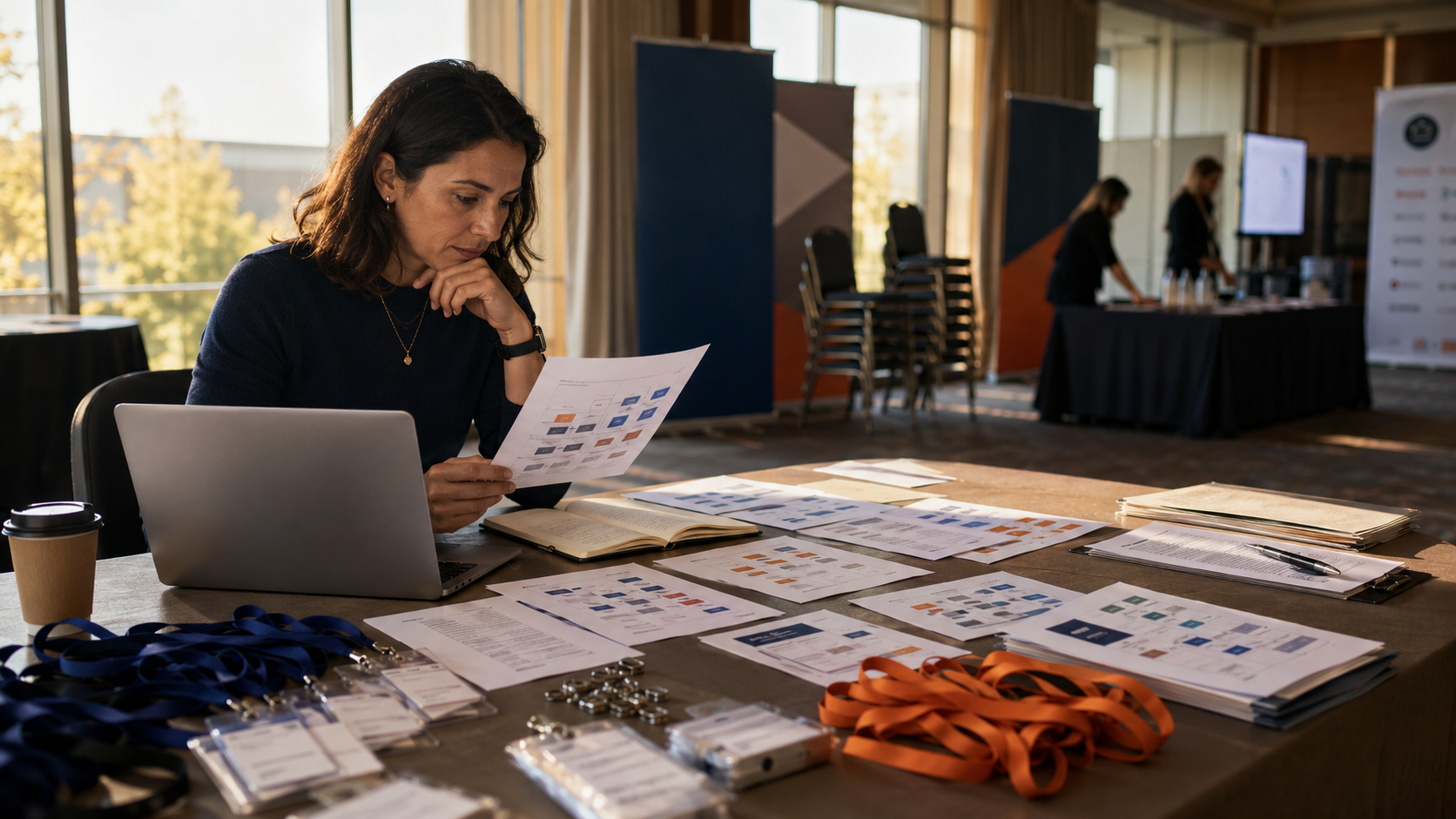
Events are full of recurring work. You need to open registration, manage participants, publish the agenda, run check-in, collect feedback, handle ticketing or payments where needed, and report back afterward. When each step lives in a different app, the team spends time translating instead of operating.
That usually creates the same problems:
- duplicate participant data
- extra logins for staff and attendees
- agenda changes that do not match the registration flow
- check-in instructions that live in a different place from the badge or participant app
- post-event reporting that has to be stitched together by hand
Consolidation becomes attractive when organizers want fewer handoffs and clearer ownership of event data.
What buyers look for when they rationalize the stack
Event tech buyers rarely ask, “What is the biggest platform?” They ask more practical questions:
- Can this keep registration, participant access, agenda, and check-in tied to the same event record?
- Can organizers manage modules without turning the workspace into a mess?
- Can participants join, see the right agenda, and access event-specific features in one flow?
- Can reporting pull from the actual event activity, not a pile of exports?
That is where a practical event workspace matters. Bewitt is built to help organizers run event operations in one place, with tools for registration, participant access, agenda management, check-in, engagement, feedback, branding, payments, and reporting.
Where Bewitt fits in a consolidated event stack
Bewitt is not trying to be every tool for every job. It is meant to be the event workspace where the core operational work stays connected.
That can include:
- Public and private event joining, including join codes and registration flows.
- Registration fields when you need custom attendee data collected during join.
- Agenda management so sessions, notes settings, and schedule changes stay inside the event.
- Check-in behavior that can be mixed, self, or staff-led depending on the event.
- Participant experience modules such as profiles, digital badges, networking, feedback, quizzes, missions, rewards, leaderboards, and QR scanning flows when enabled.
- Paid ticketing with ticket tiers, discount codes, comp tickets, and reporting where paid events are needed.
That is useful when the question is not “Can I add one more tool?” but “Can I remove three small ones without losing control?”
What consolidation should not mean
It should not mean forcing every event into the same setup. Bewitt supports module-based events, so organizers can enable what they need and leave the rest out of the way.
That matters because not every event needs the same combination of features. A simple registration-and-agenda event does not need the same setup as a team-based, ticketed, feedback-heavy program.
Good consolidation reduces clutter. It does not flatten the event into a one-size-fits-all template.
How to evaluate your current stack
If you are reviewing your event tools, start with the actual workflow:
- List the steps from first signup to final report.
- Mark where data is entered more than once.
- Identify the places where staff switch tools during the event.
- Check which tools are used only once or twice per event.
- Separate “nice to have” from “needed to run the event.”
If the same event data keeps moving between forms, spreadsheets, inboxes, and ticketing tools, consolidation is probably worth the conversation.
Where Bewitt can help
Bewitt gives organizers a practical way to keep core event work together: registration, participant access, agenda, check-in, engagement, feedback, payments, and reporting in one workspace.
That can make event stacks easier to maintain in a few ways:
- fewer handoffs between tools
- clearer participant records
- less duplicated setup for recurring events
- more consistent attendee journeys across public pages and the participant app
- reporting that stays closer to the live event record
If your current setup feels like a collection of short-term fixes, Bewitt is worth comparing against that workflow.
You can Book a Demo, start an event, or ask for a custom quote if the event is larger or more complex.