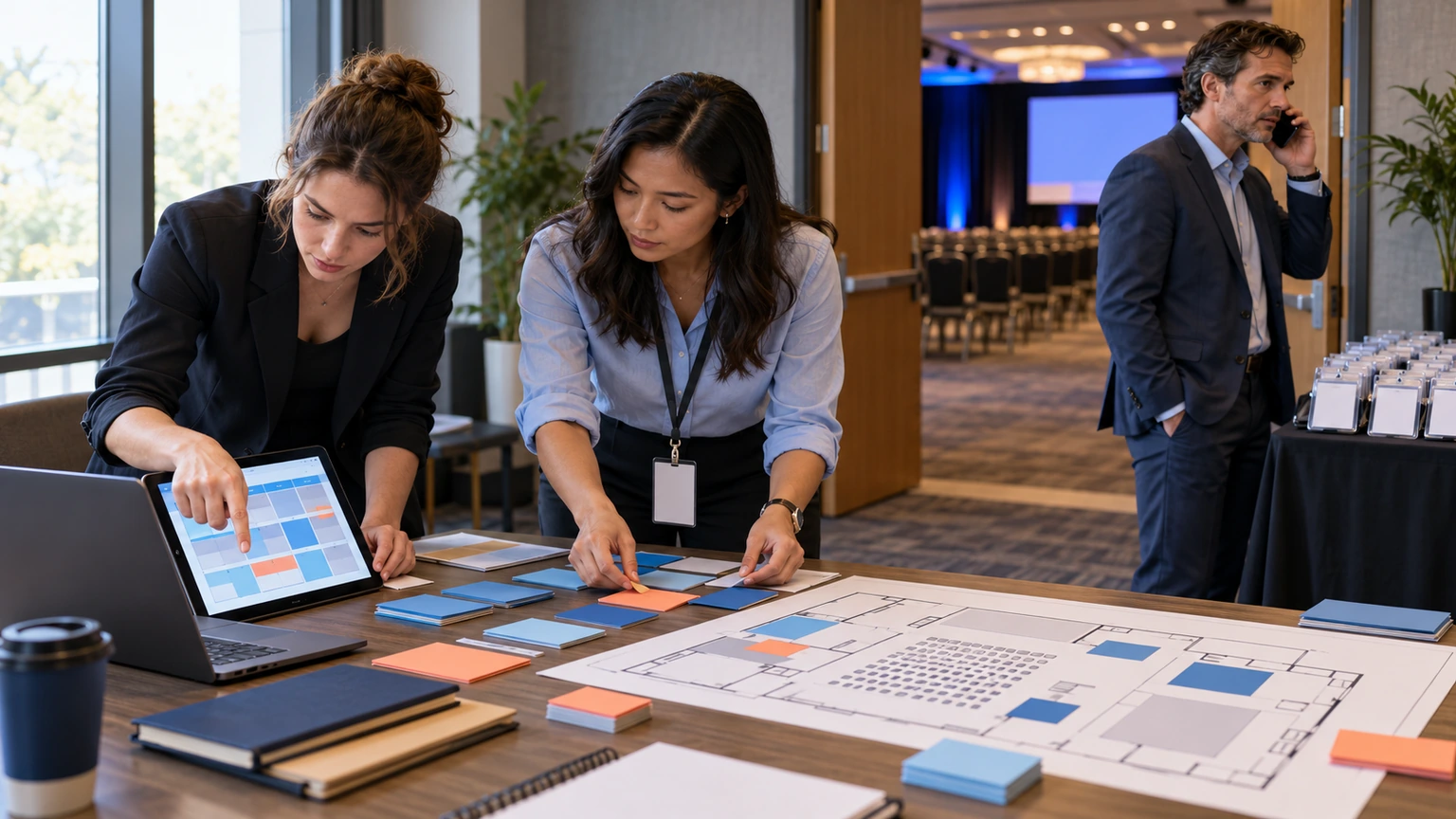
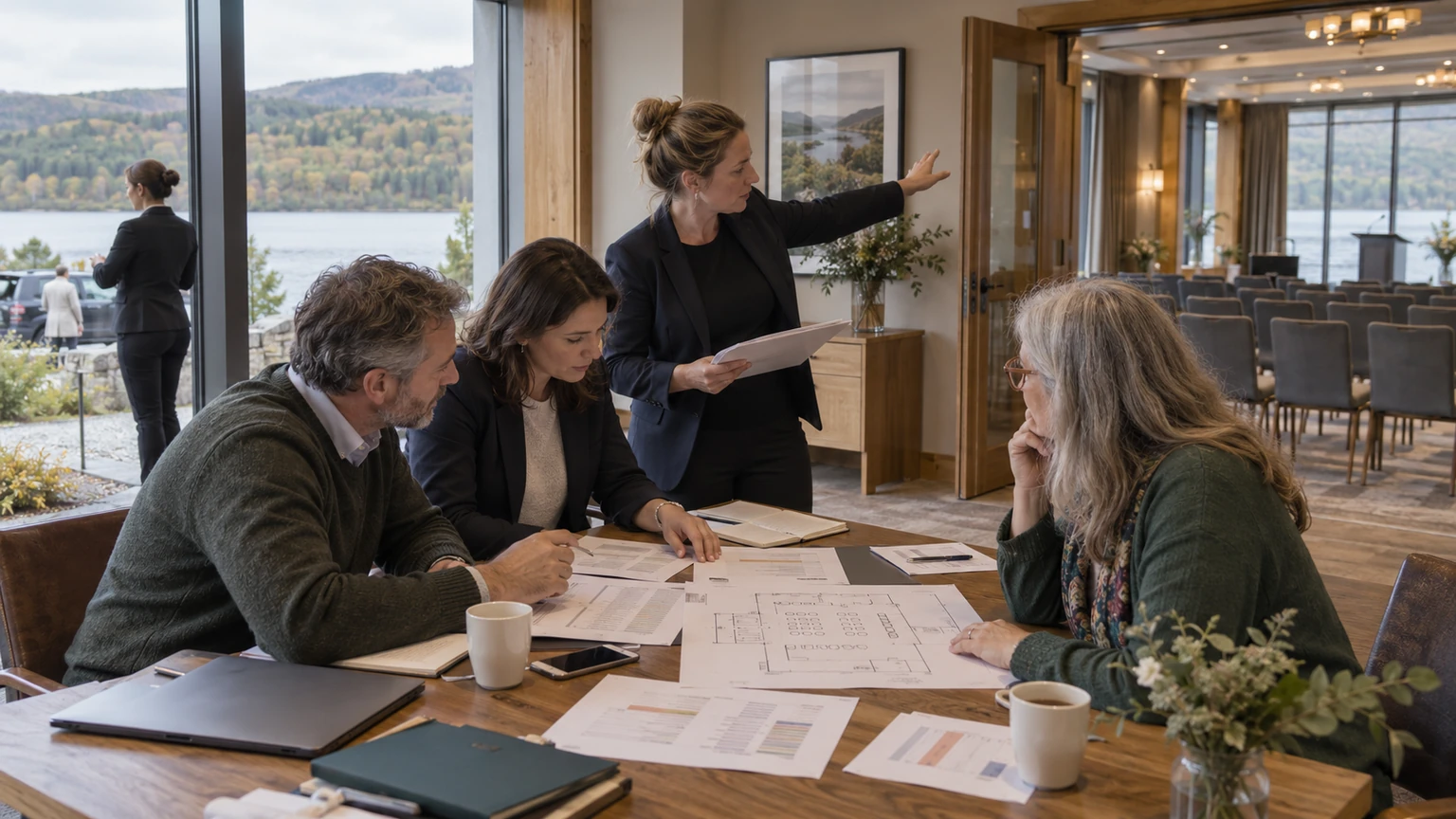
Fermanagh and Omagh are set to host Ireland’s IAAT Conference for adventure tourism at Lough Erne Resort on 25–26 November 2026.
That is a specific and useful regional conference planning signal. It tells us the event has a destination, a venue, a sector focus, and fixed dates. What it does not give us is the full operating model behind the conference.
For event organizers, venue managers, DMO teams, and local partners, that distinction matters. A regional conference is rarely just a smaller version of a national event. It has its own pressure points: travel patterns, local coordination, stakeholder visibility, and a higher expectation that the host place itself will contribute to the experience.
A regional conference succeeds when the operating plan treats the destination, venue, and delegate journey as one connected system.
Why this matters
Regional and niche conferences often look simple from the outside.
The attendee base may be more targeted. The scale may be more manageable. The venue may feel contained. But those advantages can hide real complexity.
Common challenges include:
- delegates arriving from different transport patterns and times
- local partners needing clear roles across hospitality, tourism, and event delivery
- programming that must balance industry relevance with destination value
- venue space that has to support sessions, networking, and informal meetings without friction
- small operational issues becoming more visible in close-knit professional communities
That is why regional conference planning needs discipline, not assumptions.
What the public signal actually tells us
From the information available here, the confirmed signal is limited but meaningful: Ireland’s IAAT Conference for adventure tourism is scheduled for 25–26 November 2026 at Lough Erne Resort, hosted in the Fermanagh and Omagh area.
That supports a practical discussion about regional conference planning best practices.
What this does not confirm on its own is:
- the expected delegate count
- the session format and track structure
- whether familiarization activities or off-site experiences are included
- the registration, sponsor, or exhibitor model
- the event technology stack used by the organizers
- the exact transport, staffing, and service plan
That distinction is important.
A conference announcement is a planning signal, not a complete operating blueprint.
Start with the real travel pattern
For regional conferences, travel planning is part of the attendee experience, not a side note.
Teams should map how delegates are actually likely to arrive, when peak arrivals will happen, and where friction may appear before guests even reach registration. This matters even more when the conference draws a mix of local, domestic, and cross-border attendees.
A practical planning review should cover:
- arrival windows on the day before and the first morning
- parking capacity and overflow logic
- coach, taxi, or shuttle coordination if needed
- clear pre-event communications on routes, timing, and check-in expectations
- departure patterns after the closing session
If travel feels uncertain, the event starts under tension. If it feels clear, the conference begins with trust.
Treat the venue as an operating environment, not just a backdrop
A resort or destination venue can create strong appeal, but event teams still need to test how it performs operationally.
The key question is not only whether the venue looks right for the conference. It is whether the venue supports the way the conference will move.
That includes:
- how close registration is to arrival points
- whether session rooms are sized for realistic demand
- how easily delegates can move between content and networking areas
- whether sponsor or partner presence fits naturally into attendee flow
- where informal meetings will happen without blocking circulation
Regional conferences often depend heavily on conversation, relationship-building, and low-friction networking. If people spend the day navigating bottlenecks or unclear layouts, the program loses value even when the content is strong.
Build the agenda around energy, not only topics
Niche and sector-specific conferences usually attract attendees who care deeply about the subject matter. That can tempt organizers to fill the agenda too tightly.
That is not always the best choice.
For a two-day conference, pacing matters. Delegates need enough structure to justify the trip and enough space to actually use the room. In many regional conferences, the useful conversations happen between sessions, after panels, or during hosted networking moments.
A more durable agenda design usually includes:
- a clear opening session that frames the event quickly
- realistic transition times between rooms or functions
- breaks that are long enough for networking, not symbolic only
- content sequencing that avoids putting similar sessions into direct competition
- a closing structure that ends cleanly for travelers
Good conference flow reduces crowding and decision fatigue at the same time.
Coordinate local stakeholders early
Regional conferences often involve more local visibility than large city events. Destination teams, tourism bodies, local authorities, hospitality partners, and host venues may all have an interest in the outcome.
That can be an advantage if roles are clear.
It becomes a problem when multiple groups are speaking to delegates, sponsors, or media without a shared operating picture.
A practical coordination model should define:
- who owns attendee communications
- who handles venue operations and on-site decisions
- who manages local partner relationships
- who approves program changes
- who responds to travel or service disruptions
Regional goodwill helps, but only when it is organized.
Make networking intentional
Smaller and mid-sized conferences often promise better access, more relevant conversations, and a stronger sense of community than larger trade events. That value does not appear automatically.
It needs design.
Organizers should think carefully about where and when delegates will naturally meet. A practical networking model often works better than a crowded social schedule.
Useful formats may include:
- hosted arrivals or opening receptions with clear purpose
- coffee breaks placed near partner or sponsor activity
- topic-led roundtables
- short facilitated introductions for first-time attendees
- protected free time for peer discussion
The goal is not more networking on paper. It is better interaction in practice.
Plan for sponsor and partner visibility without disrupting the conference
Regional conferences often rely on sponsor, destination, or sector-partner support. That support needs to feel integrated, not forced.
Attendees respond better when sponsor visibility fits the event workflow. For example, partner presence near registration, breaks, or relevant content areas usually works better than isolated exposure that delegates must go out of their way to find.
Teams should ask:
- where will sponsors actually meet delegates
- what traffic moments matter most
- which sponsor benefits require staffing support
- how will partner activity be measured after the event
If sponsor value depends on accidental footfall, the plan is too weak.
Keep communications simple and local
Regional event communications should help people make decisions quickly.
That usually means less promotional language and more practical detail. Delegates need to know where to go, when to arrive, what to expect, and how the event will run.
Pre-event messaging should clearly cover:
- dates, venue, and check-in timing
- travel and parking guidance
- accommodation expectations, if relevant
- agenda highlights without overwhelming detail
- contact routes for support
- any weather, dress, or local conditions that may affect the experience
For conferences tied to place-based sectors like tourism, this matters even more. The destination is part of the event story, but operational clarity still comes first.
Prepare for exceptions on site
Regional conferences can feel intimate, which sometimes leads teams to manage changes informally. That is where avoidable errors appear.
Last-minute speaker updates, attendee substitutions, dietary issues, room changes, and VIP requests should still follow a clear process.
A compact on-site control model should include:
- one live source of truth for registration and status changes
- a named owner for rooming, agenda, and attendee updates
- a clear escalation path for venue and guest issues
- staff briefings at the start of each event day
- one method for communicating urgent changes to delegates
Small conferences do not need less control. They need control that is easier to use.
A practical checklist for regional conference planning
- confirm how attendees will realistically travel in and out
- test venue flow from arrival to closing, not just room capacity
- build the agenda around pacing, networking, and movement
- define stakeholder roles before public communications begin
- place sponsors where attendee interaction will naturally happen
- keep delegate communications practical and specific
- create a simple on-site exception process before the event opens
What organizers should not assume
There are a few common mistakes in regional conference planning.
- do not assume a respected venue removes the need for flow testing
- do not assume a niche audience will tolerate poor pacing because the topic is relevant
- do not assume local partnerships will coordinate themselves
- do not assume smaller scale means lower operational risk
- do not assume strong destination appeal can compensate for unclear logistics
Each of these assumptions can weaken a conference that otherwise has a strong concept.
What this means for event teams
The IAAT 2026 signal is useful because it highlights the kind of event many organizers and venues work on regularly: a sector-focused regional conference with destination relevance and a clearly defined host setting.
The operational lesson is straightforward. Regional conferences work best when planners connect venue function, local coordination, attendee flow, and networking design from the start.
That is usually what separates a conference that feels well hosted from one that simply takes place in a good location.
For event teams, the opportunity is clear: plan the region, the venue, and the conference as one experience.