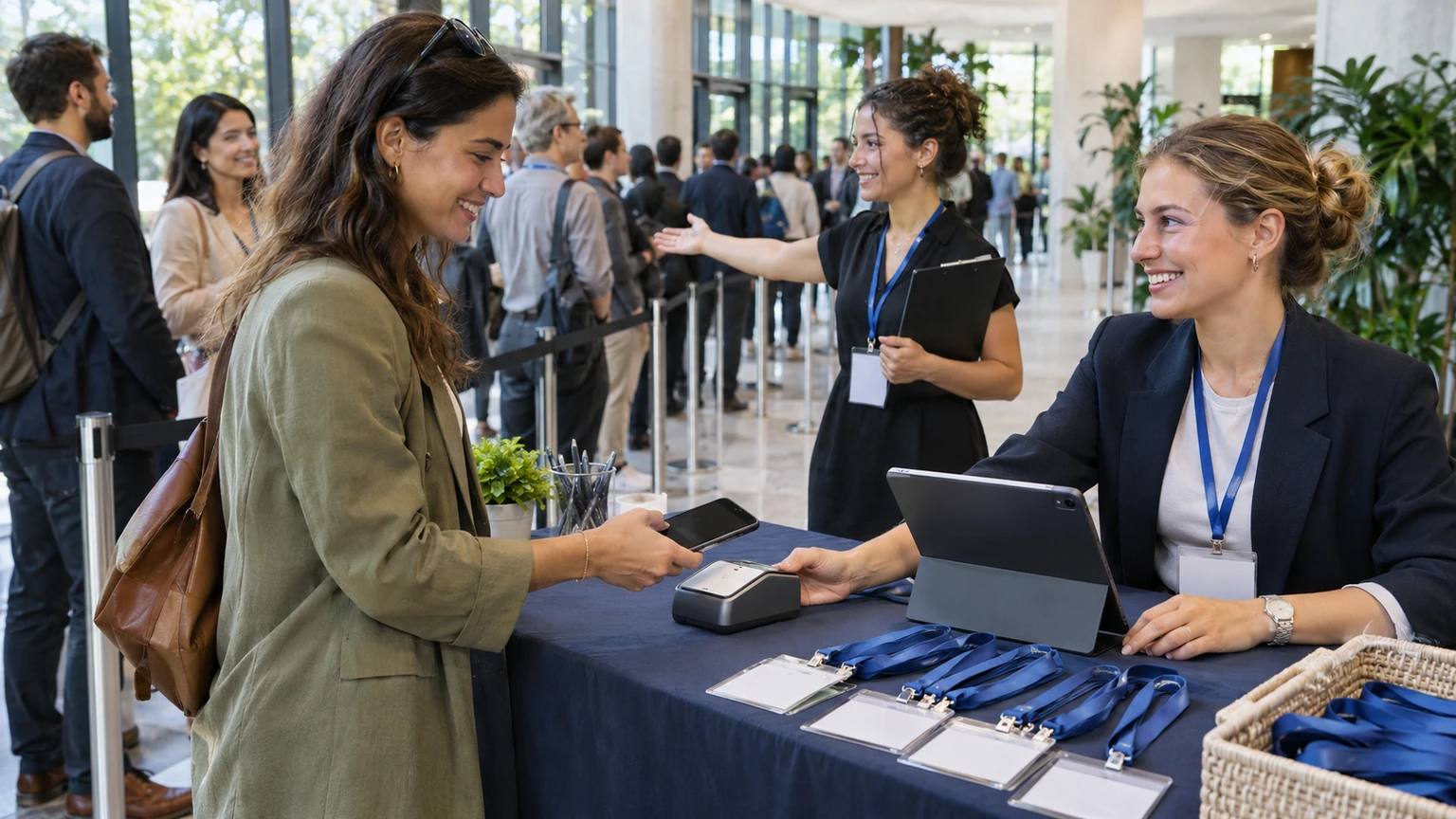

Cvent Accelerate Dubai 2026 offers a useful public signal for event teams: AI is now firmly part of the conversation around event-led growth.
That matters, but it should be handled carefully. A conference highlight or market narrative can show where attention is moving. It does not, on its own, prove which AI uses are operationally sound, commercially valuable, or ready for every organiser.
Still, the direction is clear enough to support a practical question: where can AI genuinely help event growth, without creating more noise, risk, or manual clean-up for the team?
For event operators, the best AI use cases are usually the least theatrical ones. They reduce friction, improve timing, or help teams make simpler decisions faster.
Why this matters for event operations
Event growth is rarely one single problem. It usually sits across registration conversion, audience targeting, content relevance, sponsor value, attendee experience, and post-event follow-up.
That is exactly why AI gets attention in this space. Many of those workflows involve repeated decisions, large volumes of data, or communication tasks that are time-sensitive and difficult to personalise manually.
For organisers, venue operators, and event tech buyers, the operational interest is straightforward:
- can AI help teams work faster without lowering quality
- can it improve attendee and exhibitor decision-making
- can it surface patterns that teams would otherwise miss
- can it support growth without adding headcount at the same pace
Those are sensible questions. But they should be tested against real workflows, not broad claims.
What the public signal tells us, and what it does not
From the source idea provided, the confirmed signal is narrow but relevant: Cvent Accelerate Dubai 2026 highlighted AI's role in event-led growth and reflects broader AI adoption across event technology ecosystems.
That is enough to justify a practical discussion about where AI may fit into modern event operations.
What this source does not confirm on its own is:
- which specific AI tools delivered the best results
- what return organisers actually measured after deployment
- which use cases performed well across different event formats
- how difficult implementation was for teams with limited technical capacity
- whether attendees responded positively to every AI-assisted touchpoint
- which governance controls were in place behind the scenes
That distinction matters. Market momentum is real. Operational value still needs to be earned.
AI in events should be evaluated like any other operating change: by workflow impact, adoption, accuracy, and risk, not by how often it appeared on stage.
Where AI can be practically useful for event growth
1. Audience segmentation and targeting
One of the most credible areas for AI is helping teams work through large audience lists more intelligently.
Instead of treating all prospects the same, teams can use AI-assisted analysis to identify groups based on likely interest, behaviour patterns, ticket type, geography, company profile, or prior engagement.
Operationally, this can help with:
- prioritising outreach lists
- adjusting messaging by audience segment
- spotting underperforming registration cohorts early
- identifying similar prospects to past high-value attendees
The practical benefit is not that AI replaces marketing judgment. It helps teams narrow where attention should go first.
2. Faster content and campaign iteration
Event marketing often slows down because small teams need to produce many variations of emails, landing page copy, session descriptions, reminders, and follow-up messages.
AI can help teams generate first drafts faster, test message angles, and adapt copy for different audience segments.
Used well, this shortens production time. Used badly, it creates generic messaging that sounds efficient but converts poorly.
That means human review still matters, especially for tone, clarity, and factual accuracy.
3. Agenda and content insight
Growth depends heavily on whether the event content matches what the market actually wants.
AI can be useful here when it helps teams process large volumes of input, such as survey responses, session feedback, call-for-content submissions, or recurring attendee questions.
This can support better decisions on:
- which themes deserve more space in the programme
- where content appears repetitive or too broad
- which audience concerns are rising fastest
- which formats people seem to prefer
That is especially helpful when conference teams need to make content decisions quickly across multiple tracks.
4. Attendee support and information retrieval
Many event teams lose time answering repeat questions: where to collect badges, when doors open, how to find a room, what a pass includes, or where a shuttle departs.
AI-assisted support can help reduce that load if the underlying information is current and well structured.
The real value is not novelty. It is consistency and speed.
If attendees can get accurate answers faster, staff can focus more attention on exceptions, VIP handling, sponsor needs, and on-site problem solving.
5. Sales and sponsorship follow-up
Event growth is not just about attendee numbers. It also includes sponsor retention, exhibitor renewal, and better commercial follow-up after the event.
AI can help teams organise notes, summarise interactions, flag likely follow-up priorities, or sort leads into practical next steps.
That may improve speed after the event, which is often where revenue opportunities are lost.
But teams should be cautious. Commercial follow-up is sensitive, and low-quality automation can damage relationships quickly.
6. Forecasting and planning support
Another realistic area is decision support for planning.
If AI tools help organisers interpret historical patterns, teams may get earlier signals around likely registration pacing, content demand, staffing pressure points, or audience mix shifts.
This can be useful for operational choices such as:
- when to increase promotional activity
- which sessions may need larger rooms
- where staffing cover may be too thin
- which audience segments are lagging against plan
That kind of support is often more valuable than headline-grabbing automation because it improves planning discipline.
Where event teams should be careful
AI can create new operational problems if adoption is rushed.
Common pressure points include:
- poor data quality feeding weak outputs
- staff over-trusting summaries or recommendations
- generic copy reducing brand credibility
- unclear accountability when outputs are wrong
- privacy and compliance concerns around attendee data
- fragmented tool usage across teams
These are not abstract issues. In events, bad information spreads quickly. One wrong answer to attendees, one weak sponsor follow-up, or one misleading recommendation can create hours of manual recovery.
A practical framework for choosing AI use cases
Before adopting any AI workflow, event teams should ask a few grounded questions.
1. Is the workflow frequent enough to matter?
If the task happens rarely, the AI layer may add more setup than value. Repeated, high-volume, time-sensitive workflows are usually better candidates.
2. Is the input data reliable?
Weak inputs create weak outputs. If attendee records, campaign data, content tags, or support information are inconsistent, AI will not fix the underlying problem.
3. Does the task require accuracy, creativity, or judgment?
Some tasks can tolerate a rough first draft. Others cannot. Badge rules, access policies, sponsor deliverables, and travel instructions require much tighter control than brainstorming subject lines.
4. Who owns review and approval?
Every AI-assisted workflow should still have a human owner. That person needs to know what the tool is allowed to do, what must be checked, and what should never be published automatically.
5. Can the result be measured?
If the team cannot define success, adoption will drift into opinion. Choose use cases where outcomes can be observed, even with simple measures.
Examples might include response time, conversion rate, staff hours saved, content turnaround time, or attendee satisfaction with support.
A sensible starting sequence for organisers
Most event teams do not need a broad AI rollout. They need one or two controlled wins.
A practical sequence could look like this:
- map the workflows that consume the most repetitive effort
- pick one low-risk use case with clear ownership
- define the input data and approval steps
- run a limited pilot before the event or on one event segment
- measure output quality, time saved, and team adoption
- expand only if the workflow is genuinely better
This approach is less exciting than an enterprise transformation narrative, but it is usually more useful.
Examples of good early-stage AI candidates
For many teams, better first use cases may be:
- drafting and refining segmented email copy
- summarising survey feedback into recurring themes
- supporting FAQ responses from approved event information
- organising sponsor or sales notes after meetings
- flagging registration trends that need manual review
These are easier to test than more ambitious use cases that depend on deep systems integration or fully automated attendee-facing decisions.
Where teams often get this wrong
The main mistake is buying into AI as a category instead of solving a specific operating problem.
Other common mistakes include:
- trying to automate high-risk workflows too early
- assuming faster output means better output
- failing to clean and structure source data
- leaving legal, privacy, or compliance review too late
- measuring success only by internal enthusiasm
In events, practicality matters more than ambition. A smaller workflow that works consistently is worth more than a large AI plan that staff do not trust.
What this means for event teams
The signal from Cvent Accelerate Dubai 2026 is useful because it reflects where the market is heading: AI is becoming part of event-led growth discussions, and event technology buyers will keep seeing more of it.
That does not mean every team should move quickly, or broadly. It means teams should get more disciplined about identifying where AI can reduce friction, improve relevance, or support better decisions in daily operations.
The strongest near-term advantage will probably go to organisers who stay selective. They will treat AI as an operating tool, not a brand statement.
If the workflow is repetitive, measurable, and reviewable, AI may help. If it is unclear, high-risk, or poorly governed, it is better to slow down and design the process first.