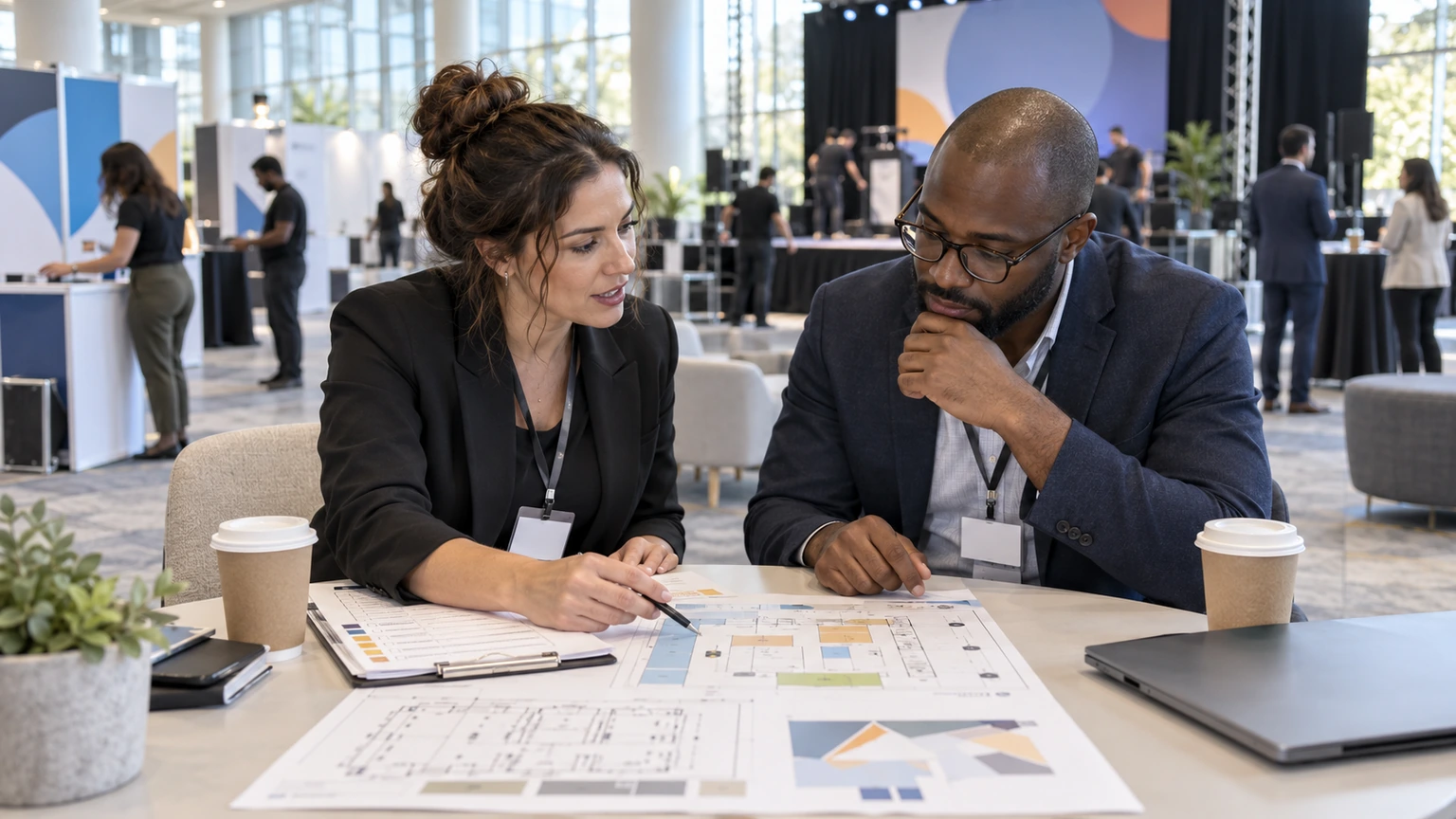
A reported example of Tolaram backing ARCON 2026, alongside a call for stronger collaboration, is a useful signal for conference organizers.
On its own, that public signal does not give us the full sponsorship structure, the commercial terms, or the exact delivery model behind the partnership. But it does point to something operationally important: strong conference sponsorships are rarely only about logo placement. They work better when they are built around mutual value, credible alignment, and clear execution.
For event producers, sponsorship teams, and conference organizers, that matters because sponsor revenue is only one part of the equation. The real challenge is building partnerships that improve the event without creating extra friction for attendees, speakers, exhibitors, or staff.
A sponsorship deal may start as a commercial conversation, but it succeeds or fails in operations.
Why this matters
Many conferences still approach sponsorship too narrowly.
The conversation often starts with inventory: stage branding, booth space, lanyards, email mentions, app banners, VIP access. Those assets matter, but they are not the whole picture.
Large or ambitious sponsors usually want more than visibility. They want relevance, credibility, access to the right audience, and a role that makes sense within the event.
That creates a practical challenge for organizers. If the partnership is not structured carefully, sponsors can end up with unclear expectations, weak activation, and disappointing results.
Common failure points include:
- sponsor packages built before audience needs are defined
- poor fit between sponsor category and conference theme
- too many overlapping partner rights
- late-stage activation requests that disrupt operations
- unclear ownership across sales, content, and event delivery teams
- post-event reporting that does not match what sponsors actually value
None of these issues are unusual. All of them can be reduced with a more disciplined approach.
What the public signal actually tells us
From the material available here, the confirmed signal is limited but useful: Tolaram reportedly backs ARCON 2026, and the surrounding discussion emphasizes stronger collaboration.
That is enough to support a practical discussion about sponsorship strategy for conferences.
What it does not confirm on its own is:
- the exact sponsorship tier or rights package
- whether the backing is financial, strategic, or both
- how the sponsor will activate before or on site
- which measurable outcomes both parties expect
- how the collaboration will be governed operationally
That distinction matters.
A partnership headline is a useful market signal, not a full operating blueprint.
Why cross-industry collaboration can raise conference value
Some of the strongest conference partnerships come from adjacent industries, not only the event's core sector.
That can be valuable when the sponsor brings one or more of the following:
- access to new audiences
- commercial credibility in the host market
- distribution or community reach
- thought leadership that fits the agenda
- infrastructure, hospitality, or operational support
- brand strength that helps attract other partners
Cross-industry collaboration works best when it adds something practical to the event ecosystem. It should not feel random or forced.
For example, a sponsor from outside the conference's main vertical may still be a strong fit if it helps expand attendance, deepen executive participation, support networking, or strengthen the event's position in a region or business community.
Start with sponsor fit, not just sponsor size
Big-name backers attract attention, but name recognition alone does not make a partnership valuable.
Before pitching or accepting a sponsor, ask a more operational set of questions:
- why does this brand make sense for this audience
- what role can it play without distorting the event
- will attendees understand the connection
- can the sponsor contribute beyond signage
- does the internal event team have capacity to support the activation well
A smaller but well-aligned partner often performs better than a larger sponsor with weak relevance.
This is especially true for conferences where trust, expertise, and peer exchange matter more than mass-market exposure.
Build sponsorship around conference objectives
Good sponsorship sales starts with a clear event strategy.
If the conference team cannot define what the event needs most, sponsor packages tend to become generic. That makes it harder to attract serious backers and harder to deliver measurable value later.
Start by deciding which outcomes matter most:
- funding growth without raising ticket prices
- improving content quality
- expanding market reach
- adding executive hospitality
- supporting networking programs
- strengthening exhibitor participation
- improving attendee experience
Then map sponsor opportunities to those goals.
For instance, if the priority is better networking, the sponsor package should not stop at branding. It may need hosted meetups, facilitated introductions, lounges, or invitation-based side events that the operations team can realistically deliver.
Where sponsorships usually create the most operational value
1. Content support
Sponsors can help expand the program through thought leadership, research, guest speakers, or curated sessions.
But this needs clear boundaries. Editorial standards should stay with the organizer, even when sponsors contribute expertise.
2. Experience enhancement
Some sponsorships work best when they improve the attendee journey directly.
This may include:
- better hospitality areas
- networking formats
- arrival or registration support
- transport coordination
- coffee breaks or hosted receptions
These activations tend to land well when they are genuinely useful, not overly promotional.
3. Market credibility
A respected sponsor can signal that the conference matters. That may help with speaker recruitment, delegate confidence, and additional partner outreach.
This is often one reason organizers pursue anchor sponsors early.
4. Ecosystem building
Cross-industry sponsors can help connect the conference to investors, operators, trade groups, buyers, policymakers, or new commercial communities.
That is where collaboration can become more strategic than transactional.
Do not sell packages before defining rights clearly
One of the fastest ways to create sponsor frustration is to oversell benefits that are hard to deliver cleanly.
Before outreach begins, define:
- which assets are exclusive
- which assets can be shared across tiers
- what the sponsor receives before, during, and after the event
- which team owns delivery of each benefit
- what deadlines apply to creative, approvals, and activation requests
- what is not included unless separately agreed
This reduces last-minute confusion and protects the event team from scope creep.
It also makes the sales conversation more credible. Serious sponsors usually respond better to clarity than to inflated menus of loosely defined benefits.
Create one sponsorship plan that operations can actually run
Many sponsorship programs look strong on paper and then break down because too much is promised too late.
A practical sponsorship plan should connect commercial commitments to event delivery in one place.
That plan should cover:
- contracted rights and deadlines
- brand asset collection
- speaker or content approvals
- booth or activation requirements
- VIP guest allocations
- staffing contacts
- on-site support needs
- reporting expectations after the event
If these details live across scattered email chains, the risk usually shows up in the final weeks.
A practical outreach model for conference teams
1. Build a short list by relevance
Start with organizations that match the audience, the region, or the conference theme. Do not begin with the broadest possible list.
2. Lead with the event case
Show who attends, why they attend, what business problems they care about, and where the sponsor could add value.
3. Offer role-based packages
Instead of only gold, silver, and bronze tiers, consider sponsor roles tied to actual conference functions, such as networking partner, knowledge partner, hospitality partner, or industry ecosystem partner.
4. Keep proposals operationally realistic
Every promised benefit should have an owner, a timeline, and a feasible execution path.
5. Discuss measurement before signing
Do not wait until after the event to decide what success means.
What sponsors often care about most
Not every sponsor values the same outcomes.
Some care most about visibility. Others care about access, meetings, thought leadership, or market positioning.
A practical discovery process should clarify:
- who the sponsor wants to reach
- whether the goal is awareness, lead generation, relationship building, or category presence
- which audience segment matters most
- what activation format they can support internally
- what evidence they will expect after the event
This helps avoid mismatched expectations later.
If a sponsor wants qualified executive conversations, a branding-heavy package may underperform. If a sponsor wants broad visibility, a small private dinner may not be enough on its own.
Measurement should be planned before the event
Post-event reporting is often too vague because the metrics were never agreed properly.
Conference teams should define a reporting framework early, based on what was actually promised.
That may include:
- attendance numbers for sponsored sessions or activations
- meeting volumes or hosted introductions
- lead counts, if appropriate and compliant
- engagement with sponsored networking spaces
- brand visibility delivery across agreed placements
- qualitative feedback from sponsor stakeholders
The point is not to inflate reporting. It is to make it useful.
The best sponsor recap is not the longest one. It is the one that connects agreed objectives to what actually happened.
What organizers should not assume
It is easy to overread public partnership news.
From the signal available here, organizers should not assume that every conference needs a large corporate backer, that every cross-industry sponsor will be a natural fit, or that collaboration automatically produces better outcomes.
Success still depends on the basics:
- clear alignment
- realistic rights packaging
- strong internal coordination
- timely sponsor management
- measurable delivery
Without those elements, even a high-profile sponsor can create more work than value.
A compact checklist for conference sponsorship planning
- Define the event objective: growth, revenue, credibility, networking, audience expansion, or experience improvement
- Prioritize sponsor fit: sector relevance, audience logic, market presence, and activation potential
- Clarify rights: exclusivity, shared assets, deadlines, and deliverables
- Align internal teams: sales, content, ops, marketing, and on-site support
- Keep activations practical: useful for attendees and manageable for staff
- Agree success measures early: not only after the event
- Report against promises made: with honest, usable outcomes
What this means for event teams
The reported support for ARCON 2026 and the call for stronger collaboration offer a simple but valuable reminder: sponsorship is strongest when it functions as a partnership, not just a placement sale.
For conference teams, that means treating sponsor strategy as part of event design and event operations at the same time.
If you want better backers, build clearer roles. If you want better collaboration, define how it will work in practice. And if you want sponsorships that elevate the conference, sell what the event can deliver well, then run it with discipline.