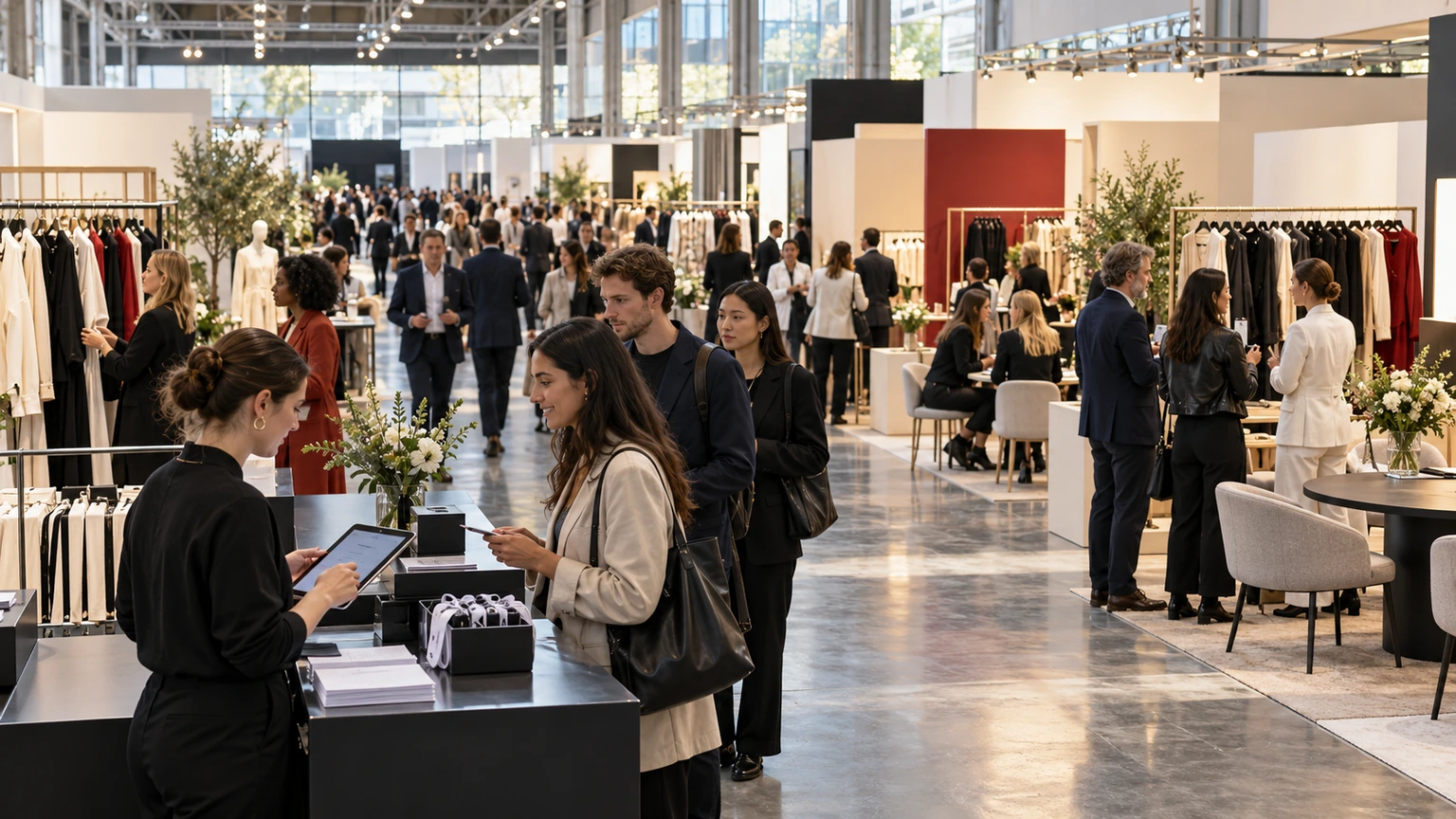
Fashion trade shows often look glamorous from the outside, but operationally they are dense, time-sensitive business events. Buyers, brands, exhibitors, media, staff, and venue partners all need different things, often at the same time.
A useful public signal here is that fashion trade-show activity remains active in regional markets, including coverage around Shoesstar Almaty in FashionNetwork. That matters because it reinforces a practical point: fashion exhibitions still depend on strong delivery, and growth usually increases operational complexity faster than teams expect.
For organisers, expo managers, and fashion event planners, the question is not whether to add technology for its own sake. It is which tools actually help a show scale while keeping registration, exhibitor support, buyer flows, and on-site coordination under control.
In fashion trade shows, scale is not just about selling more space. It is about handling more people, more meetings, more exceptions, and more pressure without breaking the attendee and exhibitor experience.
Why this matters for event operations
Fashion trade shows have some of the same needs as any exhibition, but the operating model can be more demanding. Organisers may be balancing product discovery, wholesale relationships, seasonal timing, brand presentation, and a mix of commercial and media attention.
As a show grows, pressure tends to rise in a few predictable places:
- registration and badge collection before doors open
- buyer and exhibitor segmentation
- appointment and meeting coordination
- lead capture and follow-up expectations
- staff communication during live show hours
- changes to access, schedules, or exhibitor needs on site
Without good systems, teams often compensate with manual work, spreadsheets, messaging threads, and last-minute desk decisions. That may work at smaller scale, but it becomes harder to sustain as the exhibition expands.
What the public signal tells us, and what it does not
From the source idea provided, the confirmed signal is narrow but useful: fashion trade shows remain active, and Shoesstar Almaty has been covered by FashionNetwork as part of that ongoing market activity.
That is enough to support a grounded discussion about how fashion exhibitions can use event technology more practically as they scale.
What this does not confirm on its own is:
- which exact event platforms any specific show uses
- how its registration or buyer workflows are structured
- what exhibitor service model is in place
- which technology integrations are live
- what measurable outcomes any one organiser achieved
That distinction matters. The market signal supports the topic. It does not justify claiming a specific stack, workflow, or result for an individual event.
Evidence-aware event planning starts with known operational demands, then matches technology to those demands without assuming every trade show needs the same setup.
Where event tech helps most in fashion trade shows
Registration and check-in
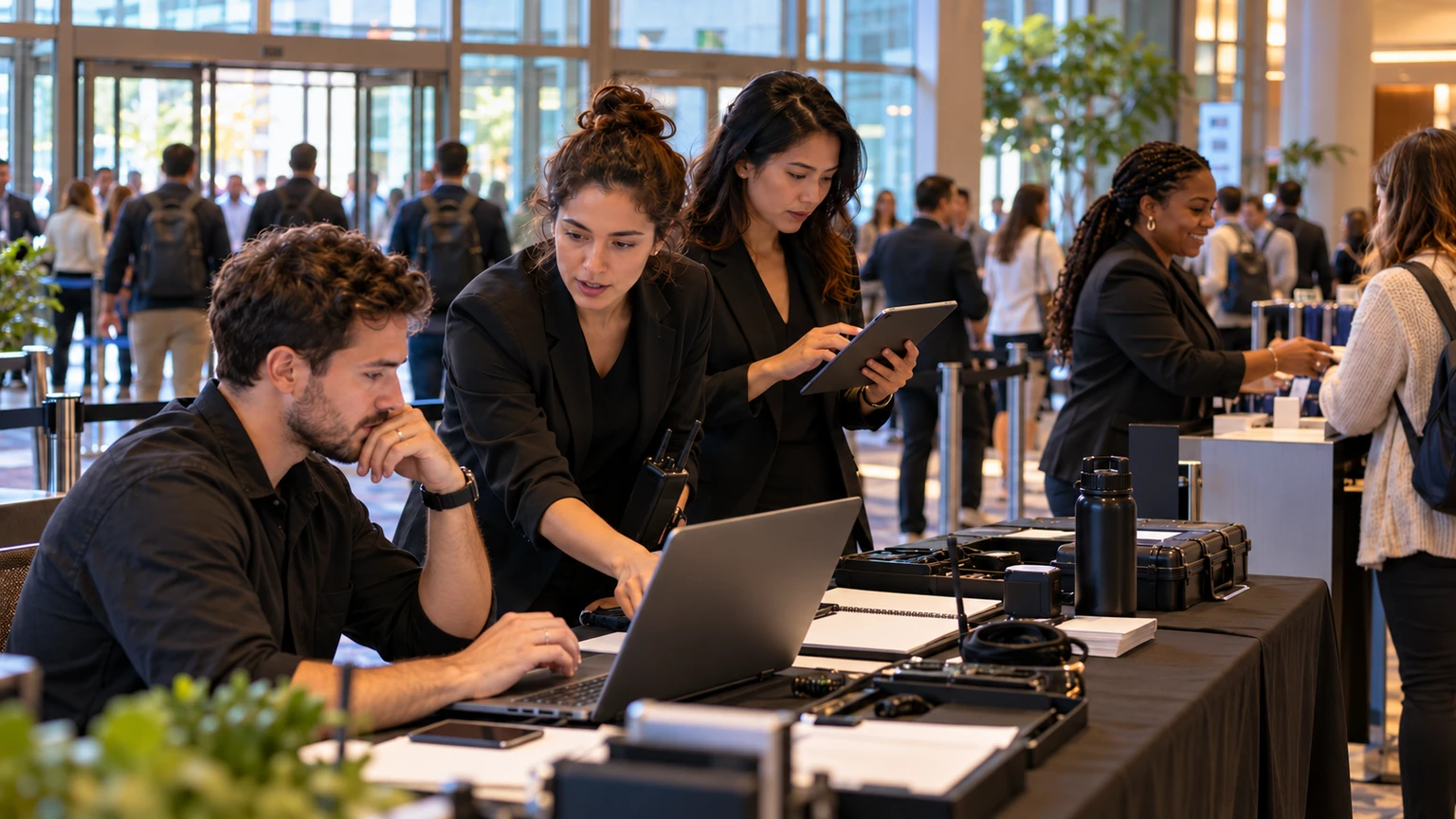
The first scaling challenge is usually entry. Fashion shows often attract a mix of exhibitors, retail buyers, invited guests, media, partners, and staff. If registration rules are unclear or slow to process, queues build quickly and the event starts under pressure.
Useful registration workflows should help teams manage:
- different pass types and access levels
- fast attendee lookup and badge handling
- corrections, duplicates, and walk-ins
- clear separation between approved and general access where needed
The operational goal is simple: frontline staff should be able to solve common issues quickly without escalating every exception.
Buyer and exhibitor management
Fashion trade shows are not only about footfall. They are usually judged by the quality of commercial interactions. That means buyer and exhibitor data needs to be organised well enough to support outreach, approvals, service, and reporting.
As scale increases, organisers benefit when systems make it easier to:
- maintain accurate exhibitor records
- segment buyers by profile or relevance
- track who needs special handling before arrival
- keep sales, operations, and on-site teams aligned on the same information
If these records are fragmented, teams start making decisions from inconsistent data. That creates avoidable confusion both before and during the show.
Lead capture for exhibitors
Exhibitors need a reliable way to capture buyer interest. In practice, this matters as much as the show design or visitor numbers, because exhibitors often assess value through the quality and usability of leads collected on site.
Organisers do not need to overcomplicate this. They should focus on whether lead capture is:
- easy for exhibitors to use under live conditions
- quick enough to avoid missed conversations
- structured enough to support follow-up after the event
- supported clearly by training or guidance before the show opens
A feature that looks advanced in a demo but is awkward in a busy booth will not perform well where it matters.
Meeting and appointment support
Many fashion trade shows rely on structured meetings, informal buyer introductions, or scheduled appointments. This is one of the clearest areas where growth increases coordination pressure.
Technology can help if it reduces manual back-and-forth and gives teams better visibility into:
- who is meeting whom
- when and where meetings are happening
- which participants need reminders or updates
- where scheduling conflicts are building
Not every event needs a complex hosted-buyer model. But when meetings are central to the event's value, organisers should treat appointment flow as an operational system, not a side task.
How scaling changes the operating model
At small size, a fashion exhibition can often run on personal knowledge and manual coordination. Senior staff know key exhibitors, buyer lists are manageable, and exceptions can be handled informally.
As the event grows, that model starts to strain. More exhibitors mean more service requests. More buyers mean more segmentation and communication. More foot traffic means more pressure at entry points and help desks.
This is where event tech becomes less about innovation and more about consistency. Teams need shared records, clearer workflows, and faster visibility into what is happening across the show floor.
In practical terms, scaling usually means moving from:
- individual knowledge to team-wide visibility
- manual fixes to repeatable workflows
- reactive communication to structured updates
- basic attendance counting to more useful post-event reporting
What organisers should prioritise first
Not every fashion trade show needs to digitise every process at once. In many cases, the best approach is to strengthen the workflows that create the most friction today.
1. Fix entry and attendee data first
If registration is slow or records are inconsistent, every downstream process becomes harder. Start with clean attendee categories, faster check-in, and reliable frontline access to attendee information.
2. Improve exhibitor-facing workflows next
Exhibitors notice operational quality quickly. If organiser communication is fragmented, lead capture is weak, or service questions go unanswered, confidence drops. Simple, dependable exhibitor workflows usually matter more than adding flashy features.
3. Strengthen internal coordination
Many live-event problems are not caused by missing features. They are caused by teams working from different versions of the truth. Shared status visibility, clear handoffs, and fast issue escalation often produce more value than adding another standalone tool.
4. Treat reporting as an operational output
Post-event reporting should not be an afterthought. Buyers, exhibitors, sponsors, and internal leadership often want a clear view of attendance, participation, and outcomes. Systems should make that easier, not create another manual reconciliation project after the show closes.
Where organisers should be careful
Fashion events can be especially vulnerable to buying technology based on brand positioning rather than operational fit. A polished interface or strong sales story does not guarantee the tool will hold up during live delivery.
Common mistakes include:
- buying too many disconnected tools
- underestimating staff training needs
- ignoring exception handling at check-in
- assuming exhibitors will adopt features without guidance
- adding complexity to workflows that should stay simple
Organisers should also be careful about over-customising early. Unless a workflow is truly central to the event model, heavy custom setup can create support burden without enough operational benefit.
A practical checklist for evaluating event tech for fashion exhibitions
Before committing to a new platform or workflow, organisers should ask a few grounded questions:
- Which live operational problem is this solving?
- Will frontline staff be able to use it under pressure?
- Can exhibitors understand it without extensive hand-holding?
- How will exceptions be handled on site?
- Will this reduce manual work, or just move it somewhere else?
- What reporting will we need after the event?
- How many teams need access to the same data?
If the answers are vague, the implementation risk is probably higher than it appears.
What good looks like
A well-run fashion trade show does not feel technological for its own sake. It feels organised. Attendees get in without unnecessary delay. Exhibitors know what to do. Buyers can navigate meetings and discovery efficiently. Staff can solve issues without chasing information across multiple systems.
That is the real value of event tech in this setting. It should support commercial activity and reduce avoidable friction, especially as the exhibition becomes larger or more ambitious.
What this means for event teams
The continued visibility of fashion trade shows in regional markets is a reminder that exhibitions still grow on operational discipline, not just industry momentum.
For event teams, the practical lesson is clear: scale should be supported by better workflows before it is supported by more complexity. Start with registration, exhibitor and buyer data, lead capture, and team coordination. Then build from there.
In fashion trade shows, good technology does not replace good operations. It makes good operations easier to repeat at a larger scale.