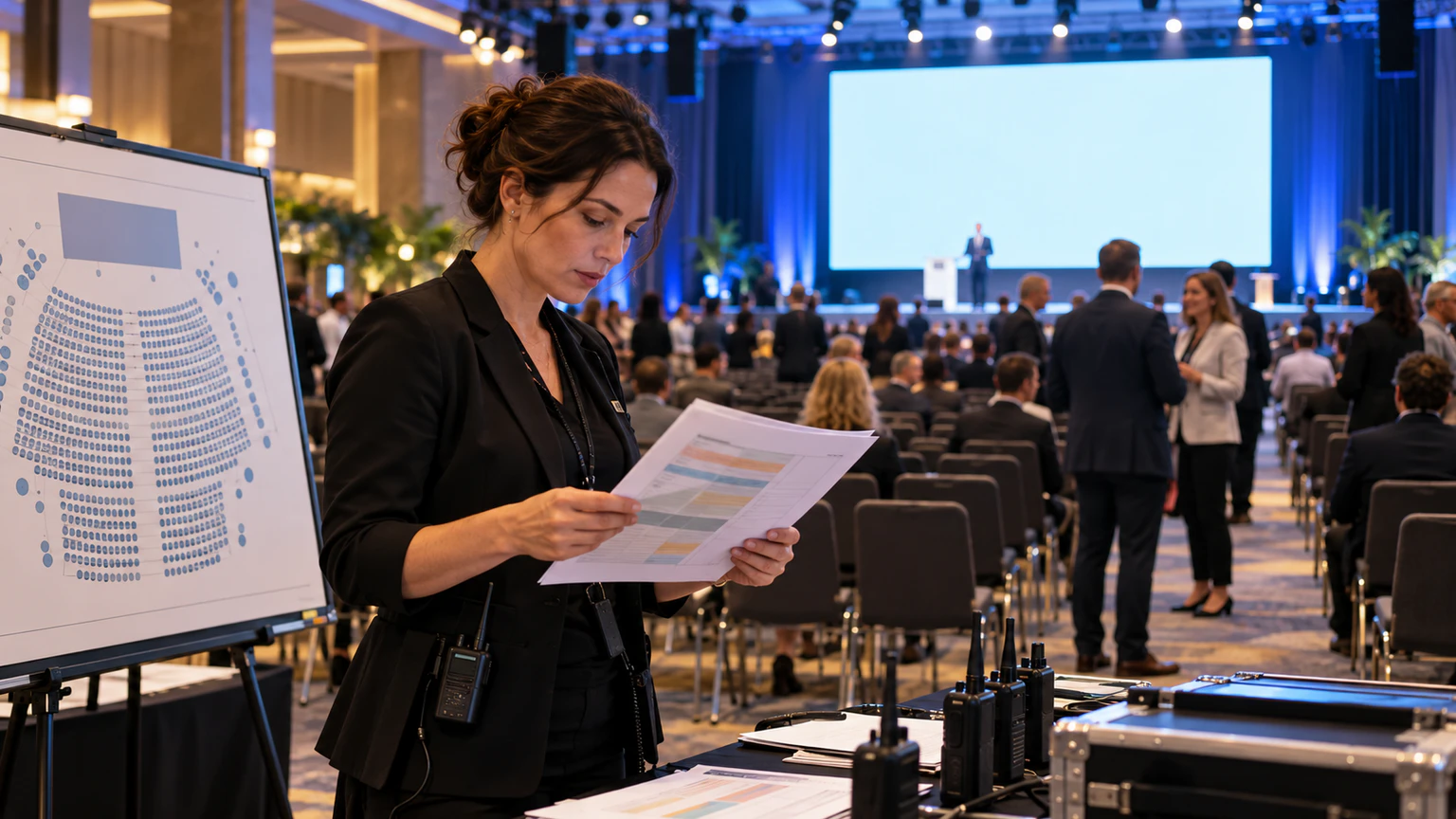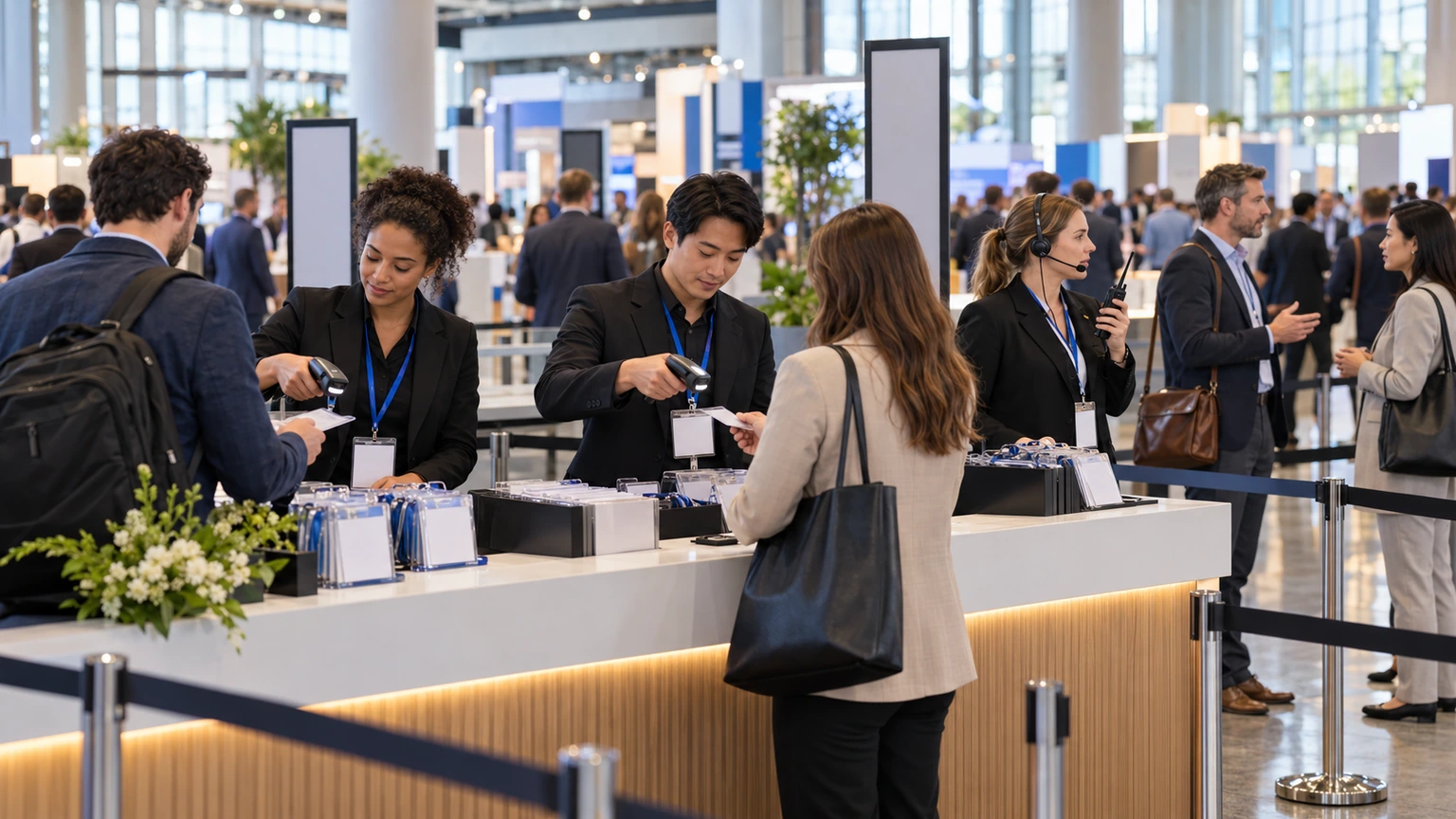

Seed funding headlines can attract attention quickly, especially in a market where event infrastructure, venue investment, and digital adoption are all evolving at once.
A useful public signal here is the reported $300k seed funding raised by INVE for Saudi event-tech expansion. On its own, that is a modest round. But it still matters because early-stage funding often says something about where investors believe operational demand may be forming.
For organisers, founders, and ecosystem builders in Saudi Arabia, the practical question is not whether one round changes the market overnight. It is what seed-stage capital can realistically unlock in event technology, and where expectations should stay disciplined.
Seed funding is not proof that a market is mature. It is a sign that some investors believe the operating conditions may now support experimentation, customer learning, and early commercial traction.
Why this matters for event operations
Event technology only becomes meaningful when it improves how events are planned, sold, delivered, and measured. Funding matters because it can help startups move from concept to repeatable execution.
In practical terms, early capital may support things such as:
- building a more stable product
- hiring implementation or support talent
- testing go-to-market in specific event segments
- adapting workflows for local organiser needs
- creating enough runway to learn from live deployments
That is relevant in Saudi Arabia, where organisers may be managing a mix of conferences, exhibitions, public events, corporate programmes, and government-linked initiatives, often with high expectations around attendee experience and operational control.
What the public signal tells us, and what it does not
From the source idea provided, the confirmed signal is narrow but relevant: INVE has reportedly raised $300k in seed funding for Saudi event-tech expansion.
That is enough to support a practical discussion about what early-stage investment may signal in the Saudi event-tech market.
What this does not confirm on its own is:
- which exact product workflows are gaining traction
- how many organisers are already using the platform
- what retention, revenue, or deployment performance looks like
- whether the company has solved enterprise procurement barriers
- how quickly the wider Saudi market will adopt similar tools
- which event categories will convert fastest
That distinction matters. A funding round can signal investor confidence and market intent. It does not, by itself, prove operational success.
Evidence-aware teams should treat funding news as a market signal, not as proof that every workflow, integration, or buyer concern has already been solved.
Why Saudi Arabia is a meaningful context for event tech
Saudi Arabia is not just another geography on a startup expansion slide. It is a market where large-scale events, business gatherings, exhibitions, and destination-led experiences have been gaining visibility.
That creates conditions where event technology can become operationally important, especially when organisers need to manage:
- registration and attendee flows
- multiple stakeholder groups
- sponsor and exhibitor expectations
- on-site coordination
- reporting and accountability after the event
In markets like this, adoption often depends less on abstract interest in innovation and more on whether tools can handle real delivery pressure.
What seed funding may actually change for a startup
1. It can buy time to focus
Early-stage event-tech companies often face a difficult balance: shipping product, supporting clients, selling new business, and responding to custom requests all at once.
Seed funding may give a startup enough room to prioritise more carefully. That could mean refining one customer segment, improving a narrow workflow, or reducing dependence on ad hoc services work.
2. It can make live delivery more credible
In event tech, product quality is only part of the story. Customers also need confidence that the vendor can support a live event when pressure rises.
Even a relatively small round may help a startup strengthen onboarding, support, and deployment discipline. For organisers, that can matter as much as feature development.
3. It can support localisation
Regional event markets often require more than a generic platform launch. Startups may need to adapt language, workflows, customer success practices, and commercial positioning to fit local buying behavior and event formats.
That kind of localisation work is not always visible from the outside, but it is often where early market traction is won or lost.
4. It can help founders test repeatability
One successful deployment is encouraging. A repeatable business is harder. Seed capital can help founders learn whether demand comes from a broad market need or from a few unusually accommodating customers.
What organisers in Saudi Arabia should take from this
For organisers, a funding headline should not trigger automatic trust or dismissal. It should prompt better questions.
When evaluating a younger event-tech vendor, organisers should look beyond the announcement and ask:
- which operational problem does the platform solve clearly
- whether the workflow fits the event format being planned
- how the vendor handles onboarding, support, and live issue resolution
- what the fallback process is if something breaks onsite
- whether the team understands local stakeholder expectations
- how success will be measured after the event
A seed-funded startup may be highly responsive and commercially motivated. It may also still be learning where its product is strongest. Organisers should evaluate both realities at the same time.
What founders should understand about Saudi go-to-market
Saudi Arabia can be attractive, but it is not a shortcut market. Founders entering or expanding in the region usually need to be specific about where they fit.
That means avoiding an overly broad pitch like “we serve all events” and instead proving value in narrower environments first, for example:
- business conferences with structured registration needs
- exhibitions where exhibitor workflows matter
- invite-only executive gatherings with tighter access control
- multi-stakeholder programmes that require clearer coordination
Go-to-market discipline matters because event buyers do not just assess software. They assess delivery risk.
Founders should also expect that trust may be built through execution quality, responsiveness, and local relationship credibility, not just through product demos.
Where investors should be careful
Seed activity in event tech can be encouraging, but the category has some structural challenges. Demand can be cyclical, implementation can be operationally heavy, and customer requirements may vary widely across event types.
Investors looking at Saudi event-tech startups should pay attention to questions like:
- is the company solving a recurring workflow or a one-off pain point
- can the product be deployed repeatedly without heavy custom work
- does the team have a realistic customer acquisition model
- are sales cycles manageable for the stage of the business
- can support quality hold up during live event periods
A funding round may signal market belief. The harder question is whether the startup can convert that belief into reliable operating performance.
Where teams often get this wrong
Confusing funding with validation
Capital helps, but it does not replace customer proof. Some startups become more visible after a round without becoming more operationally mature.
Overestimating speed of adoption
Even in fast-moving markets, event-tech adoption can be gradual. Buyers may need pilots, internal alignment, procurement approval, or event-by-event confidence building.
Trying to serve too many event types too early
A startup with limited resources usually performs better when it wins one use case clearly before expanding into adjacent ones.
Neglecting service readiness
In event operations, a product is judged live. If support, training, and issue handling are weak, product promise fades quickly.
A practical checklist for assessing seed-stage event-tech vendors
If you are an organiser or partner reviewing a young vendor in Saudi Arabia, use a simple checklist:
- Define the one workflow you need improved most.
- Ask the vendor to explain that workflow step by step.
- Check what parts are standard and what parts require custom setup.
- Review who supports the event before, during, and after go-live.
- Clarify what success metrics will be tracked.
- Test how exceptions are handled, not just the ideal journey.
- Start with a manageable deployment if uncertainty is high.
This keeps evaluation grounded in event delivery, which is where young platforms either build trust or lose it.
What this means for event teams
The reported seed round for INVE is best read as a useful regional signal: investors are paying attention to event technology opportunities in Saudi Arabia, and startups see enough market potential to build for that demand.
That matters. But the deeper story is not the headline amount. It is whether funded startups can turn early capital into dependable workflows, local relevance, and credible support for organisers under live conditions.
For the Saudi event-tech ecosystem, that is the real test. Funding may open the door. Operational execution is what keeps it open.