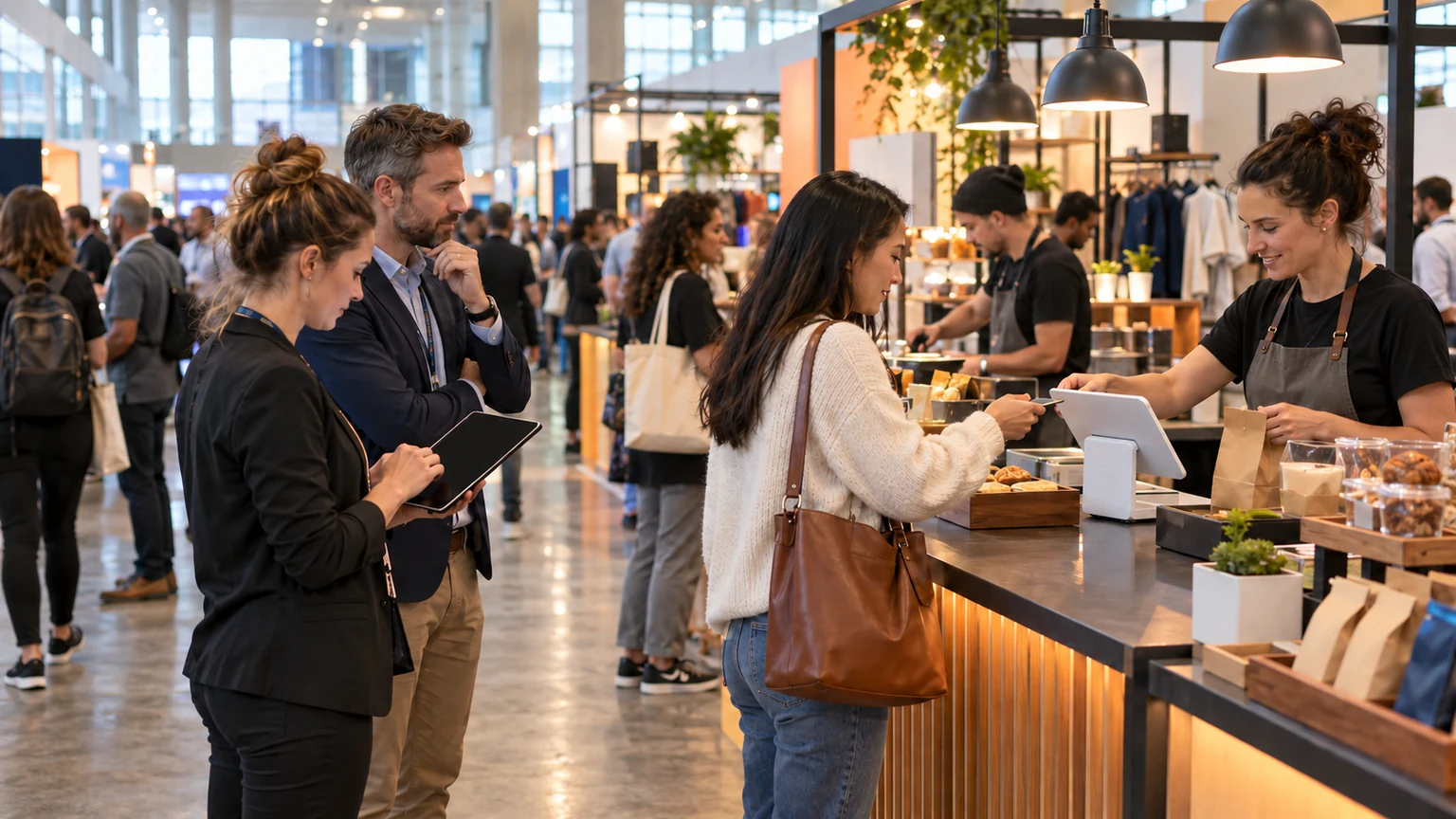
Onsite revenue is often treated as a bonus line: merchandise, food and beverage, sponsor activations, upgrades, add-ons, and pop-up sales that happen if the day goes well.
In practice, it works better when it is designed like an operating system. That means clear vendor setup, payment readiness, staffing rules, reconciliation, and a realistic revenue model before doors open.
A useful public signal here is the announcement that Fello and Billfold are partnering to make enterprise event commerce more accessible across North America.
That signal matters because it points to a common market need: large events want commerce to be easier to deploy, easier to manage, and less dependent on improvised onsite processes.
It does not, on its own, prove results, define the full operating model, or confirm how every organiser should structure commerce. But it is enough to support a practical discussion about how event teams can improve onsite revenue operations.
Onsite revenue usually underperforms for one simple reason: the event has foot traffic, but not enough commercial readiness.
Why this matters for event operations
Events already create concentration: people, time, intent, and attention are all in one place. That makes onsite commerce attractive, but it also makes failure very visible.
When commerce is loosely managed, teams tend to see the same problems:
- vendors approved too late to prepare properly
- unclear rules for inventory, staffing, and settlement
- long queues that suppress demand
- manual reconciliation after the event
- inconsistent sponsor or exhibitor selling rights
- revenue opportunities missed because nobody owned them
A stronger commerce platform approach does not just add payments. It helps organisers make revenue activity operationally manageable.
What the public signal tells us, and what it does not
From the source idea provided, the confirmed signal is narrow but relevant: Fello and Billfold have announced a partnership positioned around making enterprise event commerce more accessible across North America.
That is enough to support practical guidance for organisers, venues, and enterprise event teams.
What this does not confirm on its own is:
- which event formats will benefit most
- what revenue lift customers should expect
- how the partnership is technically structured
- what implementation timeline different organisers will face
- which operational bottlenecks are removed first
- whether every event should centralise commerce in the same way
That distinction matters. A market signal can be useful without being proof of outcome.
Evidence-aware planning means using the signal to sharpen your operating model, not to assume the outcome is guaranteed.
Where event commerce usually produces revenue first
Not every event should chase every revenue stream. The strongest starting point is usually to map where attendee demand and operational control already exist.
Common onsite revenue areas include:
- merchandise and branded goods
- premium food and beverage offers
- paid workshops or add-on sessions
- VIP upgrades
- sponsor-led retail or sampling activations
- ticketed networking events or after-hours experiences
- parking, cloakroom, or convenience services where relevant
The key is to choose revenue lines that match the event experience. A commerce programme should feel integrated, not bolted on.
What a workable event commerce setup should include
1. Clear ownership
Someone needs direct responsibility for commerce readiness. If revenue activity is split across sponsorship, operations, venue teams, and finance without a single owner, gaps appear quickly.
That owner does not need to do everything. They do need authority to coordinate timelines, vendor requirements, and escalation.
2. Defined selling rights
Large events often have overlapping stakeholders: venue concessions, exhibitors, sponsors, pop-up sellers, official merchandise partners, and organisers themselves.
Before sales begin, document:
- who is allowed to sell
- what they are allowed to sell
- where they can sell it
- whether revenue share applies
- which categories are exclusive
- who handles refunds or disputes
This avoids conflict on the floor and protects sponsor commitments.
3. Operationally realistic payment readiness
Onsite commerce depends on throughput. If transactions are slow, revenue is capped by friction.
Teams should validate basics early:
- connectivity and fallback procedures
- power access
- point-of-sale staffing
- queue layout
- settlement process
- who supports issues during live hours
A polished pre-event strategy can still fail if the actual selling point is poorly staffed or hard to reach.
4. A post-event reconciliation path
Revenue is not finished when the floor closes. Organisers need a clean process for settlement, reporting, commissions, and exceptions.
If that process is manual, disputed, or delayed, onsite gains can become back-office pain.
How to think about vendor onboarding more practically
Vendor onboarding is where many commerce efforts either become repeatable or become chaotic.
For event teams, onboarding should not just collect logos and contact details. It should confirm whether the seller can operate within the event's commercial rules.
Essential onboarding checks
- legal business name and billing details
- primary onsite contact and escalation contact
- product category and sales description
- space and equipment requirements
- staff count and access needs
- payment and settlement method
- insurance or venue compliance items if required
- inventory load-in and replenishment plan
- refund and customer service responsibilities
- agreement to event selling rules
Shorter is better, but incomplete is expensive. Ask only for what operations and finance genuinely need.
A simple vendor onboarding template
Below is a practical template event teams can adapt.
Vendor onboarding form structure
- Business details: legal entity, tax or billing details, contract signatory
- Commercial category: merchandise, food and beverage, sponsor retail, service add-on, other
- What will be sold: item list, price range, restricted items, exclusivity notes
- Operational footprint: booth or cart size, storage, power, internet, equipment needs
- Staffing: names, roles, access windows, training requirements
- Payments: who processes payment, who owns settlement, refund path, escalation path
- Load-in and replenishment: arrival schedule, replenishment method, responsible contact
- Compliance: venue rules, health and safety items, insurance documents if applicable
- Reporting: sales reporting frequency during event, final reconciliation deadline
- Sign-off: acknowledgement of event commerce rules and revenue share terms
This structure helps avoid the common mistake of approving sellers before operational review is complete.
How to model onsite revenue without overestimating it
Revenue modeling does not need to be complicated. It does need to be honest.
Many teams start with total attendance and apply an optimistic spend number. That usually overstates results because it ignores timing, access, queue capacity, audience fit, and the simple fact that not every attendee is a buyer.
A better model starts with four inputs:
- qualified buyer volume
- conversion rate
- average transaction value
- selling hours and throughput limits
Basic formula
Estimated revenue = qualified buyers x conversion rate x average transaction value
Then sense-check that against physical reality:
- How many transactions can each point of sale handle per hour?
- How many staffed selling points exist?
- When is foot traffic strongest?
- Will programme timing suppress demand?
If the operational ceiling is lower than the modeled demand, the model is too high.
A simple revenue modeling example
Imagine an enterprise conference with 4,000 attendees.
- Estimated qualified buyers for a premium add-on offer: 20% = 800 people
- Expected conversion rate: 25%
- Average transaction value: $18
Modeled gross revenue would be 800 x 25% x 18 = $3,600.
Now check throughput. If the offer is sold at one point with limited staffing during a short break, the team may not be able to serve 200 buyers efficiently. The true result could be much lower unless they add capacity or extend the sales window.
This is why revenue modeling should be paired with queue and staffing planning, not left in a spreadsheet alone.
How organisers can increase spend without forcing it
The strongest commerce programmes reduce friction and improve relevance. They do not rely on aggressive selling.
Practical levers include:
- placing offers near natural dwell points
- aligning product mix with audience type and event timing
- using pre-event messaging to prime demand
- grouping related purchases into clear bundles
- keeping prices simple and visible
- making collection or fulfilment easy
For example, a paid workshop add-on will convert better if attendees understand the value before arrival, know where it happens, and can purchase without leaving the main event flow.
What enterprise teams should watch closely
At larger events, onsite commerce becomes a coordination issue as much as a sales issue.
Teams should pay special attention to:
- rights conflicts between sponsors, venue partners, and organisers
- brand control over what is sold and how it appears
- settlement and revenue-share transparency
- support coverage during live selling periods
- how commerce data will be reconciled after the event
- what happens when a seller is not ready on time
These issues matter more than abstract feature comparisons because they determine whether the model can scale across multiple events.
Where teams often get this wrong
They launch too many revenue lines at once
More offers do not automatically mean more revenue. Complexity can dilute staffing, confuse attendees, and slow reconciliation.
They approve vendors without operational review
A commercially attractive vendor can still create problems if they require unsupported equipment, unclear staffing, or a manual settlement process.
They ignore throughput
If buyers cannot complete transactions quickly, interest does not become revenue.
They forget the post-event workload
Finance, sponsor teams, and operations all feel the impact when settlement rules are vague.
The most profitable onsite offer is not always the one with the highest price. It is often the one the team can deliver consistently, quickly, and at scale.
A practical pre-event checklist
- Assign a named commerce owner
- List all onsite revenue streams and rank them by effort and likely return
- Document selling rights and exclusivity rules
- Complete vendor onboarding before final approval
- Validate power, connectivity, staffing, and queue plans
- Model demand against real transaction capacity
- Set reconciliation and reporting deadlines
- Prepare issue escalation for live trading hours
What this means for event teams
The public partnership signal around Fello and Billfold is useful because it reflects a real need in the market: enterprise event commerce has to become easier to deploy and easier to operate.
For organisers, the lesson is straightforward. Onsite revenue improves when commerce is treated as part of event operations, not as a side activity that happens near the floorplan deadline.
If your team wants better returns, start with the basics: clear rights, tighter vendor onboarding, realistic revenue models, and live selling setups that can actually handle demand.
That is what turns foot traffic into revenue, and revenue into a repeatable operating advantage.