Embodied AI is becoming a more serious topic in industry, not just in research labs.
Recent coverage around the 2026 World AI Conference has highlighted growing attention on embodied intelligence in China, especially its industrial direction. For event organizers, that does not mean every venue is about to fill with useful robots next quarter. It does mean the conversation is shifting from software-only AI toward systems that can sense, move, and act in physical spaces.
The practical question for events is not, “Should we add a robot?” It is, “What real on-site job would a physical AI system make easier, safer, or faster?”
That distinction matters.
In events, flashy demos can attract attention. Operational value is harder to earn. If embodied AI enters exhibitions, conferences, and trade shows more often, its success will depend less on novelty and more on whether it improves the live experience without adding friction.
What embodied AI means in an event context
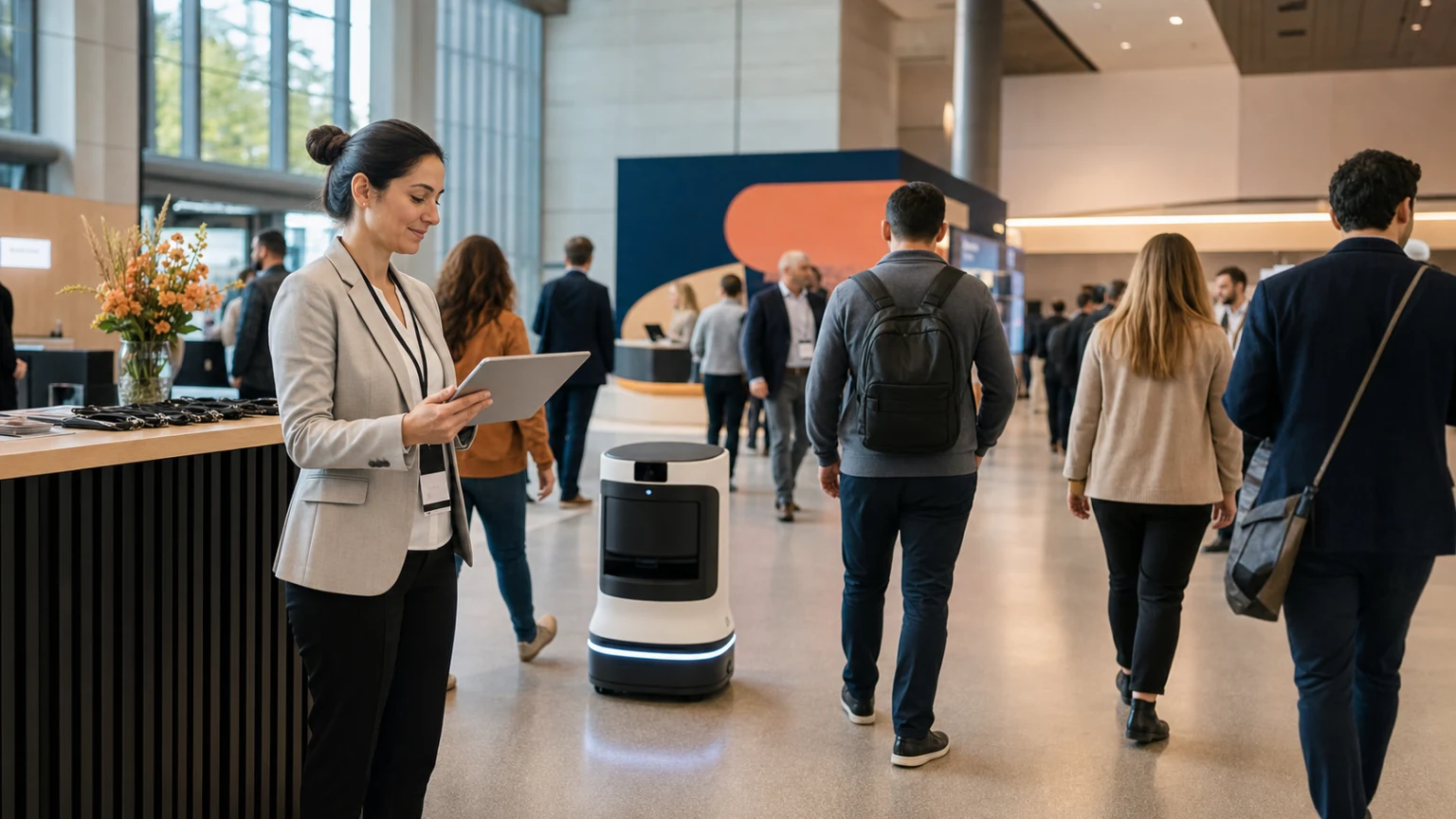
In simple terms, embodied AI refers to AI systems that interact with the physical world through hardware. That could include robots, autonomous assistants, mobile kiosks, or other machine systems that perceive surroundings and respond through movement or actions.
For events, this is different from a chatbot on a website or a text-generation tool used by staff. Embodied AI shows up in the venue itself.
Examples might include systems used for:
- wayfinding or directional support
- basic guest guidance at entrances or halls
- booth demonstrations in exhibition spaces
- physical information assistance in high-traffic areas
- repetitive support tasks in controlled environments
Not all of these uses will be practical yet. Some will work as marketing theater before they work as dependable event operations. Organizers should know the difference early.
Why this matters more to exhibitions than to slide decks
Exhibitions and trade shows are natural testing grounds for embodied AI because they are physical, public, and interaction-heavy.
Vendors want attention. Attendees want memorable experiences. Organizers want smoother traffic flow, clearer support points, and differentiated programming.
That makes embodied AI attractive for three reasons:
- it is visible, which helps exhibitors draw interest
- it is physical, which makes the experience easier to notice than background software
- it can create a bridge between innovation themes on stage and live demonstrations on the floor
But those same strengths create risk.
A visible failure is still a failure. If a physical AI system blocks traffic, confuses participants, requires constant staff rescue, or creates safety concerns, the novelty wears off quickly.
At events, operational credibility matters more than futuristic aesthetics.
Where embodied AI may actually help on-site
Most event teams should start with narrow use cases, not broad promises.
The better first question is: where do we have repetitive, structured, high-visibility interactions that do not require complex human judgment?
That could point to a few realistic areas.
1. Wayfinding and directional support
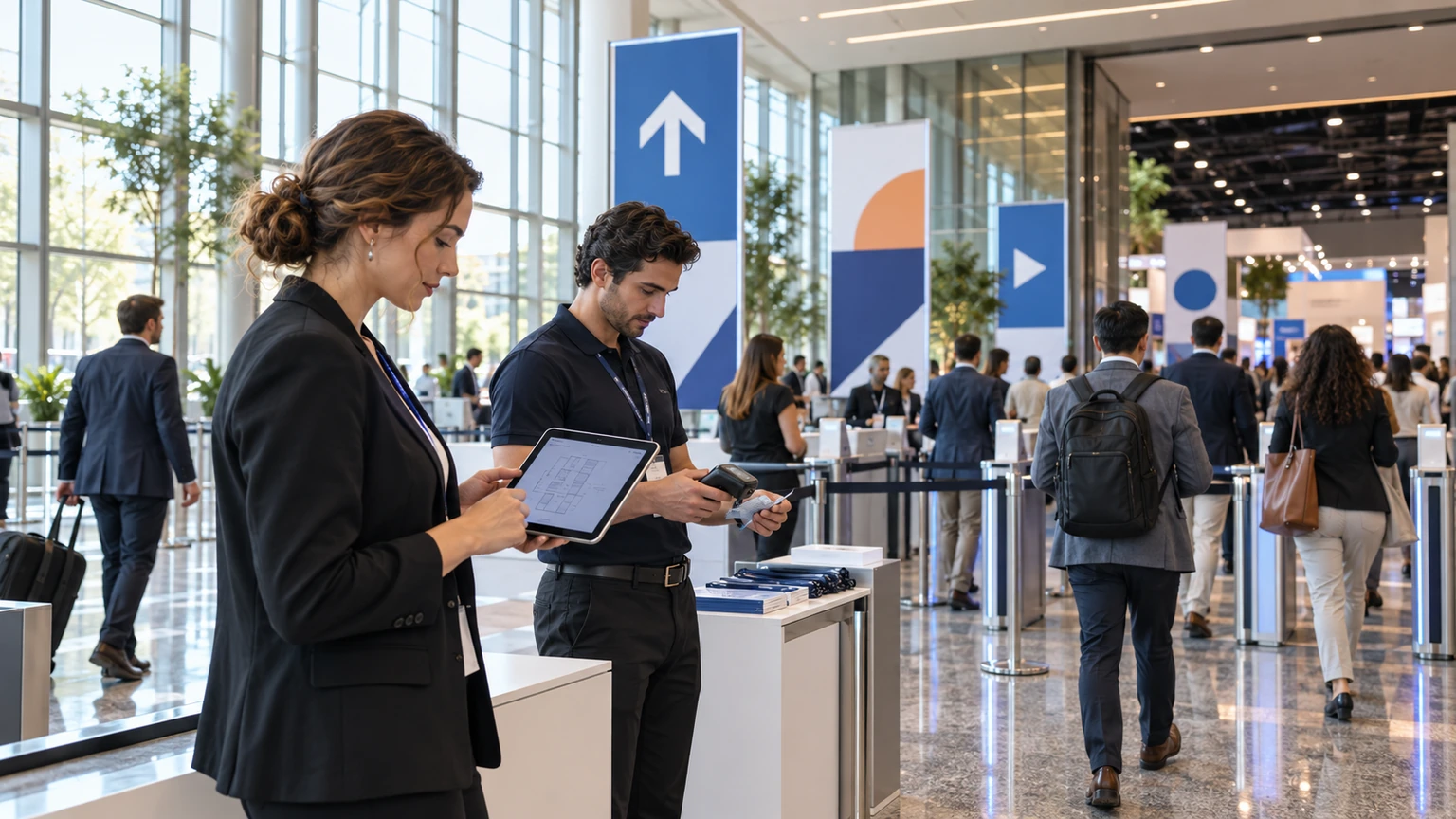
Large venues create the same questions all day: Where is registration? Which hall is session B in? Where is the sponsor lounge? Where do I collect my badge?
A physical guide stationed in a predictable area may be useful if it reliably handles simple directions and reduces pressure on staff desks.
But this only works if the event map, room names, timing changes, and access points stay accurate. A smart machine giving outdated instructions is just a more expensive version of bad signage.
2. Exhibition booth engagement
Exhibitors may use embodied AI as a conversation starter, especially in sectors where automation, robotics, manufacturing, logistics, or applied AI are relevant to the audience.
This can work well when the system supports a clear demo story:
- what it does
- who it is for
- what problem it solves
- how attendees should interact with it
Without that structure, the booth risks creating a crowd without creating understanding.
3. Simple hospitality or information roles
In some controlled environments, physical AI systems may help greet people, provide basic instructions, or route them to a human support point.
That said, organizers should be careful not to replace roles that depend heavily on empathy, exception handling, accessibility support, or judgment. Events are full of edge cases. A participant who is lost, stressed, late, or needs assistance often needs a capable person, not an experimental interface.
What organizers should evaluate before approving an on-site deployment
If a sponsor, venue partner, or internal innovation team wants embodied AI on-site, organizers should review it like any other live operational element.
Start with practical questions:
- What exact job is this system supposed to do?
- What happens if it stops working during peak traffic?
- Who is responsible for supervising it on-site?
- Does it need special space, charging, connectivity, or barriers?
- Could it create congestion near entrances, aisles, or booths?
- How will accessibility and participant comfort be handled?
- Is there a clear fallback process using human staff?
These are not anti-innovation questions. They are event-day questions.
Any new technology that enters a venue has to coexist with queues, signage, security, schedules, catering, cleaning, and people who are trying to get somewhere quickly.
The hidden event risk is not intelligence, it is physical workflow
Many event technologies fail because teams judge them in isolation instead of in movement.
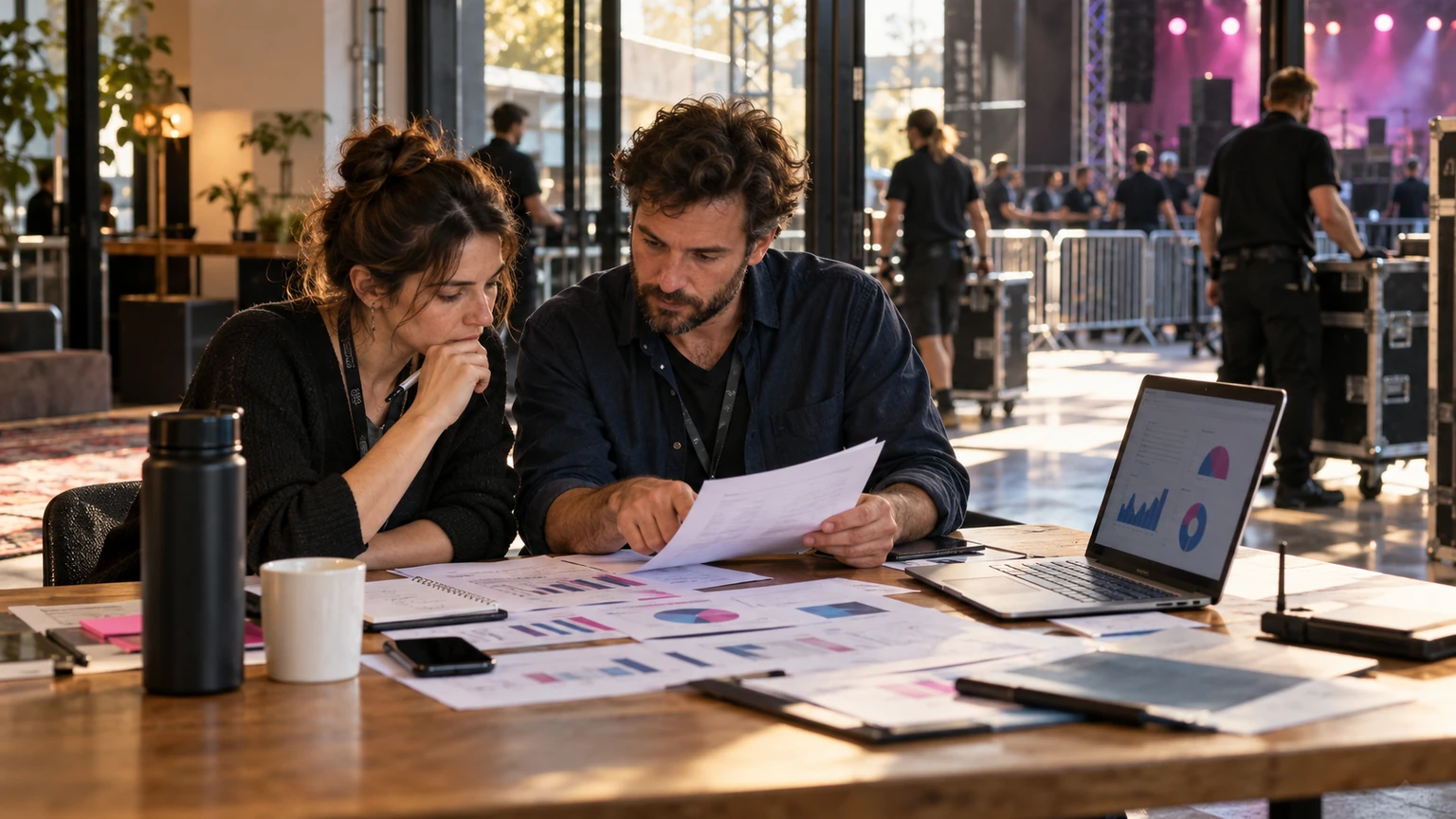
A system may look strong in a demo zone and still perform poorly in real venue conditions. Noise, crowds, poor line of sight, last-minute layout changes, and inconsistent staffing can all break a promising concept.
Embodied AI adds another layer because it occupies space and may move through it.
That means organizers should assess:
- traffic flow around the device or robot
- queue behavior if people stop to watch it
- safety around children, bags, cables, and mobility aids
- how easily staff can intervene if needed
- whether its presence improves or slows the participant journey
In other words, the success metric is not whether people filmed it. The success metric is whether the area worked better with it there.
What exhibitors should keep in mind
For exhibitors, embodied AI can be powerful, but only if the live experience supports the business goal.
A few practical rules help:
- tie the demo to a clear commercial message
- staff the booth as if the technology may need explanation or recovery
- avoid placing the system where crowds block neighboring booths
- plan for a nonfunctional state, not just a perfect state
- brief booth staff on how to transition from curiosity to real conversation
The worst outcome is a booth attraction that produces attention but no qualified discussions.
The better outcome is a demonstration that makes the product category easier to understand and gives attendees a reason to continue the conversation after the event.
What event tech buyers should watch in vendor claims
As embodied AI becomes more visible, buyers will hear more ambitious claims.
That is normal. It also means evaluation discipline matters.
Ask vendors for specifics:
- What environments has this already worked in?
- Was it used in a venue with real public traffic?
- What staff support was required behind the scenes?
- What happened when conditions changed?
- What part of the experience was actually automated?
- What measurable result improved?
Those questions help separate event-ready deployment from event-stage theater.
There is nothing wrong with a pilot or showcase, as long as everyone agrees it is a pilot or showcase. Problems start when a demonstration is sold as operational maturity before it has earned that label.
A sensible first-step approach for organizers
Most event teams do not need an all-or-nothing position on embodied AI.
A more useful approach is to treat it like a controlled on-site experiment.
- Choose one narrow use case.
- Place it in a manageable environment.
- Assign a clear owner on-site.
- Define what success looks like before the event opens.
- Prepare a human fallback plan.
- Review participant and staff feedback immediately after.
This keeps the learning practical.
If the system improves a real part of the event journey, that is worth building on. If it creates confusion, crowding, or support burden, that is useful to learn too.
Final thought
The broader shift toward embodied intelligence is worth paying attention to because events happen in the physical world. That alone makes the trend more relevant to organizers than many abstract AI announcements.
Still, relevance is not the same as readiness.
For now, the smartest event teams will stay curious, ask operational questions early, and judge embodied AI by the same standard they use for everything else on-site: does it help the experience run better for real people in a real venue?