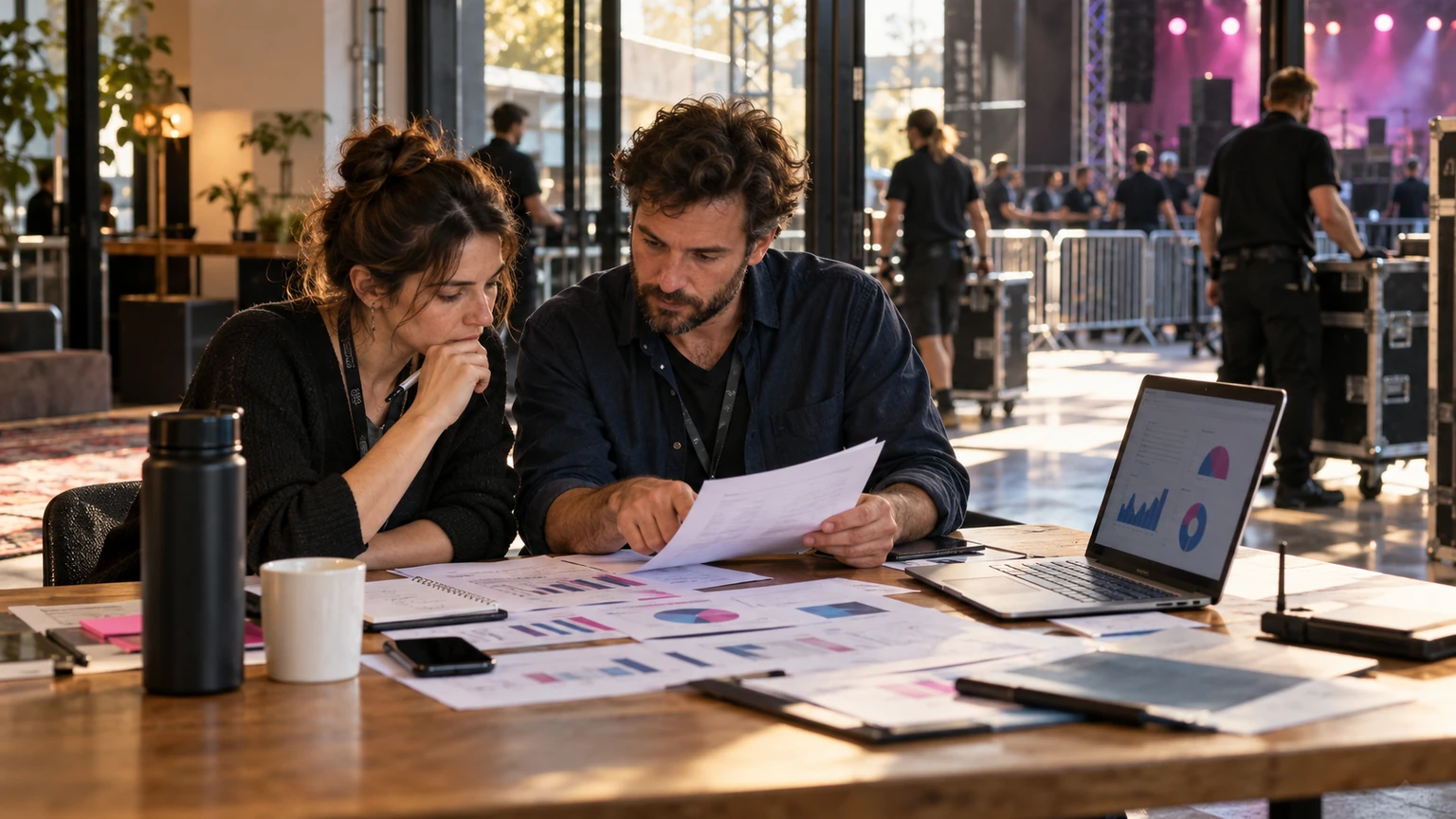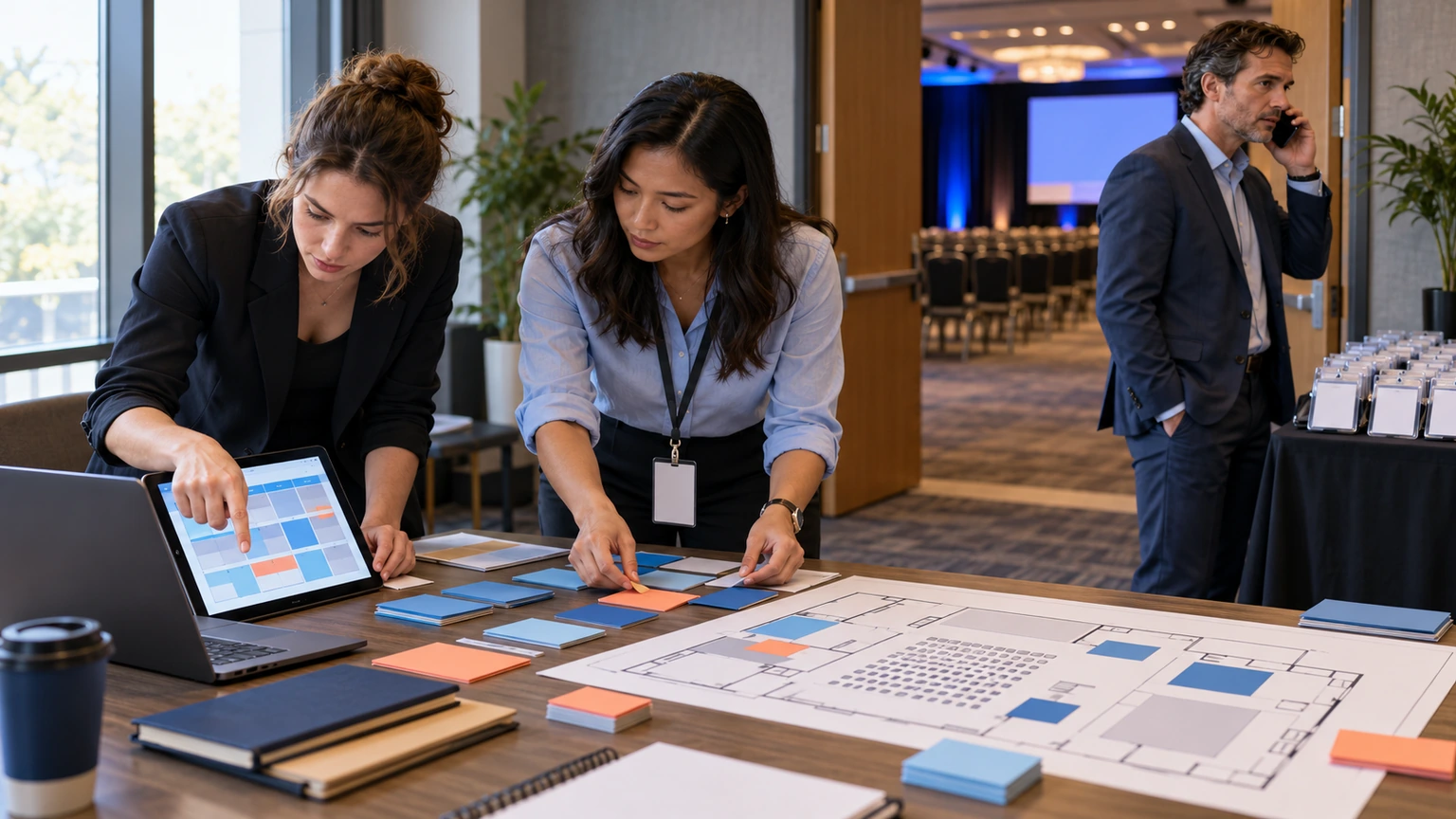

When an event feels seamless, most attendees never see the work that made it possible.
They see a short check-in line, clear session information, confident staff, and a program that appears to run on time. What they do not see is the coordination behind every one of those moments.
That hidden layer matters because event quality is often judged by the absence of friction.
A flawless event usually depends less on one big success and more on dozens of small operational problems being prevented before attendees notice them.
For organizers and agencies, that is the real lesson: smooth delivery is rarely accidental. It is operational design.
Why the invisible work matters
Event teams often spend months on visible elements such as speakers, design, sponsors, and promotion. Those things matter. But on event day, attendees experience the operation.
They notice whether:
- registration is fast
- staff know what is happening
- room changes are communicated clearly
- session timing stays believable
- access rules make sense
- help is easy to find
If those basics break down, even a strong program can feel disorganized.
That is why the best-run events treat operations as part of the attendee experience, not just back-office admin.
Start with a believable source of truth
One of the most common causes of event-day confusion is simple: different teams are working from different versions of the event.
The agenda in one document differs from the speaker brief. The venue has an older room plan. Front-desk staff were not told about a last-minute change. Sponsors have one expectation, while the operations team is executing another.
Before event week, teams should be able to answer a basic question: where does the current version of the event live?
That source of truth should cover the essentials:
- agenda and timing
- room assignments
- speaker status
- staff roles
- participant access details
- vendor and venue contacts
- live escalation paths
If staff have to guess which file is current, the event is already carrying unnecessary risk.
Check-in is where hidden work becomes visible
Attendees may remember keynote speakers and networking moments. But operational trust often starts at the entrance.
Check-in is one of the clearest tests of preparation because it exposes weak coordination immediately. A queue forms fast when badge issues, missing names, unclear attendee categories, or payment questions hit the desk at once.
Strong teams reduce that pressure before doors open.
That means reviewing:
- how attendee names will be found
- what happens when someone is not on the list
- how VIP, speaker, sponsor, and staff access is handled
- who can approve exceptions
- how badge reprints or corrections are managed
- what staff should say when there is a delay
None of this is glamorous. All of it affects first impressions.
Check-in is not just an entry task. It is the moment attendees decide whether the event feels under control.
Real-time updates need ownership
Even well-planned events change in real time.
A speaker runs late. A room reaches capacity. A session starts five minutes behind. A delivery arrives at the wrong entrance. A sponsor asks for a setup adjustment. Weather affects arrivals.
The issue is not whether changes happen. The issue is whether the team has a clear way to respond.
Operationally, that usually requires three things:
- a named decision-maker for each live area
- a simple method for communicating updates internally
- a clear rule for when attendees need to be informed
Without that structure, teams waste time repeating the same questions, forwarding messages, and checking whether someone else has already handled the issue.
When live changes do happen, speed matters. But clarity matters more.
Staffing plans should reflect the real pressure points
Many staffing plans look adequate on paper and fail in practice because they are built around headcount, not pressure points.
A better approach is to map where demand will spike during the attendee journey.
For most events, that includes:
- arrival and check-in windows
- room turns between sessions
- speaker transitions
- meal or coffee breaks
- sponsor activations
- closing and exit flow
This does not always mean hiring more people. Often it means placing the right people in the right places, at the right times, with clear authority.
Briefing also matters. Staff should know more than their immediate task. They should understand the event shape, key timings, escalation contacts, and likely attendee questions.
Agenda operations are more fragile than they look
An agenda can look polished online and still create confusion on-site.
The hidden work behind agenda delivery includes speaker coordination, timing control, room readiness, signage alignment, moderator briefings, and communication of last-minute changes.
If one session moves, several downstream tasks often move with it.
To keep agenda operations stable, teams should confirm:
- who owns final session timing
- how room changes are approved
- how moderators receive updates
- when signage or screens are refreshed
- how attendees are informed if a change affects their plan
This is where small delays can create a chain reaction. Tight ownership helps contain them.
The attendee journey depends on tiny details
Attendee experience is often discussed in big terms: personalization, content quality, networking value. Those matter, but many satisfaction gains come from small operational details.
For example:
- clear wayfinding reduces anxiety
- accurate schedules reduce missed sessions
- well-briefed staff reduce support friction
- consistent naming across signage and digital materials reduces confusion
- fast answers at help points reduce queue buildup
These are not minor details to the attendee. They are the event.
That is why good operations teams tend to think in moments, not just milestones.
A practical pre-event review checklist
Before event week, teams should pressure-test the operation, not just admire the plan.
Ask practical questions such as:
- What are the top five things most likely to go wrong?
- Who makes the call in each case?
- How will the team share urgent updates?
- Where could queues form?
- Which attendee situations require an exception path?
- Which vendors or staff need the latest version of the event today?
- What information would an attendee struggle to find quickly?
This kind of review is not pessimistic. It is what allows an event to feel calm under pressure.
What event teams should take from a flawless event
The lesson is not that great events run without problems.
The lesson is that strong teams expect friction, design around it, and recover quickly when something changes.
That usually comes from disciplined operational habits:
- one current version of the event
- clear ownership across live functions
- reliable staff briefing
- real-time communication paths
- attention to check-in, access, and flow
- constant focus on the attendee's actual experience
When those pieces are in place, the event feels easy. That is exactly the point.
Final thought
The most impressive part of a flawless event is often the part nobody sees.
For organizers, that should be encouraging. Operational excellence is not magic, and it is not only about having a bigger team. It comes from clearer decisions, better preparation, and fewer avoidable handoffs.
If an event feels effortless to attendees, someone worked very hard to make it that way.