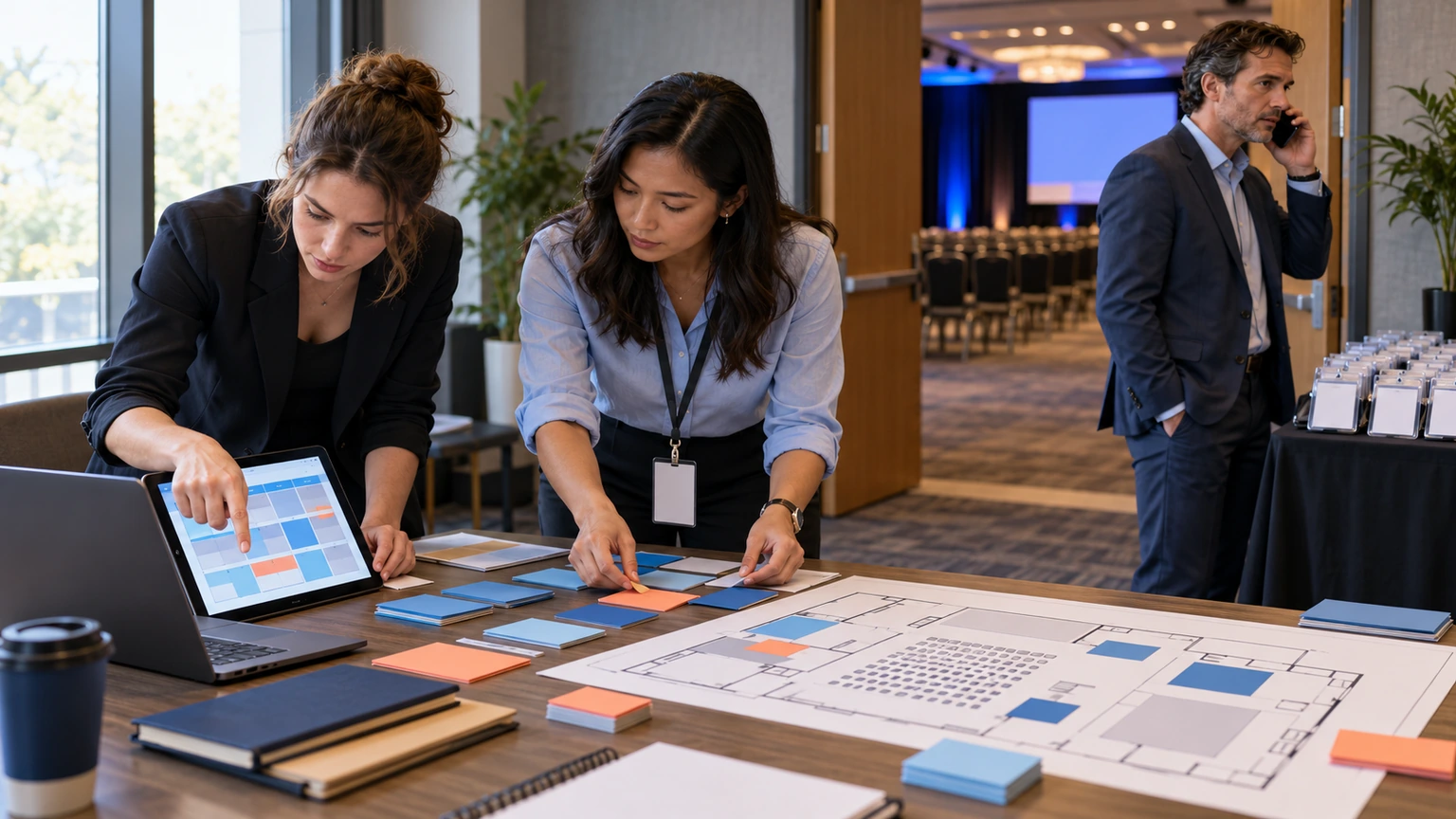
Association conferences rarely fail because the content is weak.
They usually struggle when the attendee journey feels fragmented: registration is unclear, updates arrive late, session choices are hard to manage, and on-site support depends on too many manual workarounds.
A recent public signal in conference coverage, tied to ASTA's fifth annual Travel Masters Conference in Ireland, is a useful prompt for organizers to revisit how attendee journeys are designed across travel, registration, communication, and hybrid participation.
That source does not give a full operating blueprint. It does support a practical discussion about how conference teams can build smoother attendee experiences, especially for association events with multiple stakeholder groups and more complex delivery needs.
The attendee journey is not one moment. It is a chain of operational decisions that either feels connected or feels confusing.
Why this matters for association conferences
Association events often have more moving parts than a standard commercial conference.
There may be members, sponsors, speakers, hosted buyers, board participants, students, media, and guests. Some attendees travel internationally. Some only join selected sessions. Some expect in-person access, while others need remote options.
That means the attendee journey has to work across several stages:
- pre-event discovery and registration
- travel and accommodation planning
- agenda selection and confirmations
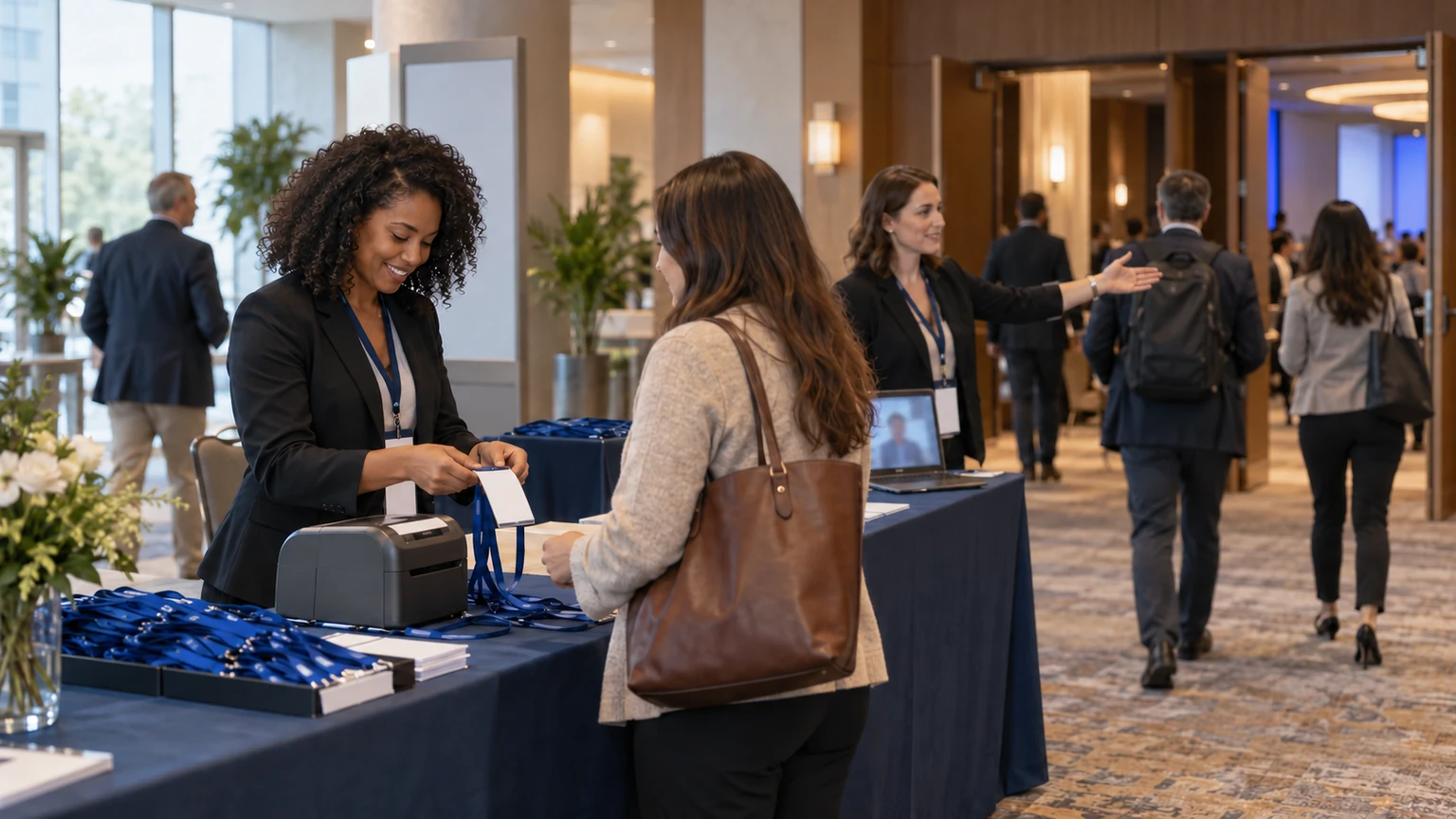
- arrival, check-in, and badge collection
- session attendance and networking
- hybrid access for remote participants
- post-event follow-up and reporting
If those steps are disconnected, the event team absorbs the friction. So do attendees.
What the public signal tells us, and what it does not
From the source idea provided, the confirmed theme is straightforward: successful association conferences are increasingly tied to better attendee management and hybrid-ready planning.
That is enough to support an operational guide.
What this source does not confirm on its own is:
- which specific technology stack ASTA used
- how attendee data was structured across systems
- which hybrid features were offered
- what measurable outcomes were achieved
- whether the same model would fit every association event
That distinction matters. Organizers should treat the public signal as a planning prompt, not as proof that one format or toolset solves every conference challenge.
A conference can look polished on stage and still have avoidable attendee friction underneath. The real test is how easily people move from one step to the next.
Where attendee journeys usually break
1. Registration collects information without supporting later decisions
Many event teams gather attendee details early, but do not structure that information well enough for later use.
For example, dietary needs, role type, arrival timing, session interests, or access preferences may be captured, but not turned into usable workflows for operations, communications, or on-site staff.
That leads to manual exports, side spreadsheets, and last-minute exceptions.
2. Communication is organized by department instead of by attendee need
Attendees do not experience the event through your internal org chart.
They experience it as one journey. If registration sends one message, the travel team sends another, and programming sends a third with different assumptions, confusion builds quickly.
This is especially common at association conferences where multiple teams contribute to delivery.
3. Agenda changes do not flow cleanly
Conference programs shift. Speakers cancel. rooms change. Capacity limits move.
That is normal.
The problem starts when attendees hear about changes too late, or when staff on site are working from different versions of the program.
4. Hybrid is added as a channel, not designed as a participant experience
Remote access is not just a streaming decision.
It affects registration language, joining instructions, support coverage, session access rules, timing, moderation, and follow-up communications.
When hybrid delivery is treated as an add-on, remote attendees tend to get a thinner, less reliable experience.
How to plan a better attendee journey
Start with attendee types, not just event functions
Before selecting workflows, map the main attendee groups your conference serves.
For an association event, that may include:
- general members
- VIPs or hosted delegates
- speakers
- sponsors and exhibitors
- staff and volunteers
- remote attendees
- press or partners
Each group may need different confirmations, deadlines, access rules, and support paths. That does not mean building a separate event for each group. It means designing with real journey differences in mind.
Define the key moments that shape the experience
Most attendee frustration clusters around a few moments:
- the decision to register
- payment and confirmation
- travel planning
- agenda building
- arrival on site
- finding the right room, person, or activity
- accessing content remotely
- receiving useful follow-up after the event
Review each moment and ask a simple question: What does the attendee need to do here, and what does the team need to make easy?
That framing is more useful than discussing the journey only in abstract marketing terms.
Practical ways to improve attendee management
Use one clear source for attendee status
Even when multiple systems are involved, the event team should know where the current attendee record is validated.
This helps reduce issues such as duplicate records, mismatched entitlements, and support teams working from old information.
At minimum, teams should align on:
- who owns attendee data quality
- which status fields matter operationally
- when changes are updated
- how exceptions are logged and resolved
Design communications around next actions
Attendee emails and updates should do more than announce information.
They should help the recipient take the next step with minimal friction.
Good conference communications often answer:
- What has been confirmed?
- What still needs action?
- What deadline matters next?
- Where should the attendee go for help?
This becomes even more important for international or association audiences, where travel, membership status, or credentialing may affect what happens next.
Prepare on-site teams for exception handling
Check-in rarely breaks because the planned cases are impossible.
It breaks because exception cases pile up: name changes, missing confirmations, access disputes, badge errors, late arrivals, or group registrations that do not match the latest record.
Organizers should prepare front-line staff with:
- a clear escalation path
- access to the latest attendee information
- rules for common exceptions
- ownership for speaker, sponsor, and VIP issues
Fast exception handling often matters more than shaving a few seconds off the standard check-in flow.
How to think about hybrid without overcomplicating it
Hybrid formats can expand access and preserve value for attendees who cannot travel. They also create more operating points to coordinate.
A practical hybrid plan should cover:
- which sessions are available remotely
- how remote attendees register and receive access details
- what support is available before and during the event
- whether networking or Q&A includes remote participants
- how recordings or post-event access will be communicated
Not every conference needs a fully symmetrical in-person and remote experience. In many cases, a clearer and narrower hybrid offer works better than a broad but unreliable one.
The main thing is to set expectations accurately.
A practical planning checklist for conference teams
- map the main attendee groups and their different journey needs
- review where attendee data is created, updated, and checked
- identify communication points that currently create confusion
- test agenda change workflows before the event opens
- prepare on-site staff for common exceptions, not just ideal cases
- define what hybrid attendees will and will not receive
- make support routes visible in every major attendee message
- review post-event follow-up before the conference starts
Where teams still get into trouble
One common mistake is trying to improve the attendee journey only at the surface level.
Teams polish email design, event branding, and mobile instructions, but leave underlying ownership and workflow gaps unresolved.
Another mistake is overbuilding. Conference teams sometimes add too many pathways, messages, or access options in an attempt to be flexible. That can create more confusion, not less.
In practice, the best attendee journeys are usually built on a few operational disciplines: cleaner data handling, simpler communications, better exception planning, and realistic promises about what the event format will deliver.
What this means for event teams
The lesson for association organizers is simple: optimize the attendee journey as an operating model, not just a hospitality goal.
That means connecting registration, travel information, agenda management, on-site support, and hybrid access into one coordinated experience.
The public signal behind this topic is limited, but relevant. Conference formats are evolving, attendee expectations are higher, and association events need more deliberate journey design than many teams still use today.
If organizers improve the handoffs between stages, attendees notice. Just as importantly, staff workloads become more manageable when the event gets busy.